
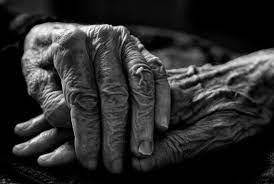
Grandma’s Hands
October 29, 2023
Rev. Douglas Taylor
Sermon video: https://youtu.be/ajeqN2tgBY0
There is a classic writing tip that is given to fiction writers, to people working on a novel. Give your hero a tragic backstory, they say. Make it something terrible that happened to them which helps make their character more noble for being good. A relatable hero needs a tragic backstory. This is why there are so many orphans in literature. The best example in my mind is from Roald Dahl’s James and Giant Peach. His parents were out shopping in London when they were killed by an angry rhinoceros that had escaped from the zoo. Poor James. So relatable. In truth, we have all had trauma in our lives. We don’t need to all become orphans to know the suffering wrought by trauma.
Over the past handful of years, I have been learning about the impact of trauma on our lives. I’ve taken workshops and attended trainings that talk about being ‘trauma informed.’ There three very interesting things about all of this that I want to share. The first is that trauma lives in our bodies.
As human beings, our bodies have deep wired reactions for self-protection. When presented with a threat, we have a physical, visceral, non-cognitive reaction commonly recognized as the ‘fight, flight, or freeze’ response. Psycho-biology has continued to bring good research around this aspect of our complex living.
And I need to emphasize, trauma lives in our bodies. This isn’t about how you might have an old hurt you will not forgive. This is about experiences that become written into our pre-thinking reactions. Think about how during a horror movie, a scene can make you jump – even though you know it is a movie, when you cognitively know there is no actual danger, your body still reacts. Our bodies react to fear and pain without needing to wait for our cerebral cortex to think up a logical response first. When we have a significant trauma experience, the reaction can become coded into our brains as part of that basic reaction.
Have you ever experienced another person’s reaction to a situation and think to yourself, that person’s reaction is not in proportion to the situation. It feels like an overreaction. If you are really attentive, you might even notice when you do it. Usually what it means is the situation is not all that’s going on for that person. One possibility is that the person has a trauma experience also at play.
It is a little like the two arrows story in Buddhism. Buddhists talk about suffering in the Four Noble Truths. And the story of the two arrows helps clarify what is meant by suffering. When we experience something that hurts us it is like we are pierced by two arrows. The first arrow is the pain that occurs, the actual event that hurts us. The second arrow is our reaction to the event that adds to our pain. The Buddhists call the first arrow the pain and the second arrow the suffering. The pain is inevitable. The suffering we can work on.
Trauma causes pain, and how we respond to it, the story we create about it, the defenses we build up as reaction – that’s all part of the suffering. Trauma is rife with suffering.
In his book My Grandmother’s Hands, Resmaa Menakem reveals that
“We can have a trauma response to anything we perceive as a threat, not only to our physical safety, but to what we do, say, think, care about, believe in, or yearn for. This is why people get murdered for disrespecting other folks’ relatives of their favorite sports team.” (p7)
But here is where it begins to get very interesting. Every person’s response is different because everyone processes their experiences in different ways. It’s not just that people have different experiences, but every person processes those experiences in unique ways. And over time, we build up protections around the trauma, defenses that keep us safe from further harm. And those defenses become ingrained in a way that is also physical and visceral; reactions that come before our cognitive brain kicks in.
Resmaa Menakem is a trauma counselor and has led trainings in a breadth of communities including public schools, domestic violence centers, police departments, military bases, and community centers. Early in his book, My Grandmother’s Hands, he shares the story behind the title.
When I was a boy I used to watch television with my grandmother. I would sit in the middle of the sofa and she would stretch out over two seats, resting her legs on my lap. She often felt pain in her hands, and she’d ask me to rub them in mine. When I did, her finger would relax, and she’d smile. …
She wasn’t a large woman, but her hands were surprisingly stout, with broad fingers and think pads below each thumb. One day I asked her, “Grandma, why are your hands like that? they aren’t the same as mine.”
My grandmother turned from the television and looked at me. “Boy,” she said slowly. “That’s from picking cotton. They been that way since long before I was your age. I started working in the fields sharecropping when I was four.” …
She said “The cotton plant has pointed burrs in it. When you reach your hand in, the burrs rip it up. When I first started picking, my hands were all torn and bloody. When I got older, they got thicker and thicker, until I could reach in and pull out the cotton without them bleeding.”
My grandmother died last year (the author concludes). Sometimes I can still feel her warm, thick hands in mine.” (p4)
And I’ll repeat something I said just ahead of this quote. “Over time, we build up protections around the trauma, defenses that keep us safe from further harm.” Human beings are resourceful and adaptive. We learn and grow so we can continue to function. We all experience trauma in our lives. Different people process it in different ways. We learn and adapt; and we create defenses to protect ourselves from trauma.
Later in our lives, the defense mechanisms we’ve had that helped us at first begin to get in the way. The grandmother’s hands were covered in thick calluses and scar tissue that had protected her in her youth, but caused her pain in her later years. The image of having ‘built a wall’ is common. We build an emotional wall or some other type of boundary to protect ourselves. In time, however, we often find the wall then impedes our ability to connect and build new friendships.
And such traits, created in response to trauma, can be passed down through generations. This is the second very interesting piece I’ve been learning lately that I want to share this morning. Trauma doesn’t just impact the individual experiencing the event. It can be passed down. A classic example that many might recognize is how alcoholism runs in families. There is nothing genetic to alcoholism. It is not passed down like blue eyes or a predisposition to heart disease. But it is passed down. And it often comes with layers of trauma and defense tactics.
And while we name this as a ‘generational’ experience, I would expand that beyond families to include communities. The impact of the Holocaust is an example. There are more than a hundred thousand Holocaust survivors still alive today. But countless Jews who were born after World War II carry the echo of a trauma they didn’t experience firsthand. Generations of Jews are now carrying a self-protective response to situations in which Jewish people are targets of hate and violence. To a non-Jew, the reaction may seem like an overreaction or in some way out of proportion. Or, we can recognize it as a trauma response echoing through the generations.
I suspect that is a part of the story with the war between Israel and Hamas. There is more than just the story of this missile and that bomb from this past month. It is generations of trauma and suffering for all the people involved, leading to what seems like senseless violence and extreme retaliation.
Or consider the impact of slavery and Jim Crow segregation. Consider the near genocide of the indigenous Indians from this land. Consider the long shadow of the clergy sex abuse scandals which were not just about the abuse but also the covering up of the abuse. Consider the immigrant experience – especially the asylum seekers fleeing violence. The trauma does not just impact the person who experienced the traumatic events. We pass the responses to the trauma down the line – sometimes healthfully but usually not.
Usually not … because the ‘trauma response’ is responding to a trauma that may or may not still be going on – it is decoupled from the actual event. We are stuck is a cycle of trying to resolve something that may not be happening anymore. All we are getting is the second arrow in the Buddhist story.
Do you begin to feel heartbroken by the enormity of it all? The impact of trauma is everywhere and impacting everyone. “Be gentle with one another,” Dick Gilbert said in the meditation. Be gentle, we are all hurting. And that brings us to the third topic I want to share this morning. When learning about trauma I’ve learned that healing is possible.
I’ve learned that trauma lives in our bodies. I’ve learned to recognize the heartbreaking extent of all the trauma, the generational echo of trauma. And I’ve learned that is not the end of the story. We can unlearn the defenses we’ve built up when they no longer serve or are no longer needed. And we can heal what we pass on to the coming generations.
I think I’ve used the example before, but I grew up in an alcoholic household and one defense mechanism I learned was the language of sarcasm – keen and biting. And I was good at it. During the first decade of my marriage, I had to work at unlearning that language, to stop myself from letting the biting remark slip out of my mouth.
Healing is possible. I think of the story we heard in the reading by Rayla Mattson. https://www.uua.org/braverwiser/strength-defines-us Rayla’s son was struggling with how other people reacted to his long hair. The story reveals how Rayla helped him navigate the harm, helping him avoid the second arrow of suffering even though the first arrow still hurt. The pain caused by the bullies was still felt. But the suffering didn’t have to happen, he didn’t have to build a wall of protection and shame for his heritage. One of the things Rayla did that helped was to bring a photo Rayla found of an indigenous man with long hair. The photo was a stand-in for an ancestor. Rayla’s son received a gift of strength and resolve from his ancestor in that moment.
Our ancestors do not only pass down trauma and defensive reactions. We also inherit their strength and pride, their resilience, their sadness, their fierceness, their grace. Healing is possible. The cycle of suffering can be eased and even broken. When you do your own work, you begin a new cycle and pass along a new way.
Resmaa Menakem shares another story in his book, this one about the healing. He writes:
Mental illness runs in my grandmother’s family. When her sister became schizophrenic and had to be hospitalized, my grandmother willingly took in her two young children and raised them as her own.
My other grandmother did the same thing with my aunt’s four kids. When my aunt became a cocaine addict and lost most of her ability to be a caring parent, my father’s mother didn’t hesitate to take over.
When I witnessed both of these changes in our family, I thought it was because my grandmothers were kind, loving, generous women. That was generally true, of course. But something else was involved – something more important. Both of my grandmothers recognized the need for someone to step in a fulfill that role. Both also had the capacity to wholeheartedly take on that role. They didn’t have to do this. …
I didn’t realize until I was in my early fifties, but both of my grandmothers also helped to create greater room and resilience in my body and nervous system. Their actions taught me to shoulder responsibility. (p288)
No act of health and healing is ever wasted. Such actions also echo and ripple out to the children, the communities, and the generations to come. Being gentle with each other is not only a kindness that offers a little rest and ease. Being gentle with each other heals. Our world needs healing. Our own broken hearts and aching bodies are where we begin to heal the world.
This is the whole focus of my call as a minister. I am here to pass the blessing along, to help anyone also find their healing, to share God’s love, to ease the suffering of the second arrow, to create more fertile ground for more flowers to take root. This is our work. We are here to be gentle with each other. To heal from the wounds of our days and days gone by. That we too may one day become the ancestors our communities need.
In a world without end
May it be so
 Rev. Douglas Taylor