
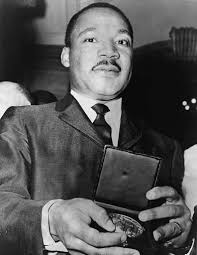
MLK Keynote Speech 2025
Rev. Douglas Taylor
host by the MLK Commission of Broome County
Monday, January 20, 2025 at 6:00pm
at the Salvation Temple Church, 80 Main Street
When I was here last year, participating in the service, I shared a small anecdote about my personal connection to one of Dr. King’s early speeches. My mother’s father, Ashley Walter Strong served the as a leader in Old Stone Universalist Church in Schuyler Lake, NY. Grandpa Strong served as Moderator and then President of the New York State Convention of Universalists in the mid 1950’s. It was in that role that he met the Rev. Dr. Martin Luther King Jr. In 1956 the meeting in Cortland and Dr. King was the featured speaker; as moderator it was my grandfather’s responsibility to introduce him.
By this time, young Dr. King had successfully navigated the Montgomery bus boycott resulting in a U.S. district court decision that segregation of municipal buses is unconstitutional.
(Although the official Supreme Court decision upholding the lower court decision was still a few months away.) Dr. King had been arrested once by this time; (although the first bomb would not appear on his front porch for another six months.) The summer of 1956 was before Dr. King and his wife traveled to India to study Mahatma Gandhi’s policies of nonviolence. It was before James Meredith tried to enroll at the University of Mississippi, before King was jailed in Birmingham where he wrote his stirring Letter from the Birmingham Jail, before the 1963 “I Have a Dream” speech during the march on Washington. This was before King visited West Berlin, before he met with the Pope in Rome, before he was awarded the Nobel Peace Prize. This was before Malcolm X was murdered, before the march from Selma to Montgomery. It was before President Johnson signed the voting rights bill, before the 1967 riots in Detroit and in Newark and in Jackson Mississippi. It was almost twelve years before Martin Luther King was shot by James Earl Ray in Memphis.
My grandfather stood at the lectern to introduce Dr. King to the 1956 State Convention delegates and attendees and had no way of knowing what would unfold over the next dozen years for that man or for the nation. He knew about King’s education and vocation; he knew about the bus boycott and the scope of the issues King and others were trying to address. My grandfather knew these were issues that he and the other Universalists there were deeply concerned about. He could sense the fire and the passion in this man.
I have tried to imagine myself in my grandfather’s position. The Universalist, if you are unfamiliar, are a people of God’s love. Love has long been our central value, guiding our faith. Standing before a gathering of northern white religious people concerned for issues of racial injustice, introducing Dr. King.
When I asked my mother about it, she was 16 years old at the time, she wrote this to me:
I know he was so proud of being able to introduce Dr. King. Knowing Dad, I would say that he stood in the same spiritual awe as I did. Dad had a deep respect for the integrity and convictions [of] Dr. King. We were all so proud of being Universalists that day.
I’ve been thinking about the experience of white allies in the Civil Rights movement and anti-racism efforts beyond. I’ve been thinking about the message Dr. King preached to engage white people in the effort for desegregation and racial equality. Because the vision Dr. King put forth was of a multi-racial, multi-cultural Beloved Community, and that is not a message only for Black people. King was talking to white people as well.
Early in my own ministry, I began preaching an MLK sermon on the Sunday before the national holiday. I have preached such a sermon nearly every year in my congregation these past twenty years. I often preach specifically about King and his message, although some years I focus on racism through the work of Michelle Alexander or Ta-Nahisi Coates, and sometimes I just preach about democracy with a few references to King. But my congregation has come to understand that I will be sharing King’s message and vision with them each year; and more – they have come to understand that King’s message is for them.
I strive to bring King’s message and vision to my predominantly white congregation, to encourage them – not that most of them need this encouragement – to heed his vision as applicable to them. The vision King offered the nation was a powerful vision calling us to move forward by staying true to the fundamental statements of who we are and who we have been as a country since our inception. King cast a vision of the beloved community united to defeat racism, united to defeat economic inequality, united to defeat the great sin of war.
It is interesting to note that nowadays we try to tame King’s message by saying only it is a message about racism. We try to contain it into a narrow concept consumable only as a nice story of something that happened once upon a time for black people. But the message cannot be so contained and ignored because King’s vision was not simply a vision of voting rights and desegregation. The message cannot be contained because the vision cannot be contained. King’s vision was of the beloved community and it included all God’s children.
King’s vision was as much about peace as he spoke out against the Vietnam War. His vision was as much about economic opportunity as he spoke in support of striking workers. King’s vision was not for some people during some time now past. His vision was for the nation to rise up and live out the true meaning of its creed, that all people are created equal. King’s vision was less about desegregation for blacks and more about stirring the rest of the nation to wake up to the injustices that were being experienced by the least of these in our midst.
The 1956 sermon King delivered to the Universalists is not my only connection to King. Ten years later, in 1966, Dr. King spoke to a larger convention, the General Assembly of Unitarian Universalists delivering the distinguished Ware Lecture.
Over the years the Ware Lecture has been delivered by Jane Addams, Howard Thurman, Linus Pauling, Helen Caldicott, Krista Tippett, Van Jones, Eboo Patel, and Cornell West. It is an impressive list. In 1966, the speaker was the Reverend Dr. Martin Luther King, Jr. and his title of his talk was “Don’t Sleep Through the Revolution.” Dr. King was invited to speak to the gathered Unitarian Universalists, a predominantly white faith tradition, and the message he chose to bring us was to wake up!
Dr. King began his speech to us with the story of Rip van Winkle. In case the tale has fallen out of fashion; briefly, it is a short story by Washington Irving about a man who falls asleep up in the Catskill mountains for 20 years. Most cogently, he falls asleep while King George the third of England rules the land and wakes to find President George Washington in charge. Rip van Winkle slept through a revolution.
In drawing the parallel, King said to us,
“One of the great misfortunes of history is that all too many individuals and institutions find themselves in a great period of change and yet fail to achieve the new attitudes and outlooks that the new situation demands. There is nothing more tragic than to sleep through a revolution.” (MLK Don’t Sleep Through the Revolution)
He then goes on to describe the demands of “the new situation” as well as what he means by “the new attitudes and outlooks” needed to face it.
He talked about the shift underway in how racism is experienced in America after the Civil Rights and Voting Rights Acts were signed into law. He talked about the ongoing pervasive attitude of racial superiority (or ‘white supremacy’ as we might say today.) He told us about the ongoing threats of violence and annihilation. Dr. King warned us about the apathy of the church, the tragic sin of standing by while people were oppressed and degraded. He warned us against sleeping through the revolution.
And frankly, in all fairness, we Unitarian Universalists – like many good white liberals – we did fall asleep after we experienced an internal implosion over racial issues just a few years after King spoke with us. As a religious movement, we pretty much stopped talking about race through the 70’s and 80’s and much of the 90’s. Now, that’s a broad and un-nuanced way of putting it, but it is largely true.
But a new day has arrived. The current generation faces much the same adversity folks faced the 60’s. There are remarkable similarities. There is an upswell in calls for civil rights and justice for marginalized identities. Young people are riled up and the older generation doesn’t quite understand why. Back in the ‘60’s, Dr. King would often cite three evils for us to deal with as a nation: racism, economic exploitation, and militarism. Are we not still facing these three evils today?
So, in 1966, Dr. King said, “all too many individuals and institutions find themselves in a great period of change and yet fail to achieve the new attitudes and outlooks that the new situation demands.” And the great period of change he referred to then is strikingly similar to the great period of change we are now in today. We can add a few problems and difficulties that were not in play back then. Healthcare, for example, was not a ‘for-profit’ endeavor back then; we invented that problem in the 70’s. And the climate crisis has grown dramatically worse since King’s time. The need for human rights and civil rights for other marginalized groups has expanded, but echoes the work King and others had done in their time.
Many people who were deeply involved in the hard work of justice-making in the 60’s may be rightly disheartened that we find ourselves in so similar a situation today. But I tell you the fires have not died and there are workers in the field today building toward a better world, where justice will roll down like waters and peace like a mighty stream.
Dr. King told that gathering of white religious liberals in 1966 that we would need new attitudes and outlooks to address the situation. As you might suspect, the new attitudes and outlooks he called for over 50 years ago – I’m going to tell you are applicable today. Indeed the ‘new’ attitudes and outlooks he called for back then, while radical, were not really new in the 60’s.
There were two particular ideas, theological ideas, that he mentioned in his speech to the Unitarian Universalists as the attitudes and outlooks needed for those times.
The first in the mindset of interconnectedness as a perspective of renewal. In the 1966 Ware Lecture he said it like this: “All life is inter-related, and somehow we are all tied together. For some strange reason I can never be what I ought to be until you are what you ought to be, and you can never be what you ought to be until I am what I ought to be.” In other speeches he talked about it as a “network of mutuality, a single garment of destiny,” in which we are all caught up together; and how “injustice anywhere is a threat to justice everywhere.” It’s all inter-related. This theological premise that we are interconnected led King and it leads us today into the work of justice.
It becomes important to be in relationship with the poor and oppressed, that you understand the condition of the disenfranchised and dispossessed. Dr. King said “True compassion is more than flinging a coin to a beggar; it comes to see that an edifice which produces beggars needs restructuring.” I am suggesting our interconnectedness calls us to have relationships with people who are vulnerable and suffering today.
The second theological perspective he mentioned is that of the Beloved Community. Dr. King kept the vision of a Beloved Community fresh in the people’s minds, as a beacon toward which we were striving. The whole underpinning of the I Have a Dream speech is that the ‘dream’ was really a social vision of the Beloved Community.
The dream is the goal. And here is the trick. This is what King came to say to the Unitarian Universalist back in in 1966. To achieve the dream, good people like me and other progressive white liberals need to first wake up and stay awake through the revolution.
What are we going to do? What are you willing to do? It is all inter-related and our goal is nothing less than Beloved Community. What are we going to do?
In the speech he gave to the Unitarian Universalists Dr. King quoted Victor Hugo who had once said there is nothing more powerful in all the world than an idea whose time has come. I would cautiously suggest that time is cyclical and the time has come again for the grand ideas of freedom and justice in our country. And it is the church that needs to herald these ideas, it is the church that must wake up and shout such things in the highways and byways of our nation.
In his 1967 book, Where Do We Go From Here: Chaos or Community? King wrote:
“The church has an opportunity and a duty to lift up its voice like a trumpet and declare unto the people the immorality of segregation. It must affirm that every human life is a reflection of divinity, and that every act of injustice mars and defaces the image of God in man.”
This is the call for religion to recognize its role in ushering in a solution to national problems.
In his Letter from the Birmingham Jail he wrote that the church had been behaving like a thermometer of culture when it used to be like a thermostat! During Dr. King’s time, the church had an opportunity and a duty to lift up its voice like a trumpet and declare unto the people the immorality of racism. Churches did so then and need to do so now. Will we? He called on churches to be champions once more for the poor, to cry out against the sin of economic inequality. Will we? King called on churches to raise their voices against the oppressive machinery of war and destruction. Will we?
The message of Dr. King was not contained as only a message against racism. He spoke out against the triple threat of racism, militarism and economic disparity. A key demand in his I Have a Dream speech, for example, was for “a national minimum wage act that will give all Americans a decent standard of living.” (A line that often gets missed!)
Dr. King was killed while supporting striking sanitation workers in Memphis, TN who were struggling for a living wage and for their dignity. Dr. King said,
“There is nothing but a lack of social vision to prevent us from paying an adequate wage to every American worker whether a hospital worker, laundry worker, maid, or day laborer.”
Dr. King’s vision still serves for our current situation, as there are still parts of that vision we have not realized. We can yet work against racism. We still can take part in speaking out against endless war. There is still more to do, right here in downtown Binghamton to change systems and support individuals struggling with poverty and economic inequality. Dr. King shared with us the dream but to achieve the dream we must first wake up.
To achieve the dream of economic equality, we must wake up enough to recognize that nearly 40 million people in American living in poverty is unacceptable and that we can do something about it. To achieve the dream of a day when “little black boys and black girls will be able to join hands with little white boys and white girls as sisters and brothers,” we need to first wake up to the fact that we have more than 11 million children living in poverty in this country, which is unacceptable and something we can address if we wanted to address it.
To achieve the dream of a day when increasing our teachers’ take-home pay will triumph over tax-breaks for tycoons; when providing for the poor pulls rank over putting them in prison; when we adjust our attitude as a society about the possibility of putting people of color into positions of power … then we must first wake up to the myth of meritocracy and the insidious reality of white supremacy culture.
I share the dream of a day when we put our great wisdom and wealth to work feeding the hungry, housing the homeless, and caring for the sick. I share the dream of a day when our nation is once more recognized as the leader of the free world not by of the magnitude of our military but by the capacity of our compassion. I share the dream of a day when we wake up and realize that before we can be a great nation, we must first be a good nation. We all have a role in bringing that Dream to fruition. It is time for us to again wake up and join the work of building the Beloved Community for today.
In a world without end,
May it be so.
 Rev. Douglas Taylor