
The Substance of Things Hoped For

The Substance of Things Hoped For
Rev. Douglas Taylor
2-23-25
“I believe in the sun even when it is not shining,” our choir sings. “I believe in love even when I don’t feel it.” This phrase, repeats over and over. And “I believe in God,” they offer at the end, “even when God is silent.” This piece was composed roughly 10 years ago by Mark Miller, and was added to the Whitbourne choral work about Anne Frank life as an uplifting coda to the emotional performance. https://www.youtube.com/watch?v=PT-VdH2lwZk&ab_channel=maestroz25
The text which serves as the basis for the lyrics of this choral work comes from an inscription on the wall of a cellar in Cologne, Germany where a number of Jews hid themselves during World War II. Composer Mark Miller said he wrote the musical arrangement during a troubling time in his life.
“I was feeling down about a few things in my life and in the country [… the] government, being black, being gay…when I discovered the words again. […] And I decided, I’m still going to believe in love. I sat down at the piano, and five minutes later, it just came.” https://morristowngreen.com/2014/03/02/bold-choices-define-harmoniums-anne-frank-tribute-in-morristown/
My sermon title is from that well-known passage in scripture from Hebrews, “Faith is the substance of things hoped for, the evidence of things not seen.” (Hebrews 11:1) I believe in the sun even when it’s not shining. There is a lot going on in our world and in our hearts that is not good. And faith calls us to believe in love, even when we do not feel it.
I want to pause and step back from the poetry and dig into what this means. First, I’ll remind us that faith and belief are two different things. Poetry is important and we all understand what the line is saying. But I’m parsing it out to lift up a point about how we can understand faith in a Unitarian Universalism perspective.
Faith is a form of trusting, a confidence in life or in God or in yourself. Saying ‘I believe in God’ can translate as ‘I have faith in, trust in, a reliance upon, God.’ And saying “I believe in God’ can translate as ‘I believe God exists.’ And the second interpretation is more etymologically accurate, while the first interpretation is more common in our vernacular use – certainly in the way the song is offering.
Christian theologian and ethicist H. Richard Niebuhr put it this way: “The belief that something exists is an experience of a wholly different order from the experience of reliance on it.” This song is about the reliance upon the sun, love, and God. It is a song about faith.
In his classic book Stages of Faith, James Fowler writes about the human development of faith as something separate from beliefs and a person’s religious tradition. Fowler writes about faith as an ongoing journey of deepening and maturing. The opening pages of his book ask questions like:
What commands and receives your best time, your best energy? What power or powers do you rely on and trust? To what or whom are you committed in life?
From this perspective we can talk about faith not as a set of beliefs but as the way we live a life. We can talk about faith as what we trust, what we rely upon. And it is important to notice the context of how faith shows up. It is not when the sun is shining, but when it is not shining. Faith shows up when we have trouble and pain, when things are broken or messy or in chaos.
I remember watching my mom while I was growing up in the church. Churches are always messy, busy, slightly chaotic places when things are going well. Some people would respond with much anxiety and running around. There would be always several things up in the air and none of them were going as planned, or at least they were demanding the full attention of several people who could not give their full attention. I’m sure many of you know what that can be like because that happens here in our congregation as well.
Anyway, while I was a youth, my mother, who was the Director of Religious Education for many years and then Minister of Religious Education for a few more years, she would remain calm in midst of all this and just continue to do the next thing that needed to be done. She was a walking example of the axiom: this too shall pass. I’m not sure I would have used these words then to describe what I was seeing; but now I can tell you, I learned a great deal about faith watching my mother move through church chaos with such calm. She trusted that we would get done those things that needed to get done; and whatever we didn’t get done, well, we would figure that out when we got there.
In the face of recurring struggle and trouble, my mother’s leadership style did not rely on frantic panic or reactive posturing. She kept calm, did the next right thing, and trusted that we would get where we needed to be in good time. Even when it was hard.
Buddhist writer Sharon Salzberg says “Faith is about opening up and making room for even the most painful experiences.” She says one of the meanings of the Pali word translated as ‘faith’ is hospitality. And Lea Morris sings: You gotta keep your heart wide open. Though these wave wanna push you around.
The part where your heart stays open is faith. Finding your way back to solid ground will come, but first, be open.
If I could be willing to make room (Salzberg continues) for my aching numbness, and the river of grief it covered, allowing it, even trusting it, I would be acting in faith. Perhaps this is how suffering leads to faith. – Sharon Salzberg
Til your faith brings you back to solid ground. Faith is not the solid ground. Faith is the openness while you are out in the storm. Faith is not the solid ground, but it will travel with you back to the solid ground.
Brene Brown said it like this:
I thought faith would say, “I will take away the pain and the discomfort.” But what it ended up saying is “I will sit with you in it.”
When you turn and face the struggle with an open heart, it is an act of faith. Admittedly, this is not a guarantee. That’s part of how it is an act of faith. But remember what James Baldwin once wrote:
Not everything that is faced can be changed, but nothing can be changed until it is faced.
Keep you heart wide open. Even when the sun is not shining. Even when the evidence to date does not support your conclusion that something good can still come. Even when the God you love has been silent. Even when the struggle is all you can experience at the moment: the struggle and the suffering and the cruelty and the hate. Even when, even when you don’t feel it, you can still believe in love.
I uncovered a powerful story about the lyrics of the choir piece we had this morning; about that inscription found on the wall of a cellar in Cologne. “I believe in the sun even when it’s not shining.”
The small poem has a complicated history and has been at the center of many stories. Sometimes the story says it was scrawled on the wall of a cave outside the Warsaw ghetto, or in a prison at Auschwitz, or at a shelter where some Jews were harbored by Catholics. Sometimes the poet is unknown, sometimes the poet is part of a collection of Jews who survived in hiding, sometimes the poet is a dead girl. Each version of the story adjusts the details a little bit in the telling.
My colleague Everett Howe had a blog “The Humanist Seminarian” which he kept while studying to become a Unitarian Universalist minister. Back in 2017 he wrote a four-part series about this poem – he did a remarkable amount of research. Interestingly, it was a fifth post he made four years later in which he wrote about finally finding the original source of the poem. https://humanistseminarian.com/2021/04/04/i-believe-in-the-sun-part-v-the-source/
Rev. Howe found a 1946 Swiss newspaper which contained the story and the poem in its earliest form. In the article, the reporter talks about visiting an old underground shelter where nine Jewish fugitives had lived for several month.
When I visited the shelter, I had the opportunity to see the emergency housing, fully equipped with a kitchen, bedroom, living room, radio, a small library, and oil lamps — evidence of a stunning experience. Meals could only be prepared at night so as not to attract the Gestapo’s attention, who would have noticed the smoke during the day. Food had to be supplied by friends who willingly gave up a portion of their rations to help those unfortunate people living for weeks in utter darkness.
The following inscription is written on the wall of one of these underground rooms […] “I believe in the sun, though it be dark; I believe in God, though He be silent; I believe in neighborly love, though it be unable to reveal itself.”
This version of the story is more human, I think; more relatable. I believe in the sun even when I must hide. The fugitives had to stay underground to remain safe. The darkness was protection. The darkness was not the problem. In fact, the darkness is part of the action they had taken to be safe. Their faith is not a crying out in powerlessness. It is trusting that they are doing the next right thing to get through the struggle.
Analogously, the line about believing in God even when God is silent can be heard not as an indictment against God’s silence, but as recognition that perhaps God is with them in hiding. That is a stretch, I’m just saying it is possible.
World War II certainly produced many indictments against God from Jewish people – so that line could easily be that. But I note that the line doesn’t say God is absent, or that God has abandoned us; only that God is silent. The atrocity is ongoing around them. The injustice has not been answered yet. The war continues. And God is silent.
And finally, in the third line – the climax of the poem rather than stuck in the middle, our author writes: I believe in Love. And translating from the German, it might be charity or compassion or neighborly love, Rev. Howe points out. Much like the Greek word Agape getting translated as ‘love’ but is best understood to mean a particular form of love.
The fugitives did experience charity or neighborly love from those who helped them remain hidden. I believe in love even when it “must remain hidden,” even when it is “unable to reveal itself.” Rev. Howe suggested a few possible translations to amplify the more likely intention of the original scribe.
Perhaps faith is not asking us to believe in love when there is zero evidence for it. Perhaps faith is asking us to believe in love even when it is hidden or masked, even when the injustice has not yet been answered. And we decide to believe in love anyway.
Yes, the storms are raging, chaos is erupting around us and we struggle to maintain our balance. Yes, evil does prosper. Truth be on ‘the scaffold and upon the thrown be wrong’ But that is not the whole story.
What do you rely upon? Keep faith that you can do the next good thing; that we can keep our hearts wide open through any struggle. Trust that our faith will bring us back to solid ground. And perhaps you also will discover that even in hard times, you still believe in love.
In a world without end,
May it be so.
Spiritually Queer

Spiritually Queer
Rev. Douglas Taylor
2-9-25
Sermon video: https://youtu.be/4M7hXgnhhzI
This is the day to start living your authentic life. If you have not yet already started on the journey – this is the day to leave behind all that blocks you from becoming your true self. Refuse that callous call to hate what you do not understand around you and even within you. This is the day to live as your authentic self.
In her book Black Liturgies, Cole Arthur Riley has a prayer that begins:
God of our truest names,
We confess that too often we have encountered liberation in a person and chosen hatred. We confess our own jealousy at a person capable of living into their true self, when we ourselves are suffocating. We are in bondage to binaries that limit our imaginations for full liberation.
This is my focus this morning. The suffocating binaries we bind ourselves and others into, the cages and boxes we build around the abundant variety that is God and our own true selves – we don’t need those boxes and cages.
Let us encounter the divine (Riley continues in that prayer) … Let us encounter the divine that refuses to be contained by human definition or imagination… Protect those with the courage to stay near to themselves. May their liberation be multiplied in all who encounter it. (from Black Liturgies by Cole Arthur Riley, p10)
She gave this prayer the title “For Trans and Non Binary Lives.” Can we accept that being trans is an act of liberation? That being openly gay or queer in any way can even spill out liberation for others? “May their liberation be multiplied in all who encounter it.” Can we accept that God’s love is not limited by your love.
Last year I was in the big bookstore over in Vestal looking for a copy of Cole Arthur Riley’s Black Liturgies, but could not find it. I had forgotten her last name and so could not rely on the alphabetical shelving system. So, I asked for help. I stopped an employee and described what I was looking. “The author is Arthur Cole or Cole Arthur … something, The book is called Black Liturgies, she’s a queer black woman writing prayers for liberation.” The employee perked up at the description and gave me a glance and asked, “Are you fam?” I smiled and, God help me, I said Yes. I’ll come back to that in a minute.
She brought me down the scripture and devotional aisle to a shelf focused on LGBTQ+. She helped me find my book and suggested a second one as well, House of Our Queer by Bex Mui. I left the store with both books.
Am I fam? Am I part of the family? Am I LGBTQ+? “Is our minister about to come out?” Kinda. I live in this world as a cis-het man – as a cis-gender, heterosexual man – but I am a little bit queer. I will not deny that functionally I am not family. I move through this world as an ally – or at least that is how I aim to be experienced. But I am also a little bit queer. Not queer enough to be targeted or impacted by the hate and legislation, but certainly queer enough to be asked about it and to have it come up regularly. I give off a vibe. And the vibe is not entirely wrong. Am I fam? Technically no, but I love the family and am cool to hang out with fam any time.
You know who was fam? James Baldwin. (Do you remember back in August when I said I would drop a Baldwin Quote every month?) Baldwin was an openly gay black man in a time when being either black or gay could get you killed. (And it still can.) In a collection of posthumously published interviews, Baldwin said:
“The terrors homosexuals go through in this society would not be so great if the society itself did not go through so many terrors which it doesn’t want to admit. The discovery of one’s sexual preference doesn’t have to be a trauma. It’s a trauma because it’s such a traumatized society.”
― James Baldwin, “James Baldwin: The Last Interview and Other Conversations”
There were over 600 anti-trans bills across the country last year. 50 of them passed. According to https://translegislation.com/ a website that tracks such legislation, 2024 was the fifth consecutive record-breaking year for total number of anti-trans bills under consideration in the United States. I am hard pressed to imagine the trajectory changing any time soon given the new administration and their expressed plans to harm trans and non-binary people.
The world around us wants us to be small and scared. Someone else benefits by the divisions and chaos. And some among us choose liberation anyway, some among us choose to live an out-loud love of their authentic selves even in the face of the hurt and hatred poured out upon them.
And liberation is available for all of us to grow into who we truly are. Liberation for ourselves and other. What I ask is simply that we witness to how trans and non-binary and queer people are well aware of this fact, publicly. Witness and learn. And when ready – follow their lead.
As M. Jade Kaiser said in our reading this morning: “In a world that so boringly, so violently, so stubbornly insists on its stale and narrow gender rules and regulations, God Themselves is a state of constant transition.”
We can, instead, choose life. As we see our trans and queer siblings doing every day as a faithful and true expression of faith, can non-trans people also can choose life.
In another essay, “On speaking queerly in public,” Kaiser writes this:
“Train a child up in the way they should go, says the scriptures. And I want them all to go queerly, go freely, go in belonging. I want us to raise a whole generation of kids who never learn to hate themselves. Or to treat others like monsters. Or that there’s anyone even god is against. This is indeed part of my queer agenda: To expose children as early as possible to all the possibilities of their beautiful becoming. To leave no doubt that whichever way their love blossoms and their gender blooms and their body unfurls, they will be protected, cherished, celebrated, loved.”
M. Jade Kaiser declares what I also proclaim: What I want for our trans and queer people is the same thing I want for cis and straight people, for everyone: to be free. To grow, loved. I want each of you here – everyone really (but you’re the ones in front of me at the moment) – I want each of you here to grow into your full authentic selves. Spiritually, personally, communally, politically, sexually.
Politically queer? In our opening words this morning M. Jade Kaiser wrote: “As in strange and proud of us.” Spiritually queer? I have said at times that I am a Buddho-Humanist Christo-Pagan with occasional bouts of mysticism. Don’t give me a box. Religiously queer? I hear from some people that they are religiously trans – as in the were ‘assigned Catholic at birth.’(But don’t use that as an acronym – ACAB means something else.)
I want each of you here to be a little bit queer in every possible way; to break out of the boxes and binaries that do not serve life; to grow free, loved. As Becky Brooks said in the prayer from this morning: “This out-loud love makes no secret of its aim to get you free.”
That is why our congregation is sending the signal in so many ways to say we are a space of welcome and belonging, of protection and inclusion. From the rainbow flags and trans rights banners our front, to the nametag buttons and pronoun conversations inside. And did you know we have 11 toilets in our building, and that all of them are safe for trans or queer people to use. They are safe for cis people to use as well, of course.
Perhaps you don’t connect with all of that. Perhaps you think it is not for you. But it is. We make our space safe for all of us when we make it safe for the most vulnerable. There is much in our world causing hurt and fostering hate – if your gut response is ‘I don’t get it,’ I encourage you to be curious … who benefits from you not getting it?
In that second book I bought last year, House of Our Queer, author Bex Mui (Moo-ee) talks about the blended realities she lives in racially, educationally, sexually, and religiously. In nearly every aspect of her life – the ‘either/or’ kind of choices are false constructs that quickly become unnecessarily constraining. She shares three lessons she learned when she left home for collage.
“People will always try to tell you what you are.
Our identities are complex.
Our lived experiences often don’t show up on the surface.” (p25)
Later in the book she writes this:
“I’m so grateful to be queer, to have had the opportunity to personally define who I want to be in relationships with, and what those relationships look like. I get to determine, outside of norms, who I am and I have found such a fierce chosen family. As scary as it can be to think of branching out beyond your first family, know that there is an abundance of connection to be made in this world, and there is a chosen family waiting to love you, exactly as you are.” (p39-40)
So, I’ll ask: Are you fam? Maybe you are a little bit queer. Maybe we could all be a little bit more queer. Most of us, after all, do not fit in the boxes society provides for us. Our queer and trans siblings have shown people of faith a path toward becoming our authentic selves that we all can follow. Every faith community can learn to be more accepting, more honest, more affirming and authentic.
Are you fam? Allies included – “there is a chosen family waiting to love you, exactly as you are.”
In a world without end,
May it be so.
MLK Keynote Speech 2025
MLK Keynote Speech 2025
Rev. Douglas Taylor
host by the MLK Commission of Broome County
Monday, January 20, 2025 at 6:00pm
at the Salvation Temple Church, 80 Main Street
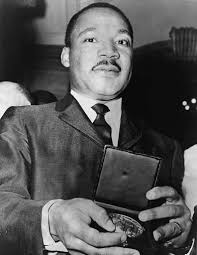
When I was here last year, participating in the service, I shared a small anecdote about my personal connection to one of Dr. King’s early speeches. My mother’s father, Ashley Walter Strong served the as a leader in Old Stone Universalist Church in Schuyler Lake, NY. Grandpa Strong served as Moderator and then President of the New York State Convention of Universalists in the mid 1950’s. It was in that role that he met the Rev. Dr. Martin Luther King Jr. In 1956 the meeting in Cortland and Dr. King was the featured speaker; as moderator it was my grandfather’s responsibility to introduce him.
By this time, young Dr. King had successfully navigated the Montgomery bus boycott resulting in a U.S. district court decision that segregation of municipal buses is unconstitutional.
(Although the official Supreme Court decision upholding the lower court decision was still a few months away.) Dr. King had been arrested once by this time; (although the first bomb would not appear on his front porch for another six months.) The summer of 1956 was before Dr. King and his wife traveled to India to study Mahatma Gandhi’s policies of nonviolence. It was before James Meredith tried to enroll at the University of Mississippi, before King was jailed in Birmingham where he wrote his stirring Letter from the Birmingham Jail, before the 1963 “I Have a Dream” speech during the march on Washington. This was before King visited West Berlin, before he met with the Pope in Rome, before he was awarded the Nobel Peace Prize. This was before Malcolm X was murdered, before the march from Selma to Montgomery. It was before President Johnson signed the voting rights bill, before the 1967 riots in Detroit and in Newark and in Jackson Mississippi. It was almost twelve years before Martin Luther King was shot by James Earl Ray in Memphis.
My grandfather stood at the lectern to introduce Dr. King to the 1956 State Convention delegates and attendees and had no way of knowing what would unfold over the next dozen years for that man or for the nation. He knew about King’s education and vocation; he knew about the bus boycott and the scope of the issues King and others were trying to address. My grandfather knew these were issues that he and the other Universalists there were deeply concerned about. He could sense the fire and the passion in this man.
I have tried to imagine myself in my grandfather’s position. The Universalist, if you are unfamiliar, are a people of God’s love. Love has long been our central value, guiding our faith. Standing before a gathering of northern white religious people concerned for issues of racial injustice, introducing Dr. King.
When I asked my mother about it, she was 16 years old at the time, she wrote this to me:
I know he was so proud of being able to introduce Dr. King. Knowing Dad, I would say that he stood in the same spiritual awe as I did. Dad had a deep respect for the integrity and convictions [of] Dr. King. We were all so proud of being Universalists that day.
I’ve been thinking about the experience of white allies in the Civil Rights movement and anti-racism efforts beyond. I’ve been thinking about the message Dr. King preached to engage white people in the effort for desegregation and racial equality. Because the vision Dr. King put forth was of a multi-racial, multi-cultural Beloved Community, and that is not a message only for Black people. King was talking to white people as well.
Early in my own ministry, I began preaching an MLK sermon on the Sunday before the national holiday. I have preached such a sermon nearly every year in my congregation these past twenty years. I often preach specifically about King and his message, although some years I focus on racism through the work of Michelle Alexander or Ta-Nahisi Coates, and sometimes I just preach about democracy with a few references to King. But my congregation has come to understand that I will be sharing King’s message and vision with them each year; and more – they have come to understand that King’s message is for them.
I strive to bring King’s message and vision to my predominantly white congregation, to encourage them – not that most of them need this encouragement – to heed his vision as applicable to them. The vision King offered the nation was a powerful vision calling us to move forward by staying true to the fundamental statements of who we are and who we have been as a country since our inception. King cast a vision of the beloved community united to defeat racism, united to defeat economic inequality, united to defeat the great sin of war.
It is interesting to note that nowadays we try to tame King’s message by saying only it is a message about racism. We try to contain it into a narrow concept consumable only as a nice story of something that happened once upon a time for black people. But the message cannot be so contained and ignored because King’s vision was not simply a vision of voting rights and desegregation. The message cannot be contained because the vision cannot be contained. King’s vision was of the beloved community and it included all God’s children.
King’s vision was as much about peace as he spoke out against the Vietnam War. His vision was as much about economic opportunity as he spoke in support of striking workers. King’s vision was not for some people during some time now past. His vision was for the nation to rise up and live out the true meaning of its creed, that all people are created equal. King’s vision was less about desegregation for blacks and more about stirring the rest of the nation to wake up to the injustices that were being experienced by the least of these in our midst.
The 1956 sermon King delivered to the Universalists is not my only connection to King. Ten years later, in 1966, Dr. King spoke to a larger convention, the General Assembly of Unitarian Universalists delivering the distinguished Ware Lecture.
Over the years the Ware Lecture has been delivered by Jane Addams, Howard Thurman, Linus Pauling, Helen Caldicott, Krista Tippett, Van Jones, Eboo Patel, and Cornell West. It is an impressive list. In 1966, the speaker was the Reverend Dr. Martin Luther King, Jr. and his title of his talk was “Don’t Sleep Through the Revolution.” Dr. King was invited to speak to the gathered Unitarian Universalists, a predominantly white faith tradition, and the message he chose to bring us was to wake up!
Dr. King began his speech to us with the story of Rip van Winkle. In case the tale has fallen out of fashion; briefly, it is a short story by Washington Irving about a man who falls asleep up in the Catskill mountains for 20 years. Most cogently, he falls asleep while King George the third of England rules the land and wakes to find President George Washington in charge. Rip van Winkle slept through a revolution.
In drawing the parallel, King said to us,
“One of the great misfortunes of history is that all too many individuals and institutions find themselves in a great period of change and yet fail to achieve the new attitudes and outlooks that the new situation demands. There is nothing more tragic than to sleep through a revolution.” (MLK Don’t Sleep Through the Revolution)
He then goes on to describe the demands of “the new situation” as well as what he means by “the new attitudes and outlooks” needed to face it.
He talked about the shift underway in how racism is experienced in America after the Civil Rights and Voting Rights Acts were signed into law. He talked about the ongoing pervasive attitude of racial superiority (or ‘white supremacy’ as we might say today.) He told us about the ongoing threats of violence and annihilation. Dr. King warned us about the apathy of the church, the tragic sin of standing by while people were oppressed and degraded. He warned us against sleeping through the revolution.
And frankly, in all fairness, we Unitarian Universalists – like many good white liberals – we did fall asleep after we experienced an internal implosion over racial issues just a few years after King spoke with us. As a religious movement, we pretty much stopped talking about race through the 70’s and 80’s and much of the 90’s. Now, that’s a broad and un-nuanced way of putting it, but it is largely true.
But a new day has arrived. The current generation faces much the same adversity folks faced the 60’s. There are remarkable similarities. There is an upswell in calls for civil rights and justice for marginalized identities. Young people are riled up and the older generation doesn’t quite understand why. Back in the ‘60’s, Dr. King would often cite three evils for us to deal with as a nation: racism, economic exploitation, and militarism. Are we not still facing these three evils today?
So, in 1966, Dr. King said, “all too many individuals and institutions find themselves in a great period of change and yet fail to achieve the new attitudes and outlooks that the new situation demands.” And the great period of change he referred to then is strikingly similar to the great period of change we are now in today. We can add a few problems and difficulties that were not in play back then. Healthcare, for example, was not a ‘for-profit’ endeavor back then; we invented that problem in the 70’s. And the climate crisis has grown dramatically worse since King’s time. The need for human rights and civil rights for other marginalized groups has expanded, but echoes the work King and others had done in their time.
Many people who were deeply involved in the hard work of justice-making in the 60’s may be rightly disheartened that we find ourselves in so similar a situation today. But I tell you the fires have not died and there are workers in the field today building toward a better world, where justice will roll down like waters and peace like a mighty stream.
Dr. King told that gathering of white religious liberals in 1966 that we would need new attitudes and outlooks to address the situation. As you might suspect, the new attitudes and outlooks he called for over 50 years ago – I’m going to tell you are applicable today. Indeed the ‘new’ attitudes and outlooks he called for back then, while radical, were not really new in the 60’s.
There were two particular ideas, theological ideas, that he mentioned in his speech to the Unitarian Universalists as the attitudes and outlooks needed for those times.
The first in the mindset of interconnectedness as a perspective of renewal. In the 1966 Ware Lecture he said it like this: “All life is inter-related, and somehow we are all tied together. For some strange reason I can never be what I ought to be until you are what you ought to be, and you can never be what you ought to be until I am what I ought to be.” In other speeches he talked about it as a “network of mutuality, a single garment of destiny,” in which we are all caught up together; and how “injustice anywhere is a threat to justice everywhere.” It’s all inter-related. This theological premise that we are interconnected led King and it leads us today into the work of justice.
It becomes important to be in relationship with the poor and oppressed, that you understand the condition of the disenfranchised and dispossessed. Dr. King said “True compassion is more than flinging a coin to a beggar; it comes to see that an edifice which produces beggars needs restructuring.” I am suggesting our interconnectedness calls us to have relationships with people who are vulnerable and suffering today.
The second theological perspective he mentioned is that of the Beloved Community. Dr. King kept the vision of a Beloved Community fresh in the people’s minds, as a beacon toward which we were striving. The whole underpinning of the I Have a Dream speech is that the ‘dream’ was really a social vision of the Beloved Community.
The dream is the goal. And here is the trick. This is what King came to say to the Unitarian Universalist back in in 1966. To achieve the dream, good people like me and other progressive white liberals need to first wake up and stay awake through the revolution.
What are we going to do? What are you willing to do? It is all inter-related and our goal is nothing less than Beloved Community. What are we going to do?
In the speech he gave to the Unitarian Universalists Dr. King quoted Victor Hugo who had once said there is nothing more powerful in all the world than an idea whose time has come. I would cautiously suggest that time is cyclical and the time has come again for the grand ideas of freedom and justice in our country. And it is the church that needs to herald these ideas, it is the church that must wake up and shout such things in the highways and byways of our nation.
In his 1967 book, Where Do We Go From Here: Chaos or Community? King wrote:
“The church has an opportunity and a duty to lift up its voice like a trumpet and declare unto the people the immorality of segregation. It must affirm that every human life is a reflection of divinity, and that every act of injustice mars and defaces the image of God in man.”
This is the call for religion to recognize its role in ushering in a solution to national problems.
In his Letter from the Birmingham Jail he wrote that the church had been behaving like a thermometer of culture when it used to be like a thermostat! During Dr. King’s time, the church had an opportunity and a duty to lift up its voice like a trumpet and declare unto the people the immorality of racism. Churches did so then and need to do so now. Will we? He called on churches to be champions once more for the poor, to cry out against the sin of economic inequality. Will we? King called on churches to raise their voices against the oppressive machinery of war and destruction. Will we?
The message of Dr. King was not contained as only a message against racism. He spoke out against the triple threat of racism, militarism and economic disparity. A key demand in his I Have a Dream speech, for example, was for “a national minimum wage act that will give all Americans a decent standard of living.” (A line that often gets missed!)
Dr. King was killed while supporting striking sanitation workers in Memphis, TN who were struggling for a living wage and for their dignity. Dr. King said,
“There is nothing but a lack of social vision to prevent us from paying an adequate wage to every American worker whether a hospital worker, laundry worker, maid, or day laborer.”
Dr. King’s vision still serves for our current situation, as there are still parts of that vision we have not realized. We can yet work against racism. We still can take part in speaking out against endless war. There is still more to do, right here in downtown Binghamton to change systems and support individuals struggling with poverty and economic inequality. Dr. King shared with us the dream but to achieve the dream we must first wake up.
To achieve the dream of economic equality, we must wake up enough to recognize that nearly 40 million people in American living in poverty is unacceptable and that we can do something about it. To achieve the dream of a day when “little black boys and black girls will be able to join hands with little white boys and white girls as sisters and brothers,” we need to first wake up to the fact that we have more than 11 million children living in poverty in this country, which is unacceptable and something we can address if we wanted to address it.
To achieve the dream of a day when increasing our teachers’ take-home pay will triumph over tax-breaks for tycoons; when providing for the poor pulls rank over putting them in prison; when we adjust our attitude as a society about the possibility of putting people of color into positions of power … then we must first wake up to the myth of meritocracy and the insidious reality of white supremacy culture.
I share the dream of a day when we put our great wisdom and wealth to work feeding the hungry, housing the homeless, and caring for the sick. I share the dream of a day when our nation is once more recognized as the leader of the free world not by of the magnitude of our military but by the capacity of our compassion. I share the dream of a day when we wake up and realize that before we can be a great nation, we must first be a good nation. We all have a role in bringing that Dream to fruition. It is time for us to again wake up and join the work of building the Beloved Community for today.
In a world without end,
May it be so.
Martin and Malcolm in America
Martin and Malcolm in America
Rev. Douglas Taylor
1-19-25
Sermon Video: https://youtu.be/pjYecyTMKL4
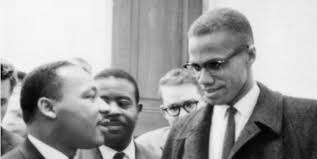
James Baldwin wrote an incisive article for Esquire magazine in 1972 about his relationships with both Martin Luther King Jr. and Malcolm X. Baldwin had the unique position of being a contemporary colleague of both men. Four years after Martin’s assassination and seven years after Malcom’s, Balwin wrote,
“Malcolm and Martin, beginning at what seemed to be very different points … and espousing, or expressing, very different philosophies, found that their common situation so thoroughly devastated what had seemed to be mutually exclusive points of view that by the time each met his death there was practically no difference between them.”
It is commonly accepted in many circles even to this day, the romantic cliche that Martin was the peaceful, inspiring one working tirelessly for integration while Malcolm was the scary, dangerous one fighting for black empowerment. They are held up as dissonant icons of the ‘60’s; two paths, two opposing options people could choose between. Peniel Joseph’s book title The Sword and the Shield acknowledges this mythic perception of these two historic men. “Self-defense vs. nonviolence,” we can read on the jacket cover, “black power vs. civil rights, the sword vs. the shield”
The truth, I hope you are not surprised, is more nuanced and complimentary. Indeed, over the years I have found myself draw more to the radical work of King in his later years. And if Baldwin’s analysis is on target, we who love the radical aspects of King, have much to appreciate in the later years of Malcolm X as well.
The Soul Matters theme of the month for January is ‘story.’ I think it is fitting for us to grapple with the stories we have been fed about these two men, and the impact of these stories on how we respond to situations of racism and economic injustice today.
Part of the story is simply historical record.
Martin Luther King Jr. was born in Atlanta into a preacher’s family. He experienced southern segregation and racism growing up, but also the protective strength of the black church. He attended Morehouse college, Crozier Theological Seminary, and Boston University for his doctorate. At the age of 25 he was called to serve the Dexter Avenue Baptist Church in Montgomery Alabama. From there, he became more and more involved and central to the Civil Rights Movement.
Malcolm X, was born in Omaha Nebraska to the Little family, admirers of Marcus Garvey. His father died in a streetcar accident although many suspected it was not an accident. His mother was later committed to a state hospital after a nervous breakdown. Malcolm’s adolescent years were spent in foster homes or with other relations. Malcolm was a street hustler and thief. He was arrested for burglary when he was 20. While in prison, he converted to Nation of Islam, changed his last name from “Little” to “X” as was the custom in the Nation of Islam, and once paroled, began climbing the ranks in the religious institution. From there, he became more and more involved and a central spokesman for the Black Power movement.
Both Martin and Malcolm rose to such levels of power and persuasion among people that our government had agents and surveillance on each of them throughout their public careers. Both Martin and Malcolm’s assassinations spurred questions and conspiracies around the official stories offered about the shooters. All of that is about circumstance more than either of their character.
What brought them together is that both Martin and Malcolm had the goal of eradicating racial discrimination and advancing the conditions of Black people in our country and world-wide. They certainly disagreed on the role of violence in the movement – King advocating for Non-Violent Direct Action and Malcolm X strongly supporting armed self-defense. And they did not agree on the ultimate goal of what racial advancement looked like. King was an integrationist, envisioning a multi-racial Beloved Community. Malcolm X was a black nationalist, promoting the superiority of the Black race.
If you were alive back then and remember how things were, you may recall how vilified Malcolm X was. Martin Luther King Jr. was also vilified in certain circles, but the lion’s share of the fearmongering was heaped onto Malcolm X.
It was easier to demonize Malcolm X for two reasons – he was saying some fairly radical and scary things. For example, one talk King gave on Civil Rights was titled “Give Us the Ballot.” Later, when Malcolm X did something similar the title he used was “The Ballot or the Bullet.” Malcom X was provocative, and thus, easier to demonize. The second reason is that King’s impact was built across the racial lines, among white and black people. Malcolm’s impact was among black people who were poor and marginalized. And really, the demonizing I’m talking about is defined by the espeices of the white people at the time, not the black people. Both Martin and Malcolm were considered dangerous by those in power who benefited from the status quo.
There is a lesson here. When we are offered narratives about people that they are scary and dangerous – maybe look a little deeper to uncover the motives feeding those narratives. Fear and division are tools used by oppressive systems to maintain control. It was Malcolm X who said, “If you’re not careful, the newspapers will have you hating the people who are being oppressed, and loving the people who are doing the oppressing.”
Malcolm X’s primary goal was to advance Black dignity. He wanted Black people to be proud of themselves because they were Black. He wanted Black people to walk tall, proud to be Black. James Baldwin once wrote: “It took many years of vomiting up all the filth I’d been taught about myself, and half-believed, before I was able to walk on the earth as though I had a right to be here.” Malcolm wanted to give Black people a world in which they knew they had a right to belong, in which they did not need to shield themselves from the hatred and self-hatred fed to them every day. Malcolm’s fierce critique of white supremacy, his rhetorical sword, was a tool in the service of his passion for Black dignity.
King’s focus was on Black citizenship. He insisted that we must join together in solidarity and make our democracy work for all the people. King wanted Black people to demand their rights, to insist on being granted their due as citizens of the nation. And more, he wanted all people, white and Black, to participate in making our nation realize its promise. I think many of us are more familiar with Dr. King’s motives and his articulation of his goals.
We are certainly more familiar with Martin’s quotes, like, “We are inextricable caught in a network of mutuality;” and, “True peace is not merely the absence of tension; it is the presence of justice.” But Malcolm had the gift of eloquence as well. “We didn’t land on Plymouth Rock, Plymouth Rock landed on us,” he said; and, “You can’t separate peace from freedom because no one can be at peace unless he has his freedom.” Many people will quote Dr. King out of context and turn his words of power into pablum – we don’t get to have that poetry without also taking the pain.
The contemporary Black Lives Matter movement feels like the heir of both the Black Power movement and the Civil Rights Movement blended. The call to say their names, for example, to lift up the individuals who have been killed was a key part of the movement. It is a mark of Black dignity. And the call to assemble and insist on civic change was the main thrust. It is a mark of Black citizenship to declare – these are our streets. We keep us safe.
But it is Malcolm X who is quoted more often by young activists today. The call for Black citizenship is certainly still important to people, but the call for Black dignity is the starting point, without which there is no other work. In his new book Starting Somewhere, local activist and organizer, Roderick Douglass offers a Malcolm X quote in the forward of the book. “There is no better teacher than adversity. Every defeat, every heartbreak, every loss, contains its own seed, its own lesson on how to improve your performance the next time.” Appreciation of Malcolm’s contribution and impact is rising.
As our days unfold before us, it is worth noting that the anger and pain Malcolm spoke to is the same anger and pain many vulnerable people feel today. Martin Luther King Jr.’s vision of Beloved Community with a place for everyone is still our central guide. But there is much we can learn from Malcolm X’s perspective as well. When we make the commitment to live out of Unitarian Universalist values of Justice and Equity and love – then we do well to lean in to that discomfort of other people’s pain and anger. Learning more about Malcolm X, his life, his words and teachings, will help me be more present and a better ally.
Recognizing the blend of Martin and Malcolm in their later years, we can attend not just to the call for peace and justice, but for dignity as well. Recognizing and encouraging the dignity of the poor, the disenfranchised, and the vulnerable is what opens up the possibility of a Beloved Community where we can meet as equals. Martin once said, “A riot is the language of the unheard.” With all that is going on in the world, the suffering and the injustice, we who would be part of the solution must keep our ears and hearts open to what is going on. And we can treat all people with dignity, for that is the starting point for the Beloved Community to become realized in our midst.
In a world without end,
May it be so
Spirit Ablaze

Spirit Ablaze
Rev. Douglas Taylor
12-15-24
Sermon Video: https://youtu.be/tWcWKxFP1ZQ
I recall reading somewhere years ago, but could not put my finger on the quote this week, a small story of a rabbi kissing his spouse and children goodbye earnestly each sabbath before going to lead prayers for the congregation; for who could know what might happen between the moment we invoke the name of the holy and moment immediately following when we offer suitable supplication.
I step into this topic knowing full well I preach unto a community that consists largely of atheists and agnostics; and of those remaining who do believe in God, most do not believe in a God like that. A god of arbitrary smiting and wrath. I know this. Truth be told (and I trust this is not surprising), I don’t believe in a God like that either. And yet I bring this topic before us all the same and will make suitable effort to translate in such a way as I hope will still be edifying to the full range of belief among us.
Here we are, each Sunday. And like that hapless rabbi kissing his family goodbye, I invite the holy each week to abide among us as we worship together.
In her book about prayer, Teaching a Stone to Talk, Annie Dillard frames the question this way:
“Does anyone have the foggiest idea what sort of power we so blithely invoke? Or, as I suspect, does no one believe a word of it? The churches are children playing on the floor with their chemistry sets, mixing up a batch of TNT to kill a Sunday morning. It is madness to wear ladies’ straw hats and velvet hats to church; we should all be wearing crash helmets. Ushers should issue life preservers and signal flares; they should lash us to our pews. For the sleeping god may wake someday and take offense, or the waking god may draw us out to where we can never return.” (Annie Dillard, Teaching a Stone to Talk.)
Do we? Do know what sort of power we so blithely invoke? Annie Dillard is a poet and author; her writing is a blend of naturalism, mysticism, and self-reflection. I discovered her work while in seminary and it had a profound impact on my view of the world. Her theology does not line up perfectly with mine, but there is enough overlap for me to find resonance.
When she cites our audacity to blithely invoke the holy, for example, I don’t quite resonate with the suggestion that an angry father God might strike us all down. But I do find it compelling to read her passionate plea as if to declare – this is real, you know, all this ritual and gathering we do! It’s not just a bit of pomp or fluff. It’s real. I like that part.
I am reminded of a description from Rev. Nancy McDonald Ladd’s book After the Good News that came out just before the pandemic. It is a book about the future of Unitarian Universalism. In it, she writes:
A universalist God for a tragic era is not a gauzy, hymn-singing force of personal devotion that draws us endlessly toward itself, but a fierce and compelling power that grips us by the collar amid our rebellious descent and calls us to choose the will to mutuality all over again, even when that choice is so risky that it could utterly remake us.
And that, my friends, is the risk Dillard is referring to when she suggests we wear crash helmets and issue life jackets in place of orders of service each week. The risk is that the holy we are invoking each week may remake us. We risk actually becoming compassionate toward the vulnerable; we risk acting on those ideals we mention each Sunday.
There is a joke bouncing around social media lately about how some conservative Christian pastors are warning their people against watching the new Wicked movie lest it lure them into evil ways. The tongue-in-cheek response is, “you’re worried about the influence of a 2-hour movie on your parishioner’s morals, yet weekly worship has not made your people more compassionate and Christ-like.”
The risk is we might invoke the holy together and be changed by the encounter. Or I can say – we risk invoking our deepest values and find ourselves compelled to realign our behavior to match our values. Or I can say – we risk inviting God to be with us and discover God accepted the request.
This thing we are doing every Sunday morning, there is some contradiction built into it. As Unitarian Universalists in particular, we are several steps off the beaten path in terms of religion and belief; and yet our Sunday morning practice looks a lot like the usual beaten path! We attract people who are seeking an alternative to organized religion and we jokingly say we are very disorganized – and yet, we are an organized religion. It’s just we have organized around something radically different than what most other religious communities gather around. We gather around values and a promise to be with each other across our differences.
We Unitarian Universalists live in the religious realm of individualism and freedom of conscience; and we carry an abiding distrust of authority. One result of that is the way we compensate and push ourselves to be community-focused, to lean into the concepts of covenant and accountability and liberation. Another result is an undercurrent in which we keep faith at arm’s length. We intellectualize our experiences; we talk about things and learn about things. That is in important aspect of how we create community together.
The trick here is not to stop doing that, but to balance it with more trust. We need to allow ourselves to be impacted and changed by the experiences we create together, by experiences of the holy. Our shared experiences on Sunday morning can be transformative; they can impact our living and our behaviors. We can risk growing and changing, risk being transformed, healed, or as Rev. McDonald Ladd put it – remade.
I am not suggesting we swing wildly into the over-trusting end of this conversation. Dillard offers a deep warning against that as well. She warns us not only against faking it, against being tourists in religion. And she offers a warning for when we take it seriously and we do experience the transformative power of love; that we not lose ourselves in the light we seek. Let me spend a minute in this extreme with you.
Her 1977 book, Holy the Firm, is a thin little text exploring a three-day time span of events on an island in the Puget Sound where she was writing. The crash of a small plane and a seven-year-old girl burned in the accident become a focus for Dillard to talk about beauty and cruelty, faith and suffering, and a moth caught in a candle flame.
It is that last bit that so captivated me when I read the book as part of theology class in seminary. Dillard describes how she would often read by candle light every night. Moths were constantly fluttering around her flame, many suffering the clichéd result.
“One night,” she writes early in the book, “a moth flew into the candle, was caught, burnt dry, and held. I must have been staring at the candle, or maybe I looked up when a shadow crossed my page; at any rate, I saw it all. A golden female moth, a biggish one with a two-inch wingspan, flapped into the fire, dropped her abdomen into the wet wax, stuck, flamed, frazzled, and fried in a second.” (p16)
Dillard goes on to describe the event in vivid detail for several more sentences. Quite poetic, quite horrifying.
After, she writes,
“And then this moth-essence, this spectacular skeleton, began to act as a wick. She kept burning. The wax roses in the moth’s body from her soaking abdomen to her thorax to the jagged hole where her head should be, and widened into flame, a saffron yellow flame that robed her to the ground like any immolating monk. That candle had two wicks, two flames of identical height, side by side.” (p17)
I don’t bring this story to say – don’t succumb to burn-out friends. We can have that message in the workshop immediately after the service today. Instead, the message her is a spiritual warning. When you find the light, when you find your calling, when you are alive and afire with a passion for something life-giving – be mindful of what ese is happening in your life around you as you burn with your passion.
This is a bit like the proverbial question for the dog always chasing cars. What would they do with it if they ever caught one? What would you do if you ever did set your spirit ablaze?
There is a lot going on around us these days, my friends. There are calls for us to step up and live our values out loud, to be visible allies for the vulnerable and the marginalized. And this is not just a call to do justice – it is a call to live our spiritual values together in community.
Much of it will come out as a call to do justice – Who is taking care of our trans siblings? How are the undocumented in our community? Where are unhoused people sleeping tonight? When can we feed the hungry again? A lot of this will sound like a call for justice. But deeper down it is a call to faith, a call to trust that the holy to go with you on the call.
If we gather on Sunday mornings like this, invite the holy to show up, and experience growth and change in ourselves – the spirit will call us into places where we will need our communities around us and … and we will need faith to trust that God is with us in the work. Or, to trust that our values are true.
If we invoke the holy here and feel Love grab us by the collar and utterly remake us – we do well to trust that Love and not try to be our own wick and flame. We must trust Love to travel with us where we are called. To trust God, to trust our values as true, to trust the holy. If you feel a change, a growth, a call – don’t fall for the idea that you must be the moth and burn yourself up in response.
Instead, grab you crash helmet and heed to spirit. Let love be your guide in the days to come. Dare to respond, take a risk to reach out and live your values more boldly, trusting that Love will travel with you as you go. Let love be the burning wick. Your work is show up with that love, and to trust that love will travel with you as you go.
In a world without end
May it be so.
 Rev. Douglas Taylor