
The Colorblind Confusion
The Color Blind Confusion
Rev. Douglas Taylor
February 27, 2022
Sermon video: https://youtu.be/vV708zI9UXc
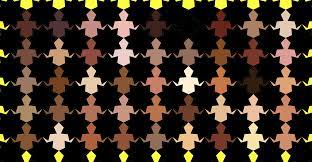
I understand the confusion, the color blind confusion. I do. Being color blind seems like the pinnacle of equality. Surely it is a good quality. Being color blind is about treating all people the same without regard for race or ethnicity. It is to say – I will not treat you differently simply because you have a different skin color than me. Our congregation’s bylaw document has that now-standard non-discrimination clause:
“… the full participation of persons … without regard to actual or perceived race, class, color, culture or national origin, sex, sexual orientation, gender identity or expression, or physical or mental challenge.”
Our Unitarian Universalist principles and values include the call for equity, for treating ALL people with inherent worth and dignity.
It is also one of the tenets of our American legal system that all are equal under the law. It was a central point of the 1960’s civil rights movement – that everyone be treated equally. Dr. King, in his landmark speech, said
“I have a dream that my four little children will one day live in a nation where they will not be judged by the color of their skin but by the content of their character.”
And it almost seems like all this focus on the color of our skin is the problem; wouldn’t it be better if we could all be color blind. King asked us to focus on the content of each other’s character instead of the color of each other’s skin. Even the great Dr. King wants us to all be color blind.
Except … to reach that conclusion, one must ignore the context of that famous quote. One must misunderstand the whole point of the speech and the rally and the moment in history that is the context of that quote by Dr. King.
The problem is that being color blind is a form of ignoring important aspects of a person’s identity and experience. Being color blind claims there are no race-based differences and in so claiming, ignores and refuses to deal with the reality of those differences. Being color blind is to pretend systemic racism does not exist which is essentially to be complacent and complicit with that racism.
What Dr. King was calling for was a change in the system. The context of that amazing quote from Dr. King is that he wanted the nation to pay attention to the problem of racism. He wanted the nation to live out the noble principles in its founding documents rather than keep acting terribly toward black people and other minorities. Fast forward a few decades and people have twisted King’s words into an excuse to pretend everything is equal now.
Pauli Murray was a civil rights activist, author, lawyer, poet, and priest. Her name is credited in our order of service for some of the worship elements. She earned degrees from Harvard, Yale, and Berkley. She came of age during World War I, raised by her maternal grandparents in North Carolina. Thurgood Marshall, when he was still chief counsel of the NAACP, “called Murray’s 1950 book, States’ Laws on Race and color, the “bible of the civil rights movement.” https://en.wikipedia.org/wiki/Pauli_Murray Murray was a co-founder of NOW – the National Organization of Women, a strong influence on Ruth Bader Ginsberg, and many now retroactively credit her with being non-binary and transgender long before such terms were in common use.
Pauli Murray was hugely influential in a multitude of human rights issues over the course of several decades and yet almost no one knows about her. There is a documentary about her life worth watching. Why has she been so forgotten?
Do you remember the landmark Supreme Court case Brown v Board of Education? It was meant to desegregate our schools, to give children access to opportunity without regard to race or color. Did it work? Decades after Brown v Board of education, our public schools are still effectively segregated because our neighborhoods are still effectively segregated. https://www.washingtonpost.com/news/answer-sheet/wp/2014/04/24/how-after-60-years-brown-v-board-of-education-succeeded-and-didnt/ We can successfully predict more about a child’s upward mobility by their zip code than by their SAT score or if their parents read to them each day. It doesn’t take much to uncover the reality of inequality in our country. Why would we pretend there is not a racial component connected to that inequality?
It is necessary to look at what is going on with a critical lens. To challenge ideas that try to ignore real problems. Here is another example, we all know we abolished slavery in our country, right? The Thirteenth Amendment abolished slavery, right? Wrong. I was taught that it did. But when we read the language of the amendment, we find this:
Neither slavery nor involuntary servitude, except as a punishment for crime whereof the party shall have been duly convicted, shall exist within the United States, or any place subject to their jurisdiction.
So, slavery is still permitted in our country under certain conditions. That’s not the same as saying slavery is abolished. Our mass incarceration system is a continuation of slavery. It says that in our constitution. And if we pretend that we are color blind, we’ll completely miss the racist implications of who is filling our prison cells. It is necessary to look at what is going on with a critical lens. To challenge ideas that try to ignore real problems.
These examples, Pauli Murray, Brown v Board of Education, and the 13th Amendment, they lead me to the topic of Critical Race Theory. Critical Race Theory, or CRT, became a hot button issue over the previous year, largely as a form of distraction to stir up a conservative base. A study https://www.mediamatters.org/fox-news/fox-news-obsession-critical-race-theory-numbers showed that Fox News had mentioned Critical Race Theory almost 2,000 times in a 3-month period in the spring of 2021. That breaks down to about 20 times a day for 90 consecutive days.
But with all that hype, most people did not really know what CRT actually was. Simply put, Critical Race Theory legal theory related to constitutional law and other related law issues. More specifically, it states that our societal institutions have had racism baked into how they function. It focuses on the legal aspects of institutional racism. Our criminal justice system, education system, labor market, housing market, and healthcare system are all “laced with racism embedded in laws, regulations, rules, and procedures that lead to differential outcomes by race.” https://www.brookings.edu/blog/fixgov/2021/07/02/why-are-states-banning-critical-race-theory/
Critical Race Theory is a legal concept. It started with legal scholars Derrick Bell, Kimberlé Crenshaw, and others in the 1970’s talking about the need to look critically at our legal system in terms of race.
Are the purportedly race-neutral documents and laws actually race-neutral? Were they ever meant to be? Is their impact such? Do our U.S. laws alleviate or perpetuate racism? Rather than accept the legal stance of race-neutrality at face-value, CRT asks us to think critically about it.
Let’s pause for a minute and notice the big cultural argument about CRT is whether or not it should be taught to our children in our public schools. The sensational claim was that our children were being indoctrinated with CRT, that white kids were being taught to hate themselves. Which is just so wildly inaccurate as to be obvious fear-mongering. And yet, people bought into the fear.
Again, CRT is about legal theory related to constitutional law. CRT per se is not taught in our K-12 public school systems. Not really. But critical thinking is. And the word ‘Critical’ is the key because it is used the same in CRT and when we are talking about ‘critical thinking.’
Our Unitarian Universalist values do indeed call us to treat ALL people with inherent worth and dignity, to promote equity in human relations. And … Our faith calls us to promote justice and liberty and truth. Never forget that one about truth. A key value for us is the free and responsible search for truth and meaning.
When we look at a religious text, we weigh it against our experiences and against reality as we know it. When we read, for example, in the Koran: “The heavens, We have built them with power. And verily, We are expanding it” (51:47); that can sound pretty cool and rather modern. But we also recognize that when the Koran was written, the scientific concept of an expanding universe was not a viable theory yet. But it does provide an opening between our modern scientific understanding of the universe and Islamic faith today.
When we read, for example, in Christian scripture about how Jesus calls Peter the “rock on which I build my church” (Matt 16); yet we know there was no Christian church at that point, we can recognize this as an addition by a later editor – something that evidently happened quite a bit to Christian Scripture as it took shape.
We don’t take such texts at face value. We interpret them through their context. We weigh them based on who the original hearers were, what was the historic situation, did the author have an agenda they were trying to convey?
And Unitarian Universalists promote these same values in the public sphere, not just in our religious explorations. Critical thinking is a value we strive to bring when we are taking in the news and current affairs, not just ancient religious texts.
When presented with the issue of being color blind, for example, we can acknowledge the noble goal of equality; but we are not let off the hook by the ideal. We are drawn to ask:
Who benefits from presenting an issue this way or that way? Does a particular law or practice actually accomplish what it was created to accomplish? Who is included in this version of our community and who is left behind when we pretend to not consider a person’s skin color?
As people of faith, this is important to us. It is important for us to engage in a free and responsible search for truth and meaning. The ‘critical’ part of Critical Race Theory is a key piece of how we engage with the world.
Shifting gears and digging in a little more, the conservative argument against CRT is against an applied version of CRT in our schools. The applied version takes the basic tenets of the theory and applies them to history and education. Central to this, as I’ve already stated, is the idea of institutional racism and white supremacy. The conservative argument goes on to say the implication is that all white people, and white children of course, are taught that they are oppressors while all black people, and black children of course, are taught that they are victims.
I have said before and think it bears repeating – if your anti-racism work centers around making white people feel bad then you’re doing it wrong. I may feel bad, that may still happen; but it’s not the goal. I may feel bad as a white person, as an American, when I learn about the Tulsa race massacre or about the prevalence of lynching – but that’s not the point of the work. The point of the work is for us to grapple with the atrocities so we may be bold in making changes for a better society.
The people banning Critical Race Theory make it sound like the goal is to make all white people feel bad about themselves. That’s simply not true. I believe that is a cipher, a coded way to stir up the conservative base. The real goal of CRT is to fix the structures in our society that continue to disadvantage and harm people of color.
As Unitarian Universalists we are committed to building a more just and beautiful world together. We are committed to not being color blind so much as color celebrating – to celebrating our differences, leaning in to the unique ways we each experience this life. We are committed to grappling with injustices, sifting through discomfort for the sake of a better world together.
In a world without end,
May it be so.
Widening the Circle

Widening the Circle
Rev. Douglas Taylor
February 6, 2022
“This is the world I want to live in.” the poet tells us. Naomi Shihab Nye’s “Gate 4A” is a simple piece relating an encounter, an utterly normal interaction among strangers at an airport gate waiting through a flight delay. Utterly normal, I say – and yet not common enough. Nye describes the world she wants to live in as a place where people are not apprehensive to share cookies together. That doesn’t seem beyond our reach. And yet … This experience of meeting people without walls of suspicion or fear does not come as easy as we would think.
It is a world within our grasp, a possible future of inclusion, of beloved shared reality free of bigotry and division. Nye says it is the world she wants to live in. It is the world I want to live in as well.
It is the world our faith calls us to create together. We Unitarian Universalists have ‘Beloved Community’ threaded through our diverse theologies. We have compassion and inclusion woven into our principles and our mission statements. We say God is Love, and all are welcome, and there is no bar separating us from the holy, and everyone is kin. We know the world does not actually work that way and so we are called to bring more justice, to refuse hate and division, to bind up the broken, to be allies to the downtrodden, to make the Beloved Community a little more true today than it was yesterday.
There is deep history in our chosen name as a faith tradition; but beyond that we can also say as Unitarians, we are one – a unity of who matters in this life. And as Universalists, we are all headed together into the brightness of the coming days. We are one and we are all included. Others draw circles to shut people out and we – we are called to widen the circle.
And even as I say this, even as I declare these lofty statements of our calling, even as we speak of widening the circle, I am sure you have noticed, have felt the opposite happening around us.
This pandemic has shrunk our circles of connection. Many of us lament the circumscribed living we are experiencing. Yes, love demands we care for the health of our community, I am not suggesting we stop being careful. But the reality of this pandemic has curtailed our widening work of late.
We were open and in-person for a few months this fall. But with winter, we again suspended all in person gathering for a time. It is likely we will cycle back open soon, and it is also likely we will at some point again close. We don’t know for certain, but we if we are to keep both our commitment to health and science as well as our commitment to live out our calling, we will need to keep being creative in how we do this. And so our circle of attention has shrunk
This pandemic time has been hard on our social activism, for example. We have not had as many rallies and public events since the pandemic. It is hard to organize a people who can not gather together in person.
It has also been hard for visitors. It has been hard for visitors to get a hand hold among us. We’ve had some staff transitions and we’re not paying attention the way we used to. It is hard to do the welcoming work we used to be pretty good at when we are online.
This has also been difficult for long-term members. Many of our elders and others who have been around a long time to stay connected online. It is a different kind of work to stay connected online. It is hard to feel heard, to feel valued.
Our circle has shrunk. It has been hard to DO things with this pandemic. There has been loss and isolation in this time. It is hard to not feel disheartened by this. It feels like we are not living up to our great calling to widen the circle and our mission as a congregation. And in the face of that, it is hard to not judge our community, my leadership, our faithfulness as a people when we see how we have not been widening the circle lately. So what are we going to do?
Let me tell you a story. I saw a short video recently that got me thinking. In the video, jazz musician Herbie Hancock is talking about an experience he had over 50 years ago when he was playing in the Miles Davis Quintet. The group was playing a set and (Hancock says) at one point he played a chord on the piano, and it was just wrong. It sounded bad. But there they were, live on stage playing a jazz set. He thought he had just ruined the piece, ruined the whole night.
But Miles just paused for a moment, listening, and then played a few notes on the trumpet that rescued the music, fitting the chord into what was happening. Herbie Hancock looks out at us in that video and said, “He played some notes and he made my chord right.” He said it took him years to figure out how Miles had done that. Here’s what he figured out: he said, “I judged what I had played. Miles didn’t. Miles just accepted it as something new.”
He said the gift of a good jazz musician is to take anything that happens and work it into something of value.
A wrong chord is not the end. A wrong chord or a mistake is not the last word on the matter. In religious life we say something similar – “Don’t put a period where God has put a comma.” God is not done with what we are going through. The spirit, the holy is still moving through every situation, even this one we are in the middle of right now.
So, what’s next? There are so many things that can happen next! A mistake, a wrong note, a bad situation, is not the end of the story. Ever!
What’s next? It can feel like this pandemic is like a massive boulder that has landed in our path, in our otherwise clear and perfect path forward! We were chugging along, we had a building renovation, we were hosting a series of interfaith meetings in the community, we were involved in the Black Lives Matter movement, we had some great youth and young adult ministry going on, we were looking to expand our partnership with a community meals program across town, we had plans! And then this boulder landed in our path. Now we have to deal with the boulder in our path. And it seems like dealing with this boulder is all we can do. Yet try as we might, we cannot push this boulder out of our path, we can’t force this pandemic to go away.
What’s next? What notes can we play to make this chord right? I don’t have the answer to that. I am not the Miles Davis of the liberal church. I have been listening and playing what notes I can. I know many of you have been doing so as well! We’re not going to turn it around in an instant the way Miles could. But when we think of the other metaphor – the boulder in our path – maybe we can imagine how we keep trying. We keep working on it. With persistence and imagination, we can find a way. This is not about the response of a few quick notes played in the moment. This is going to take some longer work to deal with this boulder.
So we ask: Can we work with this boulder? Can we build around it? Can we climb atop it to gain perspective? Can we decorate it? Can we learn it’s story? Can we use its strength? Can we incorporate even this boulder into the landscape of our loving?
I am convinced we can still live our mission and our calling with this boulder in our path. And I’ll tell you why.
It’s because we know we are not the only ones who feel like we’ve had a boulder land in their path. We are not alone with this feeling of frustration and isolation. This pandemic has hit us all. And – here’s the important part – this leads us to empathize with the difficulty and suffering of others. Our experience leads us to widen our circle of concern and care. If we will let it. This is how we deal with the boulder; we see it has landed on everyone.
The refugees fleeing Afghanistan’s horrors and seeking an opportunity to live without fear and the threat of violence in our country have experienced this pandemic’s boulder and so much more. We can be part of the community of people offering help to the refugees.
The communal trauma wrought against black lives in our country and the systemic racism haunting and harrowing so many aspects of our society can be overwhelming. We can become allies and anti-racists together to witness for a better way forward for people of color in our country and for us all.
The countless people living one medical emergency away from bankruptcy in our country and all those who have already suffered that particular injustice are drowning. We can step up as advocates for a more just and fair medical insurance system. And we can partner with those seeking to directly support people suffering in this way right now.
Homelessness and hunger are real problems in our county. Antisemitism is alive even locally. Hate crimes and violence against women, against our LGBTQ siblings, and against so many others need to be countered with messages and actions of love and acceptance and justice. We are well positioned to offer those messages and those actions because that is our calling and our mission as a faith.
He drew a circle that shut me out-
Heretic, rebel, a thing to flout.
But love and I had the wit to win:
We drew a circle and took him In!
-Edwin Markham
We are called to widen every circle we are in; to reach for those on the margin and draw them into the center. I get it that doing that is hard right now. I get it that this pandemic has shrunk our circle rather then widen it. But that is not the last note of the song, that is not the end of the story. Yes, we have a boulder in our path. But we can pause and listen to the chord that sounds wrong, hear the discord and respond.
Friends, I offer you these stirring words and miss having you all here in the sanctuary with me. Consider the impact you’ve felt being excluded from this sanctuary over these past few weeks, and before during the early part of the pandemic in 2020. You didn’t play a bad chord and yet still you are impacted by circumstance. This sanctuary has been closed to you. This small example of exclusion we are experiencing leads us to empathize with others who are excluded.
This space, this room is an important part of our identity as a faith community. It is our sanctuary, the place where we come together, where we laugh and pray and think and hold sacred silence together. It has been hard not being together in this space.
As I stand in here alone this morning, I imagine you all here. I remember your presence. But in a way, this emptiness makes it a little easier to call to mind all those who were occupied this space in the past. All those through the years who came into this space before you and I were here, they too laughed and prayed and thought and held silence together. The walls hold that memory, even renovated and changed, the walls and rafters still hold the echo of those who did occupy this space before.
And before this space, they occupied other buildings. They echo through the years into our time. Our ancestors hold this space for us while we are not able to be here. And they tell us to keep working on that boulder. They had struggles of their own. This is not the first difficulty the congregation has ever faced. This is not the first time we have felt our circle shrink instead of expand. It wasn’t the end of the story then. It is not the end now.
Our predecessors knew the calling. Room had been made for them and they widened their circles over their time to welcome others in, to reach out to those in need, to serve their calling. Those who went before are with us still, echoing in these momentarily empty halls. They whisper down to us – push against the circle, they say. Widen it! Do not be confined! They say, break it if you must, but let everybody in! This is the world I want to live in.
Widen the circle and make it wider still. This is the call of our faith; this is the charge to us from those who tended this faith before us, and also the longing of those yet to come. Widen the circle, and make it wider still. Until all the world can see and know that we are one and we are all included.
“This is the world I want to live in. … Not everything is lost.” And we are all loved.
In a world without end, may it be so.
Long Live the Kind
Long Live the Kind
January 30, 2022
Rev. Douglas Taylor
Sermon video: https://youtu.be/ZpGb6l3gQu8
My colleague Keith Kron relates the following story early in his new book What Really Matters:
“Sir!” I had just entered the grocery store a few minutes before closing, and when I turned around there was a young African American man rushing toward me, holding something. “Are these your keys?”
They were. “Thank you,” I said.
“No problem, sir. They were in front of the store. They must have fallen out of your pocket when you hurried in.”
When would I have noticed? I had been trying to get out of the cold, too stubborn to put my gloves on and regretting it.
“Let me give you something,” I stammered, realizing what it would feel like if my home and car keys were lost.
He smiled and shook his head. “It’s nothing. Anyone would have done this.” He dashed off before I could say, “No they wouldn’t.”
I was left standing there, grateful for this thoughtful teenager, who made my night a lot less anxious than it might have become. I won’t forget his smile either as he handed me my keys before leaving. In an age of incivility, little acts like this young man’s go a long way. (p 23)
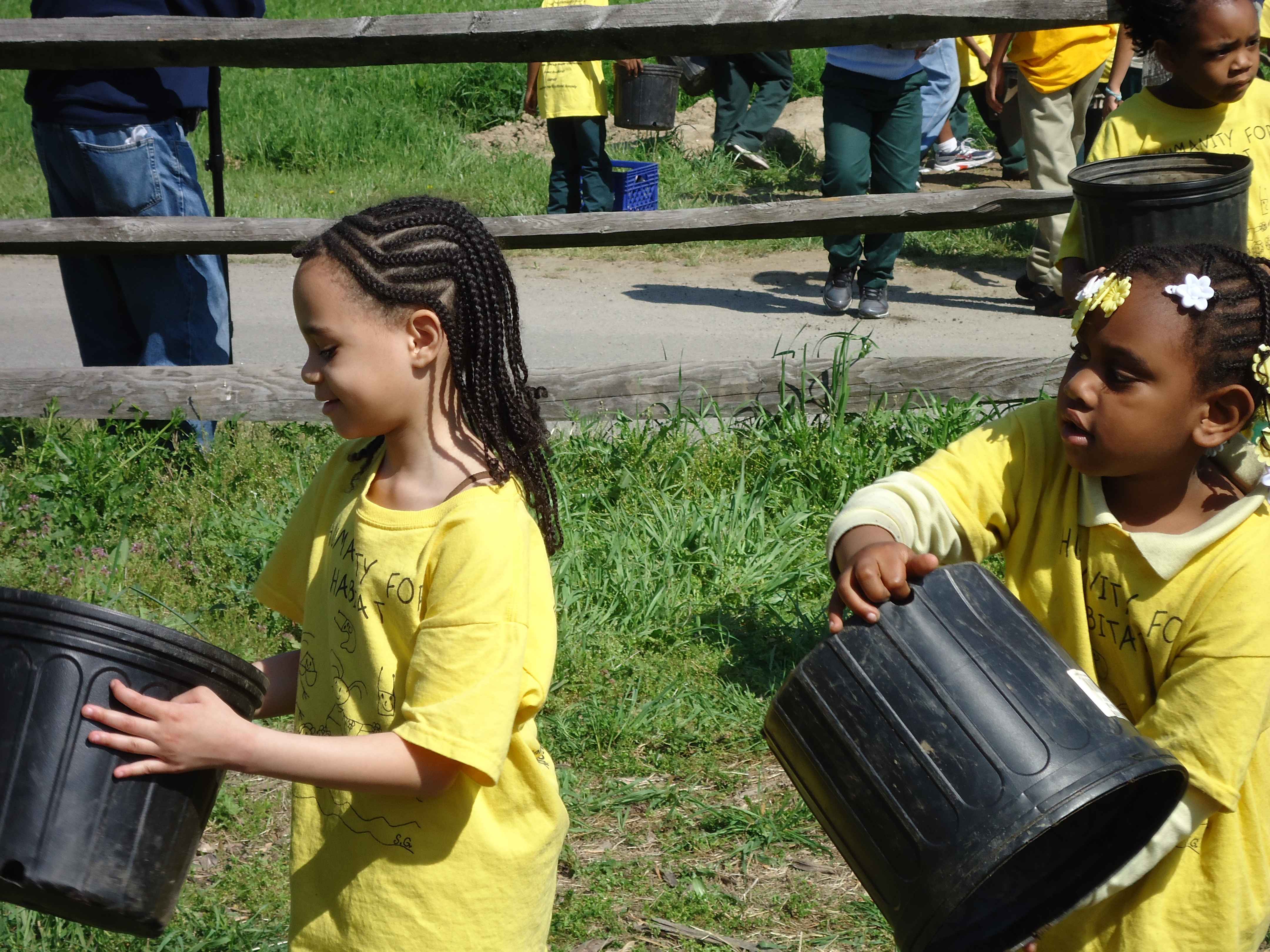
Kindness is always worth it. Of course, you are not going to find anyone in our community to argue against being kind. Kindness is one of those virtues all agree to be of great value. As renown author Henry James has said: “Three things in human life are important: the first is to be kind; the second is to be kind; and the third is to be kind.”
Firefighters in Florida responded to a call about a man who had a heart attack while mowing his lawn during an extreme summer heat wave. After the paramedics attended to him and rushed him to the hospital, several of the firemen stayed behind to finish mowing the lawn and cleaning up the man’s yard. (A Year of Living Kindly, by Donna Cameron; p17)
I was reading a book a few months back entitled A Year of Living Kindly by Donna Cameron. Cameron’s premise was that the world could use more kindness and she set out to be a kinder person. She blogged about it, to publicly help herself keep this commitment, for an entire year. Every day, she worked at being a kind person on that specific day. No falling back on, ‘oh I was nice to the cashier last week and that’s my evidence that I’m a kind person.’ Every day required some action for her. I came of age in the ‘80’s, so the slogan by Anne Herbert, “practice random kindness and senseless acts of beauty” really resonates for me.
In the introduction of her book, Donna Cameron writes:
It sounds simple, and it is simple … but it isn’t easy. We don’t always pay attention to our lives; we often act out of habit or in instant response to a perceived insult or provocation. We all have our own insecurities that propel us to act in ways that aren’t always compassionate (or even logical.) We get tired, we become impatient, we grow fearful… Let’s face it, we’re human. (p12)
In short, the author discovered that while we all value kindness, in general people respect and admire kindness in others, but it is not easy to be kind all the time. Oh, how that resonates for me more than I care to admit, except that I just admitted it.
It is simple but it is not easy to be kind all the time. It takes attention and intention to keep being kind each day. But it can be something we practice and develop in ourselves. It was Martin Kornfield who said, “If we all do one random act of kindness daily, we might just set the world in the right direction.”
As today’s worship associate, Karen Marsh sent me an article https://healthyhumanlife.com/blogs/news/being-kind from her research about some studies linking kindness with happiness. So often we talk about how being kind is something we do for others, but there is a benefit to the one who is kind. Studies show that being kind is good for your heart, it boosts your immune system, even slows the effects of aging. There are several studies about something that has been called the “kindness feedback loop” which essentially reveals that kindness makes us happy and happiness makes us kind. One specific example from the article:
Studies show that acts of kindness can ease social anxiety. In one study, college students who had scored high on a social anxiety assessment were separated into three groups. Researchers asked one group to engage in three acts of kindness a day, two days a week, for four weeks. They asked members of the second group to simply try to be more social with people, and members of the third group to keep a diary of their social interactions. By performing random acts of kindness, members of the first group experienced positive interactions, decreasing their fear of negative interactions and their social anxiety overall.
I suspect one of the impacts of doing acts of kindness is that it helps us practice gratitude. We practice helping others and we end up being grateful that we are in a position to do so. It helps put our lives into perspective.
My colleague Rayla Mattson is a religious educator in Hartford CT. She and I met in a conversation about an animated TV show we both love called Avatar: The Last Airbender. I recently stumbled across this piece she had written about kindness that I found both nuanced and moving. https://www.uua.org/braverwiser/kindness-others by Rayla D. Mattson
My youngest child, who is autistic, has taught me so much — and yet there are times, like our morning bus routine, when her autism causes me anxiety. We have to wait for her bus for up to twenty minutes on a small strip of grass on a busy road, and I have to be very creative to keep her not only entertained but out of the street. (I wonder how many people we entertain each morning.)
One day last month, [this was written about 4 years ago in 2018] a white woman pulled over and ran over to us with a shopping bag. She said she sees us every morning and is so moved by my obvious love and adoration for my daughter that she felt compelled to do something kind for us. She noticed that I never have on a coat and I often stand in the rain. She didn’t know if the things would fit, she said, but the receipt was in the bag. She smiled and drove away.
As I looked down at the bag, I had very mixed emotions. I have a winter coat, but my worn-out sweatshirt is comfortable and too bulky to fit under my coat. I stand in the rain because umbrellas cause anxiety for my little one. Did she do this because I’m black? Why did she feel I needed these items?
I put my daughter on the bus, went inside, and found a note in the bag. She said she’d wanted to stop now for weeks. She was a single mom who had struggled for years to raise her boys. She didn’t know if I needed anything, but was drawn to me and my daughter. The note said to return the items and get what I wanted if I didn’t want what was in the bag.
My eyes filled with tears. Amid these racially tense times and political unrest and horrible acts of violence we see almost daily, she just needed to do something nice for someone. Seeing my daughter and me every day reminded her of the good this world has. I think she needed that connection.
… I sent out a blessing for her to the universe and held on to the notion that there are those of us who want to reach out to others; who believe that there’s goodness in the world, and want to find it. And I am grateful.
My colleague writes “She just needed to do something nice for someone.” We often use the words ‘nice’ and ‘kind’ interchangeably. And it is a remarkable compliment to say someone is a really nice person.
But the distinction we sometimes draw between the two words in not unfounded and is worth noticing. In our reading https://gratbook.com/give/difference-nice-kind-conversation/ this morning, Oliver Johnson wrote: “The warmth of being kind will overpower the pleasant positivity of niceness every time.” I would only caution against always hearing ‘nice’ as something less than ‘kind.’
But it is true. The world ‘Kind’ has its etymological roots in the word ‘kin.’ It describes a virtuous quality at the level of character. One definition of the adjective ‘kind’ is “deliberately doing good to others.” The word ‘Nice,’ on the other hand, seems to be rooted in appearance, precision, and agreeableness. It can also rise to ‘thoughtfulness,’ which is a more recent etymological development.
One blogger https://yaholo.medium.com/stop-being-nice-start-being-kind-ff6177464131 put it like this:
“Being kind to someone means that the only thing on your mind is another person’s well-being when you act. Kindness means that you do something for the benefit of another, without needing a return or payback. Niceness is how we try to climb the social ladder, but kindness is how we lift up others.”
The call to go beyond nice is a call to be real. Kindness calls us to be real.
There is a line in our congregation’s Behavioral Covenant in which we promise to ask ourselves before we speak, “is what I am about to say true, kind, and necessary.” I remember when we were considering the language of this piece before voting to accept it as our covenant, someone raise a possible objection along the following lines: Sometimes we need to do things that would be characterized as unkind. An example offered was needing to fire a staff member.
I said then and still believe it is possible to hold someone accountable while still being kind. It is possible to navigate another person’s bad behavior without becoming mean, to hold a boundary that says ‘no’ while still being kind, while still striving for a productive outcome for everyone involved. I’ve done it. I’m not saying I have done it perfectly every time or have even done it well every time I’ve been called upon to do it – but it is what I strive for and it is possible. Is it true, kind, and necessary? Saying a hard truth or holding necessary consequences can still be done with kindness.
Our society has created this framework of sensationalizing the terrible things that happen around us, the tragedies and traumas we live through. The message seems to be that we all need to return a certain toughness, hold a bit of an edge to live well in this world. As such, kindness is offered as a ‘feel-good story,’ and extra bit of fluff – like it is a rare little something, quaint and unusual.
On Facebook yesterday I saw a man pictured in front of his truck with a snow plow attachment. The message beneath the picture said: “Any homeowner who is elderly, disabled or on a fixed income call me. I’m snow plowing for free and want to be of assistance to you.” He listed his name, what county he was in, and his phone number. This was yesterday morning.
I contend such offers of kindness are not quaint and unusual. They happen quite often and are, in fact, the beating heart of our society. We all want to be more kind. We all want others to be kind with us. It is not bizarre! It is the normal we are longing to experience during this pandemic.
So many of us are lonely and exhausted. We are isolated and overwhelmed dealing with this pandemic and the systemic injustices and societal upheaval we are living though. And yet, our kindness is not just a bit of fluff – it is how we are going to get through this.
The Dalai Lama has said, “My religion is very simple. My religion is kindness.” Desmond Tutu once said, “Do your little bit of good where you are; it’s those little bits of good put together that overwhelm the world.” And Harold Kushner has said, “When you are kind to others, it not only changes you, it changes the world.”
Indeed, in the final analysis – kindness is what matters most. We all can strive each day to be more kind. Set your intention. Refuse the cynical decline. Reach out. Be Kind. The world needs more kindness.
In a world without end, may it be so.
The Last, the Lost, and the Least

The Last, the Lost, and the Least
Rev. Douglas Taylor
1-16-22
Sermon Video: https://youtu.be/E6ioFaalN68
There is trouble in our democracy of late. And not the good kind John Lewis talked about.
When day comes we ask ourselves,
where can we find light in this never-ending shade?
That is the opening couplet from the inaugural poem “The Hill We Climb” which we heard nearly a year ago from Amanda Gorman. On that chilly January morning, Gorman reminded us,
Somehow we’ve weathered and witnessed
a nation that isn’t broken,
but simply unfinished.
We’ve never been a perfect union, but always striving to become a more perfect union. We keep striving; we keep working to be better.
The senate is preparing to vote on the Voting Rights Bill soon. It is a bill that puts limits on gerrymandering, tightens restrictions on financial contributions from hidden sources, and increases access for voters – particularly minority voters through measures including automatic voter registration systems, fewer restrictions on mail-in ballots, and making Election Day a national holiday so working people have a better chance to participate.
It was Gandhi who said “The true measure of any society can be found in how it treats its most vulnerable members.” How well are we doing on that count? Are we protecting the vulnerable? Are we looking out for the marginalized among us? The House of Representatives has passed the bill. It is, however, expected to die by filibuster in the Senate. The vote has been put off until this coming week, hoping perhaps a few more senators discover their moral backbones.
In his 1957 speech “Give Us the Ballot” Dr. Martin Luther King Jr. offered this searing analysis of the situation back then on how the federal government had rendered itself impotent on the issue of voting rights back then.
“This dearth of positive leadership from the federal government is not confined to one particular political party. Both political parties have betrayed the cause of justice. The Democrats have betrayed it by capitulating to the prejudices and undemocratic practices of the southern Dixiecrats. The Republicans have betrayed it by capitulating to the blatant hypocrisy of right wing, reactionary northerners. These men so often have a high blood pressure of words and an anemia of deeds.“
And here we are again 65 years later, the landscape is changed, but the issues continue. And democracy remains in trouble for us today.
As a faith community, Unitarian Universalists are committed to the principle of democracy. For decades we have included democracy in our official statement of religious identity: Our Principles and Purposes. The wording in the 1960’s of our original merger principles says we “unite in seeking … the use of the democratic method in human relationships.” Later in the current version from the 80’s which we still use today, it says “we affirm and promote … The right of conscience and the use of the democratic process within our congregations and in society at large.”
In short, we see the use of democracy not only as a political issue. For us, it is a matter of moral importance as well. Free and fair voting access is the foundational aspect of a functional democracy. It was Susan B. Anthony who declared that, “Suffrage is the pivotal right.” This matters to us politically as citizens and this matters to us morally as people of faith. We recognize that religious interest must include moral interest in the workings of the nation.
As professor Samuel Thomas said https://www.bibleodyssey.org/en/passages/main-articles/let-justice-roll-down-like-waters-amos-5–6 in our reading about the prophet Amos this morning: “Religious devotion is meaningless if it is accompanied by unfair taxes on the poor, backdoor bribes, and working against those in need.” In case you wonder if Thomas is exaggerating or reading in to Amos what is not actually there … he’s not.
Here’s what prophet Amos said more than 25 hundred years ago (Amos 5:11-12);
You levy a straw tax on the poor
and impose a tax on their grain.
…
For I know how many are your offenses
and how great your sins.
There are those who oppress the innocent and take bribes
and deprive the poor of justice in the courts.
It is important to give access to the means of change to all the people. So, while there are those in power now attempting to suppress access and deny a voice to the marginalized among us, we do well to remember that our faith, and indeed many of the faiths represented in our nation, call us to do the exact opposite. Our faith, and indeed the faith of many in our nation, calls us to care for all the people of our nation, not just some.
My title for today’s sermon is a reference to a series of parables in the Gospel of Matthew. It is also a direct line from American politician and voting rights activist, Stacey Abrams. Abrams was part of the 2021 Ware Lecture this past summer. The Ware Lecture is an annual prestigious event at our UUA General Assembly. The shared lecture this summer focused on voter suppression and voting rights. Abrams talked about her work helping people get vaccinated. She talked about how the people she tended to be helping were the “last in line to receive support and the first in line to receive punishment.” She noticed how often her constituents were the last, the lost, and the least.
Abrams spoke stirringly about growing up with the lessons her parents gave her and her siblings. She said her parents said the children had three jobs – “go to church, go to school, and take care of others.” She and her siblings were regularly serving at soup kitchens, homeless shelters, and prisons to help those in need. Her parents would remind them that no matter how little they had as a family there was always someone else with less and our job was to serve whoever had less: The last, the lost, and the least.
In chapter 20 of Matthews’s Gospel, Jesus declares “the last will be first, and the first will be last.” This is paired with the parable of the workers in the vineyard (Matt 20:1-16). A little earlier, in chapter 18 Jesus said, “If any man has a hundred sheep, and one of them has gone astray, does he not leave the ninety-nine on the mountains and go and search for the one that is straying?” This parable of the lost sheep (Matt 18:10-14). Then a little later in Matthew, Jesus tells the parable of the sheep and the goats (Matt 25:40-45) with the character of the king proclaiming: ‘Truly I tell you, whatever you did for one of the least of these brothers and sisters of mine, you did for me.’ In the span of a few chapters of this gospel, the message arises again and again. The message that we are to care for the last, the lost, and the least. The message that God cares for them and we are do care for them as well.
I am aware that among traditional interpretations and conservative interpretations these parables are often used to speak of God’s judgement rather than of God’s love. There are interpretations of these parables I just listed saying that God separates the saved from the unsaved, that a death-bed conversion after a life of callous oppression is okay, and that leaving the conformity of the herd is considered a sin in need of saving … but those are just interpretations, and when reviewing the fullness of the message I believe the power of love is a better guide than the power of hate. It matters what we use to guide our interpretations of scripture. I lean strongly in the direction of love.
For example, pastor and blogger Mika Edmondson wrote:
“In Matthew 25, Jesus describes true converts as being marked by a peculiar empathy toward the poor, marginalized, and incarcerated. But he describes false converts as being outwardly religious but marked by a peculiar callousness toward the poor, marginalized, and incarcerated.”
That is an interpretation I can work with. We are called to take care of each other, to build a society in which we all can thrive, not just some, but all. We are called to denounce the idea that some people are disposable or unworthy. The last, the lost, and the least ought to be the barometer of where we spend our time and attention. We are called to be marked by a peculiar empathy.
What does this all mean for us today, here in our little Binghamton congregation? What are we to do with this call to include all voices, to have empathy for the people on the margins? “Think globally and act locally” is one answer. Yes, there is a lot at stake with the Voting Rights bill this week for the senate, but you and I are not senators. Our work is a little different. We can certainly agitate for change at the highest levels, but we can also be the change right here in our own lives and in our own neighborhoods.
During her Ware Lecture this summer, Stacey Abrams offered an insightful reframing of the dynamic at play. Where most of us, from a certain privileged perspective, see the poor, the marginalized, and the incarcerated as “the last, the lost, and the least.” She saw them as “the prayerful, the powerful, our protectors.” She pushed us to see them not as lowly people in need, but as those with whom we could partner – the prayerful, the powerful, our protectors.
Her suggestion that they are powerful is only accurate from a certain vantage point. But the other two qualities are resoundingly accurate. The poor and marginalized people of our nation are prayerful. That is often quite true. But I was most struck by the third attribute on Abrams’ list. Consider her assertion that they are our protectors. She said she saw them as “the prayerful, the powerful, our protectors.”
I suspect Abrams finds her time serving the Last and the Lost and the Least to be work that protects her. It protects her from growing callous, from growing jaded by the politics of the job, from losing her soul to the systems that strive to keep privileged people from caring about the poor. In this way, the vulnerable are our protectors.
Over the years I have preached a message about how we can use our privilege to serve justice. I have also preached a message about our brokenness – mine and yours – in the face of the difficulties of the world. We are called to be marked by a peculiar empathy. We are called to see our neighbors in need as ourselves, and to love them. Not because we are better than anyone else, we too are in need after all. But many of us have certain privileges that help us weather the storms of life. In service, we step closer to one another. In service, we are protected from feeling better than others. In service, we share the dream of “a nation that isn’t broken/ but simply unfinished.”
On that brisk January morning nearly a year ago, young poet Amanda Gorman reminded us of our goal, reminded us of what our nation can be when we live into our promise. (from The Hill We Climb by Amanda Gorman, January 20, 2021)
We will not march back to what was,
but move to what shall be.
A country that is bruised but whole,
benevolent but bold,
fierce and free.
We will not be turned around
or interrupted by intimidation,
because we know our inaction and inertia
will be the inheritance of the next generation.
Our blunders become their burdens.
But one thing is certain,
If we merge mercy with might,
and might with right,
then love becomes our legacy,
and change our children’s birthright.
So let us leave behind a country
better than the one we were left with.
Every breath from my bronze-pounded chest,
we will raise this wounded world into a wondrous one.
For that, my friends, we need all of our voices and all of our beautiful diversity to be better together as a nation, as a people. In service, we will climb this hill together.
In a world without end,
May it be so.
Anger – A Field Guide

Anger: A Field Guide
Rev. Douglas Taylor
1-9-22
Sermon video: https://youtu.be/JyIrS9k7KDM
We are approaching the completion of the first year of Joseph Biden’s presidency here in the United States, and the news cycle is reporting about how our country is more divided today, politically, than it was a year ago. https://www.npr.org/2022/01/03/1069764164/american-democracy-poll-jan-6
There is a staggering number of people firmly convinced that those on the other side of the political aisle are trying to destroy our democracy. People are angry. This is made worse, in my opinion, by the fact that part of the reason for this political anger among us is due to the succuss of a big lie about election fraud. This lie has been refuted and disproven clearly and repeatedly, yet the lie continues to hold sway, as does the anger, which makes me angry.
Meanwhile, this pandemic continues to rage through our country and through the world. We’ve had record numbers of cases in our county in the past few weeks. It is worse now than it has ever been. Thankfully, the Omicron variant is not as deadly as earlier variants. Still, we’re close to a total of 60 thousand deaths in New York State, more than 800 thousand in the country, and nearing 5.5 million deaths worldwide. We are seeing an exponential rise is new cases. I get angry at the way people believe and spread disinformation spurred by political interests resulting in this increased harm to the public health.
So, yes. I will preach about anger this month as we work our way through the anniversary of the Trump Republican’s failed insurrection. I will preach about anger as the economic disparity between the haves and the have-nots continues to yawn wider. I will preach about anger as our grossly mismanaged healthcare system stumbles to respond to this public health crisis. I will preach about anger as American corporations continue to be the largest contributor of global greenhouse gas emissions – selling the future of our planet for a buck. Yes, I will preach about anger this month.
But I don’t come off as an angry person, do I? If you were to asked to describe me, would ‘angry’ come to mind? Probably not. I do get angry. But I don’t spend a lot of time with it. I work to move my anger along, to transform it into action for change.
Everyone gets angry at times. Anger is one of our basic emotions. We typically associate the anger with the display of shouting and yelling, maybe a red face and clenched jaw, or a clenched fist. Violence seems to be a frequent companion to the emotion of anger.
In the 2015 Pixar movie, Inside Out, we see Anger drawn as a red emotion that, when pushed too far, will have the top of his head burst into flames (Stick hands out and make angry face). He is voiced by comedian Lewis Black. During the opening narration, Joy introduces the different emotions in the story. “That’s Anger. He cares very deeply about things being fair.”
That last part is going to be true for all the ways we display our anger. Anger is connected to caring deeply about things being fair. Anger is not always about ranting and ‘blowing up.’ It is one of our basic emotions. Everyone gets angry at times. The question is not if you get angry but what you do with it when you are angry.
Most of the resources I have about anger focus on the interpersonal levels, dealing with anger among friends and family members. I suspect this is because the goal is to allow the anger to be a catalyst for change, which is easier to accomplish in our personal relationships than it is to do on the national or global stage. But let’s take a look at the interpersonal side of this conversation for a bit. I have found there are parallels and insights suitable for the kind of angers I was sharing a few minutes earlier about injustices and politics.
Our reading this morning was taken from a classic book on the topic from 1985 – nearly 40 years ago. The primary focus of The Dance of Anger by Dr. Harriet Lerner is to serve as “a women’s guide to changing the patterns of intimate relationships.” The excerpt we heard was not focused on women’s anger in particular except in the way that the whole book is focused on women’s anger. But I tried to share a section that might be heard as useful by all genders. The dynamics of gender and anger have shifted a little over the past few decades, but I find the content still quite insightful.
In particular, the questions she encourages are important. “What am I really angry about?” “What is the problem, and whose problem is it?” And I love this one: “How can I learn to express my anger in a way that will not leave me feeling helpless and powerless?”
Dr. Lerner reveals the importance of listening to our anger to learn what it is offering, what message it is telling us about what matters to us. Anger is information that something is wrong. It is a signal that something needs to change.
A contemporary author agrees. In a 2011 essay entitled “Tender Anger,” minister and poet, Jan Richardson tells us:
“As with any emotion, anger can be a map. Within the landscape of our life, the presence of anger reveals where our passions lie, whom we love, what we consider important. Anger shows us where we are vulnerable, where there are cracks or wounds in our soul, where there is brokenness within us or around us. If we pay attention to what anger reveals about the terrain of our soul, it can help us find and create the path ahead.”
She goes on to ask, “Is there a step I can take that will transform anger into action—for my own life, for the lives of those around me, for the life of the world?”
That’s the goal, isn’t it? When I get angry about something, the point is not just to yell and scream. The point is to change something. I want to transform the anger into action. But this can get tricky, yes? Punching something is an action. Violence is an action. What we want is more than any old action. We want action that will serve life. This is where this conversation turns into a sermon. We want our anger to be transformed into action that will heal and bring justice, or simply make things more fair. This is not easy to accomplish. It is spiritual work. The usual spiritual tasks are involved – decentering the ego, patience, practice, trust, and deep listening.
And it is true that anger is often a mask for other emotions that are harder to deal with, emotions such as fear and grief. When I talk about my anger at the political shenanigans, I can admit this anger is rooted in some fear for what is at risk and grief for what has been lost. And some of my anger is really just anger. When you are angry, it is worth checking in with yourself about other emotions beneath the anger.
During my first ministry, serving in a large church with two other ministers down in the D.C. area, I learned quite a bit about grief and loss. I remember one visit from an angry member of the congregation. One of the other ministers sighed when he heard I’d be visiting with this member, and said, “This is someone who gets angry a lot. His pattern is to get angry at someone or something and leave the church. He’ll turn up then in one of the other nearby congregations for a while until he gets angry with something there and he’ll leave.”
We met; we talked about what was going on. He aired his grievance and then began to develop a list of other grievances. Eventually, I stopped him and said, “I don’t know if I’m out of line, and if I am I trust you’ll tell me, but it seems like you’re angry a lot.” He paused a moment and then agreed with me. He said, “Before my wife died, we were a great team. I would curse the dark and she would light a candle.” His wife had died recently. I asked, “Who’s lighting the candles now?”
This member had been referencing an old Chinese proverb – “Don’t curse the darkness – light a candle.” The proverb inspired the founder of Amnesty International who created the “candle wrapped in barb wire” logo – such a powerful and recognizable image. Indeed, when faced with manifestations of evil, it is better to light a candle than curse the dark.
So, what does that mean? How do we do that, how do we light proverbial candles when we are outraged at the world? How do we do more than merely curse the dark?
Feminist theologian Beverly Wildung Harrison wrote, “Anger … is better understood as a feeling-signal that all is not well in our relation to other persons or groups or to the world around us.” She suggested that anger is a form of caring – it is a sign of our connections with what matter to us. Harrison wrote, “Where anger rises, there the energy to act is present.” [from ‘The Power of Anger in the Work of Love’ in Union Seminary Quarterly Review, vol. xxxvi, pp. 41-57, 1981]
If we can honor our anger as both a sign of our caring and a spark of energy to bring change, then we can transform anger from one of the negative emotions to be avoided into yet another form of love. Cursing the dark is not enough, because it is not action toward change. Lighting a candle is about using the spark of our anger to bring change. “Where anger rises, there the energy to act is present.”
The violence so often associated with anger is about unguided anger, about anger that merely rages without accomplishing the true goal. It is not enough to just be angry. We must learn to allow our anger to serve as a catalyst for growth and change.
In her 2017 book, Braving the Wilderness, Dr. Brené Brown tells us:
“Anger is a catalyst. Holding on to it will make us exhausted and sick. Internalizing anger will take away our joy and spirit; externalizing anger will make us less effective in our attempts to create change and forge connection. It’s an emotion that we need to transform into something life-giving: courage, love, change, compassion, justice.”
In short, it is not enough to be angry. We must allow our anger to spark change. And that is one of the hardest parts of this whole conversation. Isn’t it?
I get angry about something in part because I am not able to change it. I can’t control our global descent into climate crisis. I can’t stop other people from getting sucked into disinformation and political propaganda. I can’t solve income inequality or save someone from their own bad choices. Which heaps more anger on top of my anger because I can’t transform it into an action to make a change! … Or that is how it feels at times.
But I can control myself. I can respond – even with this anger and frustration. But not if I give my anger free rein. I have to learn to allow my anger to be the catalyst, the spark, without it becoming an all-consuming fire.
Even when we are feeling angry because we feel powerless and frustrated, we can take a breath and remember that our anger is information revealing our caring hearts, revealing what matters to us, revealing the focus of where we are called to light our candle.
To do that, first, acknowledge your anger when you have it. Trust that you do get angry from time to time and that it is a worthy emotion to have. Next, listen to your anger. It is information, a signal or map revealing what you care about, what matters to you. Check to see if your anger is masking a deeper emotion, in case there is something else you need to do. But if it really is just anger, then allow it to be a spark to lead you into courage and compassion that you may bring more love and justice into your life and the lives of the people around you.
Light a candle from that spark. Allow your anger to become courage and make the changes you need. Light the candle.
In a world without end, may it be so.
 Rev. Douglas Taylor