
The System Works as Designed
The System Works as Designed
Douglas Taylor
1-18-26
Sermon Video: https://youtu.be/d_DDPYDuzCY
“This is not the America I love.” I have heard people say. “We’re better than this!” “What has happened to our country? I have heard. When we say this, we are trying to articulate a positive statement that the good country founded on good principles and civic values is not apparent … and that what is going on around us now is, by contrast, not good, not in keeping with those good values, that good foundation that we see.
And I want to let you know there is a flaw in that logic, there’s a flaw in that argument. Our country was founded through the genocide of the indigenous people. Our country was built on the labor of enslaved people. There is growing awareness that our criminal justice system is built around protecting property first, and originally that included slaves – and some argue there are echoes of that still happening today. Capitalism is structured not around benefiting creators and laborers or even society in general – it is structured around benefiting owners.
There is this tension that is in place when we say something “This is not the country I know and love.” Because it is. What we’re seeing now very often has an echo that can very easily and obviously be traced back to some of the flaws, some of the injustices, some of the cruelty that was backed into our country when we started.
But you’re also not wrong. There is a tension here. We as a country came together and wrote promises, saying who we are and who we long to be. Promises about equity and equality and ‘endowed with unalienable rights of life, liberty and the pursuit of happiness.’ That all people are created good. That was part of it!
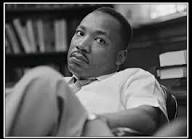
There’s a piece in the 1963 speech that King made – that is perhaps his most famous one, “I Have a Dream.” The beginning of it, before he gets rolling, he talks about a promissory note. He said, “we have come to our nation’s capital to cash a check.”
He said the ‘architects of our republic had made – with magnificent words in the Constitution and the Declaration of Independence – promises and we see this as a promissory note, a guarantee of life, liberty, and the pursuit of happiness. He said:
It is obvious today that America has defaulted on this promissory note insofar as her citizens of color are concerned. Instead of honoring this sacred obligation, America has given the Negro people a bad check which has come back marked “insufficient funds.” But we refuse to believe that the bank of justice is bankrupt.
He refused to let only the critique stay, but also that we had made a promise for who we could be.
“This is not my America,” we say. “This is not the country I love, what we are seeing in the streets.” … well – yes it is. We are flawed from the beginning. And we have greatness baked into who we could be. But we must work for that part.
The tension is that we have both the rot and the promise at our foundation and we can feed the promise while cutting out the rot. Both are true. When you wonder about what’s going wrong – part of the answer is: things are going as planned. We are at the logical outcome of the trajectory we’ve been on for a while.
But that doesn’t mean we’re done. It means there is a tension in the system. So what are we to do about that? It means we need to participate. We need to build the more perfect union. We need to engage.
In that 1967 speech (Where Do We Go From Here?) that we used as our reading, Dr. King talked about – we would say today – intersectionality. He talked about the triple evils of Militarism, Materialism, and Racism. He wove all three into this one paragraph that I absolutely love:
In other words, “Your whole structure must be changed.” A nation that will keep people in slavery for 244 years will “thingify” them and make them things. (That’s the racism) And therefore, they will exploit them and poor people generally economically. (There’s the poverty) And a nation that will exploit economically will have to have foreign investments and everything else, and it will have to use its military might to protect them. All of these problems are tied together.
The entanglement of racism and poverty has been on most people’s radar for a while, economic struggle lands disproportionally on people of color. But King is also saying poor people are exploited in our current system. Full stop. Not just that poor black people are exploited, but that poor people of every race or ethnicity are exploited. And then he ties the military in by saying the country will need to prop itself up with foreign investments that need protecting – thus a military. King lived through the use of state violence against poor people and against African-Americans in particular. And yes we usually outsource our foreign wars to proxies lately, but who knows, that might change soon. But the militarism evil that he is talking about is not just beyond our borders. It’s happening without our borders against our own people.
King called for non-violence. Often when folks wake up this reality or start calling out this reality, of this tension, of things that have gone wrong, sometimes they’ll lean into King and they’ll talk about his non-violence.
A lot of people remember King for non-violence and remember his speeches and his rallies. But it is incredibly important: King spoke of non-violent direct action. He never just spoke about non-violence. He was not in favor of passivity, of backing down, of non-violence in the sense of ‘I’m not going to get in the middle of anything because that might lead to violence.’ He was very encouraging of people getting in the middle of things, to direct action. To only speak of his non-violence is a perversion of his legacy.
Some of you have been in a class that Rev. Jo VonRue and I are co-leading over the fall. It is a class on democracy that meets online monthly with folks from several UU congregations in the area. The very first class talked about “Effective Strategic Escalation” which talked about various types and levels of protest.
We used Gene Sharp’s analysis. Gene Sharp is a decades-long scholar on non-violent action; and he has, for example, this one book that talks about 198 versions of direct action. He breaks them into three type: symbolic action, noncooperation, and alternative cooperation or Intervention
Symbolic direct action is like a rally or hanging a banner. Non-Cooperation is like a strike or a boycott. Alternative Cooperation or Intervention is like a sit-in or traffic obstruction.
The story we shared with you, “Sunny-side Mary” has some of these elements in it. Sitting in the good seats, that was intervention, that was essentially a Sit-in. When she was wading in the water, that was some symbolic action. It drew the Shady Side folks’ attention and it got something moving symbolically. And when they were all sitting in the fountain that was some alternative cooperation – some intervention, something new and different. (I guess a strike or boycott would be if all the – they had to show up or risk detention – but they could boycott paying attention. That wasn’t in the story.)
Dr. King called people into a variety of styles of non-violent direct actions. He is famous from all the rallies and speeches. But it is too easy to only do symbolic action. And if all you are doing is symbolic action, 60 years later, our country’s oppressors have figured out how to ignore you by now. It’s not enough. It’s good to do and its not enough. You need to have other things going on so the systemic powers will not simply ignore you. We need direct actions that wake people up, that get’s people’s attention, that is coordinated and planned if they are going to be effective. But it needs to be direct action.
And, ultimately, all of that action needs to be accountable to the vulnerable people most impacted by the oppression and the consequences of our direct actions.
Which brings me around to an announcement. I have been invited and I am responding to a call to action. The clergy in Minneapolis have put out a call saying ‘ICE is here and we want you to show up.’ They link their call to Selma when King put out a call for clergy and lay people to come and witness.
It is not lost on me that part of the history of the 60’s and that Civil Rights Movement that a Unitarian Universalist minister James Reeb went down and was killed. And when a white man from the north was killed, that had a different impact on the country than when all the other men and women – the people of color – had been killed and had not risen to the same level of attention.
I am not going to disparage anybody who is dramatically upset by the death of Renee Good, the murder of this white woman. Please also notice all of the black people ICE has killed in this past year.
Part of the systemic effectiveness we are called to is to allow Renee Good’s murder to activate us. We can unpack the racism of that eventually. We’ll get there.
But when King said we need to ‘begin to ask the question …’ – he began asking those questions about the triple evils 60 years ago. Are we still beginning to ask these question? No. We need to keep moving.
I have been invited to go to Minneapolis and to be accountable to the people who are there on the ground dealing with ICE directly.
When I went to Standing Rock almost 10 years ago, I had to specifically come back and say “I never wanted to risk arrest.” There were some folks here who were disappointed that I was not arrested. The badge of having done a resistance means you got arrested.
The clergy at Standing Rock were specifically not invited to do a civil disobedience that would risk arrest. In fact there was one dude who stood up at the training the day before and said ‘and those of us who want to risk arrest, come over the corner and we’ll talk about doing additional things.’
One of the grandmothers, one of the elders went to that circle … and there were a dozen white people sitting on the floor as this elder yelled at them. ‘That is not what we asked you to come do. Our Water Protectors will risk arrest. You are here to witness.’
I have been called to Minneapolis, I don’t know what they are going to ask of me. But I will be accountable to the people on the ground who are dealing with this directly. It has been made clear, it is not safe to go to Minneapolis right now. If you are a person of color or if you have a disability or if you are an obviously Trans person it may not be a good choice for you to come to Minneapolis to respond to this call. It is not currently safe in Minneapolis to be a protestor, to be an immigrant, to be racially-profile-able.
And we (attending this call) need to be accountable in any direct action we are invited into to the people who will be impacted by the consequences of that direct action. That’s incredibly important.
Yes, the injustices and oppression we are seeing today are cruel and beyond the pale. This is not the America we want. It is the America we have, the systems of oppression and injustice from our inception are echoing into our current situation. The system is working as designed. And there is another layer of design – a promise of equity and opportunity and liberty – a layer of design we need to engage and enact and make real. We need to build the more perfect union.
May we hear the complaint as well as the call. May we learn that these calls are coming to you, to me; and that it is our work to respond, to build that new America that hope can be.
When I go to Minneapolis I want to carry you with me. I’m not going to go alone. This is the stole I will be wearing (a “side with love” stole.) I want to bring you with me. I don’t know exactly how your unique theology will respond to this but can you bless this? Can you bless me? Can you pray for me? Can you imbue this stole with your wishes for what might happen, what I might encounter, that you will be with me when I am there on the streets.
If that means you might come up and touch the stole, say a prayer, send good energy, drop extra money toward the discretionary fund. I don’t know how you bless things. But please, if you are willing, offer some blessing so that I can bring you with me when I go to Minneapolis, and that they will know that we are with them; and that we care about them and this world and this society that we are recreating – the whole system.
May we lean in to the call and to the voices of those most marginalized and targeted. May we embrace the holy work of caring for each other and for those in need as we build the more perfect union.
In a world without end, may it be so.
Tea and Purpose

Tea and Purpose
Rev. Douglas Taylor
12-14-25
Sermon video: https://youtu.be/wS0h-ziD9V4
The amazing Terry Pratchett once wrote: “There’s always a story. It’s all stories, really. The sun coming up every day is a story. Everything’s got a story in it. Change the story, change the world.” (Terry Pratchett, A Hat Full of Sky)
As Pratchett suggests, we do well to pay attention to the stories we are telling ourselves about the world we live in and the world we long to live into.
Last week we talked about Star Wars and the power of hope. One of the things we saw in those stories was how resistance shows up against the forces of Empire. Star Wars is a form of dystopian fiction. Dystopian literature offers a bleak perspective on the future – things have gone wrong and now we need to work to make it better. Good dystopian fiction will go one better to reveal what is going wrong now, not just in an imagined future. It will be about our present condition more than anything else.
Today I want to talk about some utopian fiction. And in a similar vein, good utopian fiction reveals not just some imagined happy future, but how we are living with the seeds of that future even today. “Change the story, change the world.”
The story I am excited about this morning is about robots. I will confess, I’ve never been a huge fan of robot-based science fiction. And upon reflection I think that has to do with the way robots have been portrayed in science fiction over the years.
One of the things about stories is how they have a surface level entertainment and a deeper level of impact. On the surface, a story about robots may be a fun exploration of technology and imagination. On a deeper level, robots offer a mirror to explore what it means to be human. When Science Fiction leans into a character who is non-human, the author is able to help the reader better understand what it means to be human.
Isaac Asimov offered the classic version of robot stories. For Asimov, robots were an exploration into ethics and logic and the hope for a better future for humanity based on ethics and logic. Asimov wrote his robots as tools or servants to humanity. And while he did critique the premise in some ways – that was the premise. Robots were the perfect servants.
Later versions of the genre had the robots take on different roles. Think about The Robot from the Lost in Space series: “Danger! Danger!” The Robot was a powerful and loyal piece of equipment. Think about The Terminator, who was really just a weapon – and then remember how most advances in drone technology are rooted in military research these days. Think about the Droids in Star Wars who were really just a plot device and sometimes comic relief. And then think about the way Gene Rodenberry’s Star Trek portrays the character of Data as a sentient being with relationships and a unique place in the crew. Data was the first (and until recently, the only) robot I enjoyed.
The Monk and Robot series by Becky Chambers offers a radically different robot from the loyal equipment or perfect servant of earlier versions of this literary mirror. Where Asimov’s robots are essentially tools of humanity and society, Chambers’ robots are peers with humanity seeking purpose and community. Where Asimov’s robots are stand-ins for a conversation about racism and law, Chambers’ robots are conversation partners on the topic of freedom and liberation.
And most alluring for me is that freedom is not an either/or scenario – it is not an apocalyptic uprising of the machines. They do ‘rise up’ but their freedom frees the humans too. And that is how this story changes the mirror of what robots reveal about what it means to be human.
The description on the inside jacket of this book categorized as ‘cozy sci-fi’ tells us this:
It’s been centuries since the robots of Penga gained self-awareness and laid down their tools. Centuries since they wandered, en masse, into the wilderness, never to be seen again. Centuries since they faded into myth and urban legend.
One day, the life of a tea monk is upended by the arrival of a robot, there to honor the old promise of checking in. The robot has one question: “What do people need?” But the answer to that question depends on who you ask, and how. They’re going to need to ask it a lot.
How would you answer? What do you see that we need?
I mentioned near the beginning that this is a utopian story. Part of the premise as the book begins is that the people have resolved their basic needs. There is no poverty, no inequity on injustice leading to homelessness or hunger. It is a society in which everyone basic needs are met. In a world where people have what they want, what more do we need?
In the second book, there is a scene when the robot, Mosscap, first comes to a community and asks it’s question: “What do you need?” The small town of people who turned up to see the oddity of a robot were confused by the question at first. Nobody quite knew how to respond.
After a long pause, a bearded man piped up from the back of the crowd. “Well, um … I need the door to my house fixed. It’s a bit drafty.” (PCS p23)
Sometimes it can be hard to think beyond the immediate needs of our daily rounds. What do you need? Maybe not ‘what do you need help with?’ Maybe not ‘What do you need a robot to do for you?’ Because I don’t have a real robot tucked up here in the pulpit with me. And I’m not so good at fixing your drafty doorway. So what do you need? Really?
I imagine many answers in our current situation might land in the category of righting a wrong, answering an injustice, fixing a gross inequity. I need ambulance rides to be fully covered by insurance and for teachers to be valued more than celebrities. I need oligarchs and abusers to be held accountable and removed from power. I need my society to really care for the wellbeing of all the people in our society.
So, if that were accomplished, as is suggested in our little novel about a tea monk and their robot friend, then what would you need? Pretend we’ve solved our injustices and we live in a Star Fleet type of universe. What do you need?
This begins to drift into theological territory. What is the Human Condition? Many theologies are built around an assumption of sin or fallenness and how awful we are compared with God and what God expects of us. I don’t have time for that sort of sour thinking. Yes, we are imperfect and broken, but not is a sinful or bad way worthy of judgment. We are imperfect and broken in the way all the world is.
I believe our Human Condition is one in which we need to be loved – and we are loved. We may forget this truth or trauma can chased this truth from our knowing, but we are. I believe our Human Condition is one in which we are intrinsically part of the holiness that pervades the whole universe. We are interconnected – thus what I need is not only what I need, but what we need. And we need each other. I think any answer to the question ‘what do people need?’ must include the answer: each other. We need mutual thriving.
In this story I’m inviting you to read, the author makes multiple references to our need for each other. It shows up when the story talks about various things from interdependent ecosystems to friendships. What do people need? Each other.
One of the characters is the robot, the mirror of humanity revealing a deep truth about ourselves. The robot brings the question and raises thoughtful and emotionally mature reflection on the responses it hears from the humans. The other character is Dex, the tea monk.
Let me tell you a little about the work of a tea monk. Dex the tea monk travels from town to town helping people. They set up a small booth in the town market when they arrive. The booth has comfortable places to sit and relax, and it has tea. People visit a tea monk to talk through things they are struggling with. Maybe it is a grief or a confusion, perhaps they just need to talk through a decision they have to make. Usually people simply need a bit of companionship and a space to relax. Dex offers people empathy and they offer a cup of tea. Dex gives people what they need.
“What do people need?” the robot asks. Both the tea monk and the robot are in the business of figuring out what people need. Perhaps it is your business as well. What do people need? Each other, certainly.
In a cozy science fiction story where people’s basic needs are met, where folks don’t need to fight against Empire or join the resistance – they still need things. Surprisingly, what people need to fight Empire is also what people need in this Monk and Robot story – mutual thriving.
Later, during the book discussion I’m planning in January, we will talk more about mutual thriving as well as topics of economy, ecology, freedom, pleasure, our relationship with nature and with technology, as well as the meaning of life. And I’ll serve tea. I promise.
For now, I leave you that question to ponder. What do you need. May you uncover surprising answers as you wind your way through this holiday season.
In a world without end, may it be so.
How We Are Made

How We Are Made
11-23-2025
Rev. Douglas Taylor
Sermon Video: https://youtu.be/LvV2OZ9aVhQ
We are a little like the bread. We have basic ingredients – you know, bones and muscles and brains and organs, all the important stuff. Add to that the vast variety of experiences we each have, times when we were babies, times spent in a school or at work or in the woods, times with friends, good times and bad times (you know I’ve had my share). All these mixed in like different ingredients in different amounts at different times and in different orders, and then some magic happens – and yes that usually involves a little metaphorical heat. Like the bread, this is the way we are made. We are made by the way we take in these experiences, by the way we live and interact with the people around us and we become ourselves. Through some magic of interaction, the alchemy of living – just as the flour and eggs and such become bread – our experiences shape us into being us. For which we give thanks.
There was a bit in the story about how one beggar thanked the queen and the other beggar thanked God. It may seem like the story is telling us that the one who thanked God is better, but that’s not what the story is about. The story is about the queen and the queen’s realization. It doesn’t matter who you thank, so long as you are thankful. God, the universe, the powers that support and uphold life; the point of the story is about humility and gratitude. It’s about being thankful and appreciating your place in it all.
Often it is before a meal that we stop and give thanks, offer a blessing, notice and appreciate our place in it all. As in the story, when the beggars received the bread and gave thanks, many people take that moment before receiving food to offer appreciation for our place in it all. Really, this is all a message about communion. And I mean that word, communion, in a particular way.
Communion is a deeply Christian ritual, but many religious traditions – without using that word – have rituals of gratitude and connection associated with food. We Unitarian Universalists have gone a different direction; we use the word ‘communion’ with rituals not connected to food. We have our Water Communion in the fall and Flower Communion in the spring. We use the ritual to note our basic connection to life. Both our Flower and our Water services have all the necessary elements for communion, but do not use bread
As Unitarian Universalists, we see the world as an interdependent web. We see how the bread or the water or the flower is more than symbolically a way to remember our connection to that which sustains us, it is the same stuff as us. We are interconnected. It is all part of the alchemy of our living.
As I was saying earlier about how the bread is made – what makes it bread is the interconnection of the ingredients and the interaction with the heat. And the bread is not the only thing interconnected with everything.
Think for a moment about how the bread connects to you simply by eating it. At what point does the bread you eat cease to be ‘bread’ and suddenly become you? Is it when the bread enters your mouth? Or perhaps somewhere along the way when the bread is being broken down and absorbed into your blood steam? Is it you then, and no longer something ‘not-you’? At some point, you and the bread become so connected it is not possible to tease out which is which.
People talk about ‘communing with nature’ to describe an intentional way of walking in the woods, a way of experiencing the overlapping of you and ‘not-you’. But really, when are you not communing in some way with the universe? Where does the universe stop and you begin? Communion is a powerful ritual reminding us that some boundaries defining the self are traversed on a regular basis; and perhaps we can be mindful and intentional about what we bring in to ourselves and send back out. About what ingredients are included in that alchemy of our living and the living of those with us on this journey.
When we are finished with the service, I will lead us to take the bread from the focal point out to the social hall. I hope you will find an opportunity to enjoy some of the bread, perhaps even take it as part of a ritual intention of gratitude for how you fit in with the grand interconnected glory of God and the Universe and all that is and ever shall be.
In a world without end,
May it be so
To Preserve What Is Sacred

To Preserve What Is Sacred
Rev. Douglas Taylor
11-9-25
Sermon Video: https://youtu.be/KMEzq0n-oiw
Back in June we held a Question Box Sunday during which people were invited to write questions onto index cards, they were collected, and then (during the sermon portion of the service,) I responded to several of your questions. I did not get to all of them. One question I did not get to was this: “How can we preserve what is sacred?”
My initial interpretation when reading this question was to assume it was referring to things political; to the degradation of our democracy, the harm wrought against vulnerable people by the current administration, the rampant lies and cruelty, the obvious support of autocratic governments internationally including the ongoing collusion in genocide happening in Gaza, and the blatantly corrupt protection of people on the Epstein list. I figured the question arose in that context. How can we preserve what is sacred?
On further reflection, it may be that the question arose from a different context. It may have been a lamenting against something less sensational, something not covered in the news. It may have been a cry to protect the water or to save our earth. It may have been written in concern for too much secularism and not enough prayer. Maybe it was about wanting more music or art, or maybe a yearning for more joy, more love. I’m not sure.
So last week I asked you all to help me stay open to this question. We told the story of the Memory Jars (by Vera Brosgol). In the story, the child tries to collect all the things she loves in mason jars to preserve what she loves, safe. I then asked you write about a ‘treasured memory’ on the half-sheet insert with a picture of a mason jar. You’ll notice we have those sheets posted along the windows here in the sanctuary. What do you all say you treasure? What do you want to preserve?
Our question last week was smaller, easier to get into. What is something you treasure? It is easier to sort that out than the question: what is sacred to you? But it starts us in the right direction.
The word ‘sacred’ is a very religious word. The definition is something like – connected to religious matters, connected to God, dedicated to a religious purpose. I use the word as part of the variety of ways I talk about God.
If you’ve heard me speak enough times you may have picked up on one of my idiosyncrasies. I do this thing I call “multi-framing’ as a way to acknowledge and encourage our theological diversity together. Instead of just saying “God,” I will instead say, “God, the holy, your high principles, however you need to frame it – I’m talking about that which is greater than you which calls you into deeper relationship.” Have you heard me do that? I am treating words and phrases such as ‘the holy’ and ‘sacred’ almost as synonyms. And I know they are not, exactly.
I am a theist and I talk about God. I believe in God. God’s love is a very important part of my theology and my ministry. And … I also serve a religious community with a plurality of beliefs. The word ‘God’ does not connect for everyone here. So I talk about the sacred, or about love, and hopefully allow you to find your way into the wording that works best when we talk about these important things in our lives.
So I want to reflect the question back to each of you – what do you hold sacred? What does ‘sacred’ mean to you? What is included under that word? For me it is the earth. Human beings are sacred. I would say certain principles and values are sacred – or maybe at certain levels they are sacred. Truth, for example. Compassion. Equity. How about for you? What do you hold sacred? Or … I could say, what do you love?
At the top of this sermon I said that I imagined the question was about the degradation of our democracy. When I say that, I am telling you that there is some part of the democratic process I see as sacred. When I said I imagined the question was about harm wrought against vulnerable people, I am revealing to you that in some fashion, I see vulnerable people as sacred – I see protecting or empowering vulnerable people as sacred work.
What do you hold sacred? I’m not going to make us all write it down on a picture of a mason jar like last week. But I do hope you’ve landed on a few answers for yourself as I move along.
In my write up of this sermon I reminded us of the profound quote from Adrienne Rich:
“My heart is moved by all I cannot save: so much has been destroyed I have to cast my lot with those who age after age, perversely, with no extraordinary power, reconstitute the world.”
How can we preserve what is sacred?
Rich suggested that one way to preserve what is sacred is to let your heart be moved by all you cannot save. Let the grief in. Don’t numb yourself or let the overflow of news numb you. Let your heart be moved. Then, because so much has been destroyed, and it all seems hopeless and insurmountable, and who are we? You and I muttering here together about how so much has been destroyed? We who have no extraordinary power, we … will align ourselves with the sacred, with the vulnerable, with all that has been destroyed. We will pick a side and get to work. And in so doing, we will reconsecrate and reconstitute the world. We will rebuild it.
“My heart is moved by all I cannot save: so much has been destroyed I have to cast my lot with those who age after age, perversely, with no extraordinary power, reconstitute the world.”
Last week, I pretty much answered the question – how can we preserve what is sacred? – with the story about Memory Jars. In the story, the lesson was you can’t. You can’t preserve the things you love by locking them away in mason jars. You can’t wall up your heart and expect to fall in love. We can’t keep what we love in bubble wrap and expect our lives to thrive.
The lesson was to not try to preserve what is sacred. The lesson was to spend it. Give it away. Or as Adrienne Rich would have us do – perversely rebuild the world. Take the sacred out and show it off for others to see. That which is sacred does not need to be cordoned off behind a museum rope or locked up in a little tabernacle. I know, I know – in some religious communities that is exactly what they do. I’m saying, let’s not.
I’m suggesting that the sacred is not fragile, and it will grow in manifold glory when we let it. Don’t try to preserve what is sacred. Fan the flame. Feed the child. Share the news. Let the bird fly. Don’t hold it back or hide it away behind a screen or … in a sanctuary. That’s not what you do with the sacred. What we’re supposed to do is let it out, spread it around, help others discover it.
Here’s the part where I get specific. What does it mean to use it, to spread it around?
I suggested that compassion is sacred to me. Perhaps it is for you. What will be do with that now? Compassion prompted me to show up at the No Kings Rally, to show up at the voting booth. It prompted me to participate in the get angry about SNAP benefits getting held hostage for political brinksmanship. Now what. How can we get closer, get involved? If compassion is sacred, lead in and use it.
I suggested that I see harm wrought against vulnerable people as a call to preserve what is sacred. Perhaps that’s true for you as well. What will we do with that now? Many of us helped out at the community meals, we donate money for the various programs we have to support the homeless and hungry and the vulnerable. What if we can become vulnerable too? Show up at the bus station, meet some people. Get closer, get involved. It that’s sacred, lean in and use it.
And maybe circle back and really pin yourself down about what is sacred. Get clear for yourself about that and then follow up on what you uncover. Maybe it’s the music or the joy. Maybe it’s about kindness shown to a stranger or shared food. It’s not enough to just be angry about things that feel wrong.
I get it, believe me. It feels like the important things, sacred things, are at risk. It feels like parts of the world have gone off the rails, there is some madness among us that has broken out capacity to have empathy. It is as if we’ve forgotten how to share the work of being a thriving society together. I get it. There are traumatizing things, cruel things being perpetrated in our name, under the cover or our consent as a people in our country.
And … and that doesn’t mean the sacred needs to be sequestered into quarantine for its protection. In fact, the sacred is what we need shining out in the open for all to experience at a time like this.
And by “the sacred” I mean, our love for each other, our guiding values, our joy, the way we attend to the needs of others. We don’t need to preserve it, we need to use it. That’s how God works, that the nature of the holy, that what happens with the sacred. That’s what love is for. The more there is the more there will continue to be. Our work is not to preserve it, but to help it grow.
In a world without end,
May it be so.
Sometimes, Things Break

Sometimes, Things Break
September 28, 2025
Rev. Douglas Taylor
Sermon Video: https://youtu.be/Yev2xYItGh0
Yom Kippur, the Day of Atonement, is the holiest day of the Jewish year. It comes as the tenth day of the Days of Awe, the first day of which is Rosh Hashanah, the new year. The ten days of the new year are called the Days of Awe because people feel reverence tinged with fear during this special time of judgment and forgiveness. Yom Kippur is a day of fasting, of self-reflection, and of seeking and offering forgiveness. This year Yom Kippur begins at sunset on Wednesday Oct 1.
There is a particular ritual practiced during some Yom Kippur services, a ritual of confession in which the whole congregation recites a list of sins together, confessing to them, regretting them, and making the commitment not to do them again. “We have lied, we have stolen, we have broken promises.” The point is not to suggest that each individual in the community has actually done every behavior listed in the confession. The point is to help people experience the communal aspect to it – or more accurately, that is one of the points. I offered a version of this ritual one year here in our congregation and it was profoundly unsettling for several people.
There is a very different understanding and experience of confession in the Christian community compared with the Jewish community. The communal aspect of personal behaviors is a tricky piece to work with. I suspect our Jewish siblings in faith are better equipped to navigate that.
In our reading this morning https://www.uua.org/worship/words/reading/already-home-without-knowing-it, my colleague Rev David Schwartz reflected on how our Puritan roots in this country have had a significant impact on our culture into our modern times – particularly in the Puritan perspective on shame and a fear of our imperfection and brokenness. One result Schwartz shares is how the shame tangled up in the brokenness leads to a certain self-righteousness because we build up a denial of our imperfection and brokenness.
I would add that the culture around us – perhaps due to our Puritan roots, although I’m not certain – our culture around us also makes this fear of imperfection and brokenness into a deeply personal issue … as if I’m the only one who does it. This push to be perfect, Rev. Schwartz tells us, leads us unnecessarily into shame and a rigid inability to admit mistakes or make amends when things go wrong. Our modern concept of crime and punishment is caught up in this old story of a Puritanical, judgmental God even when vast numbers of Christians no longer believe in that version of a God; never mind the number of people who no longer believe in any concept of God. And yet the impact of that old story remains strong among us.
Thomas Berry, 19th century priest and cultural historian, talked about this same impact from the perspective of the old ‘science vs religion’ debates and the stories we collectively tell ourselves.
“It is all a question of story,” He writes. “We are in trouble just now because we do not have a good story. We are in between stories. The old story, the account of how the world came to be and how we fit into it, is no longer effective. Yet we have not learned the new story.” He goes on to say, “our old story … sustained us … We awoke in the morning and knew where we were. We could answer the questions of our children. We could identify crime and punish transgressors. Everything was taken care of because there was a story. ‘God is in his heaven and all is right with the world.’ It did not necessarily make people good, nor did it take away the pains and stupidities of life or make for unfailing warmth in human association. It did provide a context in which life could function in a meaningful manner.” (Science and Religion, p.123)
Earlier this hour I spoke with the children about the message Hosea Ballou brought about God’s Love and Universalism. Ballou was bringing a different story. What would our culture be like if we rooted the cultural ‘story’ of ourselves in a loving God of grace rather than a judgmental God demanding perfection and shame? What impact might that have on crime and punishment, on our expectations of children, on how we talk about mistakes we’ve made?
I remember a conversation I had once with the father of a person who committed murder; our lives intersected by chance and circumstance and I was offering a moment of pastoral support. The young man had committed what looked to be a ‘crime of passion,’ not premeditated – but still lethal. The father lamented about the long-lasting impact resulting of 30 seconds of thoughtless action. In my experience, most actions like this are part of a recognizable pattern. But I did not try to correct his mischaracterization of the murder. I had just bumped into him in the parking lot; we did not really know each other and I did not have his trust enough to challenge the stories he tells himself about his family.
But I have heard this sort of framing before – the perpetrator of a violent act made one mistake, this line of thinking suggests, had one moment of bad judgment, and will now suffer the consequences for a very long time. I am sure the father was not suggesting the consequences were unfair or undeserved. I can graciously presume this father was not trying to minimize the impact on the deceased victim. But that is part of what he was doing, minimizing the impact. But what troubled me more was his suggestion that the violent act was an aberration.
Rebecca Ann Parker once said something about how we too often think of violence as an interruption, like a flash of lightning breaking onto the landscape. Suddenly the event takes place and, like an afterimage on the back of our eyeballs, slowly fades. For people who think of violence this way, it may seem like we are suddenly seeing a new level of crime, violence of a harsher order. But that is not the only way to see it. It is perhaps more useful to recognize that violence in not an interruption, like a flash of lightning, rather it is like poison in the ground water, always present, a part of daily life for some, a part of what is going on in the world around us all the time. You may not be directly dealing with the poison in the water, but people around you are if you are willing to notice.
People occasionally say it feels like our country has taken a strange turn in which suddenly there is more violence, more anger, more hate. But I would argue we have long had a shadow of those traits at our heart. Shadowed, I say, because some of us are privileged to be in denial about it. Yet it is a deep part of who we have been as a country since our inception. It is something we can change, but it would be easier to change if we could stop pretending the violence is an anomaly that we don’t quite understand.
The Yom Kippur prayer of confession invites us to recognize the water we are swimming in. It invites us to see not only our part in things directly, but our part in the network of culture and experience in which we participate. We can shift away from asking who is to blame for this act of violence or that harmful behavior and begin to ask instead, what do people need to help them navigate their fear and anger in a healthful way? Love leads me to ask this differently. We can shift away from only seeing the 30 seconds of a violent outburst to recognizing the years of anger and the years of how people respond to a person’s anger and fail to provide the tools to deal with the anger. We can shift away from seeking to punish each transgression to seeking to support each need.
I was drawn to today’s message initially from a parenting blog that a colleague pointed out. https://www.majesticunicorn.biz/blog/2015/10/20/broken-things
The post talks about how the author, trained therapist with a swath of training in mental health, women’s health, family systems, and neurodiversity. The particular post my colleague highlighted was about anger and an incident with her son. She writes:
It took my breath away when my son stormed into the bathroom, frustrated, angry, fed-up for his very own, very significant to him, reasons. And when he chose to SLAM the bathroom door, causing the heavy mirror mounted to the front to slip out of the hardware holding it in place and crash onto the floor – a million, BROKEN pieces were left reflecting the afternoon light.
In her post, the author Kathleen Fleming reflects on anger and compassion, on how we can help our children navigate big emotions without harming ourselves or others, on how to be a parent with a child dealing with mental health needs. After dealing with the immediate safety concerns, after getting her own reactions in check, after checking in with her child and processing a bit, the two begin cleaning up.
And we cleaned up the broken pieces. We swept and we vacuumed. It was quiet work. It was careful work. It was thoughtful work.
Sometimes things break. Sometimes we break them. It’s not the breaking that matters, the how or why. What matters is how we choose to respond to the broken-ness. Does it kill us? Does it throw us into a downward spiral of blame and punishment?
OR
Does it help us remember how to love deepest? Does it push us towards compassion and over the hurdle of “rightness” and “wrongness” into LOVENESS?
Hear me, please: I am not saying there is never a need for consequences or punishment. I am not saying the rapist or the murderer should not have consequences or punishments. My point is to question why punishment seems to be our first and only response so often. My point is less about forgiveness this year, and more about grace. My point is that sometimes things break. But that doesn’t mean we need to jump to punishment. Sometimes we can thrive and grow in our imperfection, through our mistakes.
What if, when something breaks, we don’t rush to set blame, mark out punishment, or fall into shame. What if, when something breaks, we turn toward each other to find out what could make things better.
What if the child – or the grown adult – is angry about something unrelated to the moment? What if slamming a door is where they feel some control when they feel they have no power over a bully at school or the rejection of a friend or the expectations at a job or school. What if we could help people learn some control in those situations where they feel they have none instead of merely punishing them?
We find out a child breaks a mirror, and we sit with how hard it is to deal with big feelings like anger. Or we are suddenly sitting alone after we have broken something as an adult. There is a push to say ‘anger is bad and unacceptable – stop having anger.’ What if we can teach each other more about how to navigate our anger in ways that don’t cause harm instead of pretending we can just choose to not have anger.
What if we began with the basic premise that God loves you rather than the notion that God is going to judge you. What if we began with the fact that you are loved. Would that change how we respond to each other? Would that change how we navigate brokenness and broken things in our lives and in our hearts?
Sometimes things break. That doesn’t mean we are bad people. We can thrive and grow when broken, (perhaps only when we are broken.)
How we respond to the brokenness builds the world around us. It’s not the brokenness that matters. What matters is our response. What matters is the love.
In a world without end,
May it be so.
 Rev. Douglas Taylor