
Rowing for Home
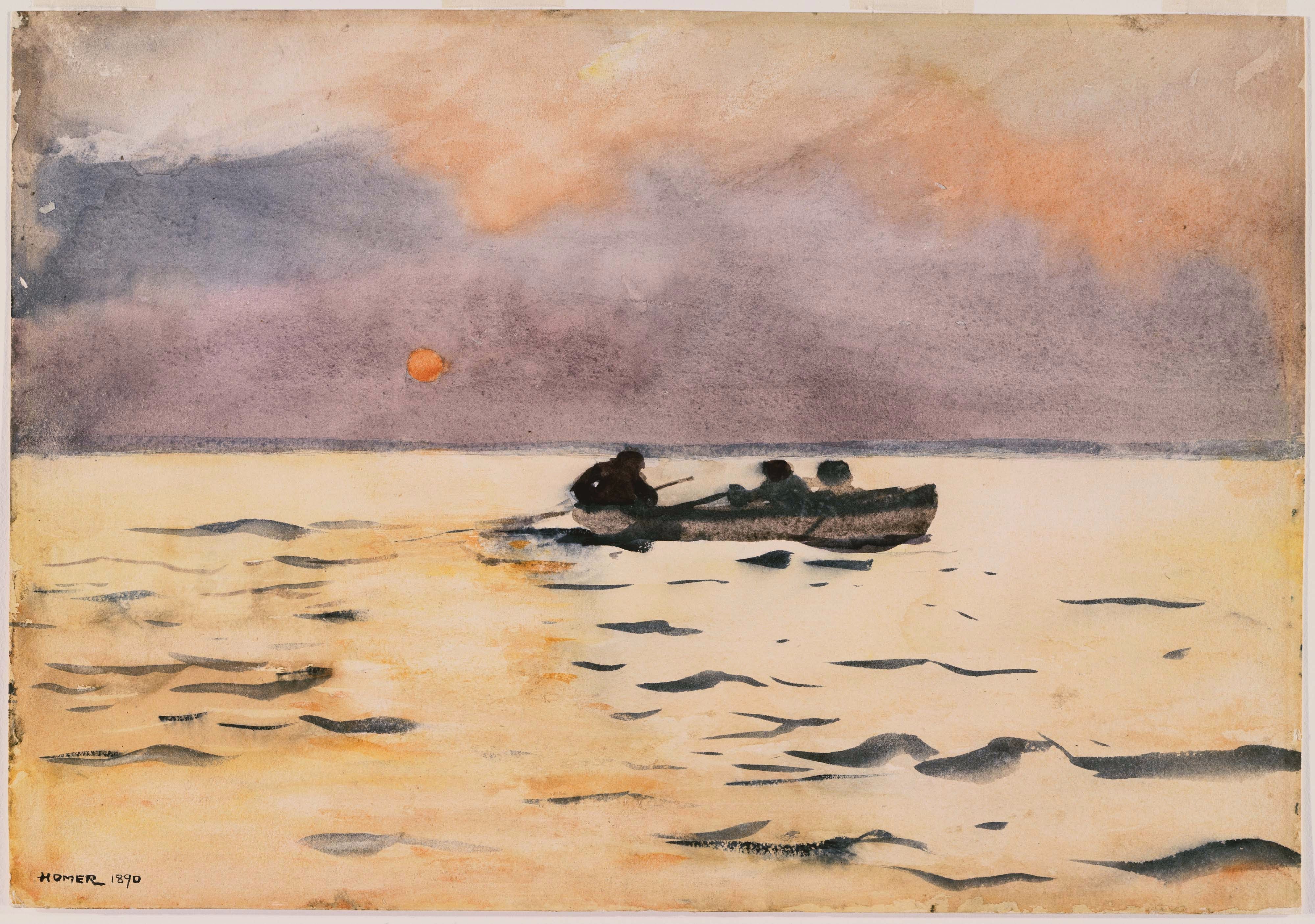
Rowing for Home
Rev. Douglas Taylor
5-31-20
UUCB
My original intention with today’s sermon was to dive into the question of how this pandemic will likely impact the way we worship and ‘do church’ together as Unitarian Universalists into the future. What I discovered over the course of writing it is that today’s sermon is focused a little more tightly than that. How will this pandemic impact the ways we do the justice work of the church into the future.
Right about now, a number of activists in our community are gathering at the Binghamton High School to march over to Rec Park, protesting for justice for George Floyd who was murdered by police last week on Memorial Day in Minneapolis. This is in the national spotlight because recording police interactions on our cellphones has become more prevalent. The officers involved were quickly fired; and many people, including the mayor of Minneapolis, called for more significant consequences. Tired of the lack of action, protestors set fire to the Minneapolis, 3rd precinct Police Department on Thursday. On Friday, Officer Derek Chauvin was arrested and charged with 3rd degree manslaughter, the beginning of what is sure to be a longer list of charges against him and the three other officers involved.
Do you remember the Black Panther movie from two years back (2018)? The marvel superhero film? Do you remember the opening scene? It starts, not in the fictional kingdom of Wakanda, but in Oakland, CA. That’s significant to the meta-narrative because the Black Panther party in the US began in Oakland back in 1968. It’s the fiction’s nod to reality. But that’s not all. The opening scene from that movie is not set in 1968, it’s set in 1992. Why is that significant? Because of the ’92 race riots sparked by the acquittal of the four white police officers who viciously beat Black motorist, Rodney King during a traffic stop.
There is a lot of pain and grief rolling through the community. The protests happening around the country today are not only for George Floyd. They are for Michael Brown, Eric Garner, and Tamir Rice in 2014; for Freddie Gray, Sandra Bland, and the Charleston Nine in 2015; for Alton Sterling, Joseph Mann, and Philando Castile in 2016; and on the list goes. They are also for Ahmaud Arbery, Breonna Taylor, and Tony McDade from these past few months. The protests are the accumulation of every frustration felt at the acquittals and excuses letting the murderers walk free in the past.
But something is changing. Like Ferrar Burns in the story from Annie Dillard; we’ve been rowing toward home all along and drifting further out into the channel and into danger. But the tide is turning. Something different is happening. We have to keep rowing toward home now. We have to row hard.
The public pressure by protestors nationally is having an impact lately. It may yet be possible to change the way this story keeps playing out – the old story where another black or brown person is murdered by a police officer or a white vigilante, and nothing much happens to the killers. But the response to the killing of Ahmaud Arbery and Breonna Taylor, for example, is different. The response to the murder of George Floyd is different. Consequences are beginning to occur more regularly for the individual perpetrators. Society is less willing to just back down and be okay with the deaths. The killing hasn’t stopped, but the response has begun to change. And a big part of what has changed is due to public pressure.
What, if anything, does this have to do with the pandemic? What, if anything, does this have to do with the impact this pandemic has had on how we do our justice work as a congregation? I am not sure I can answer those questions yet – but those are questions bumping around inside my head all the same.
I’ve noticed that our Social Justice work has faded into the background lately. I’ve noticed we have a lot on our plate and a lot pulling our attention. I’ve noticed and worried about it. And I suppose a few months back when everything became about the pandemic and how to navigate the impact of this virus – justice work settled into the background even more. How can you do direct action, after all, when you can’t get together and directly act without putting your health and the health of those you would serve and partner with and support at risk?
This virus does not care if our cause is just. The gathering of assault-weapon-toting citizens calling for re-opening resulted in a noticeable number of them catching the virus. I expect there will be a similar result for the Black Lives Matter protestors in Minneapolis and other cities. It is particularly tragic given we are finally making some headway on this police brutality form of white supremacy. This pandemic is getting in the way.
This pandemic is hounding us as we try to deal with other things. The reality of it all is overwhelming. It is daunting and most of us have not processed the magnitude of what is happening. On May 10th, 3 weeks back, I preached on what the pandemic will mean for our country. At that time, we had 4 million cases worldwide; we have 6 million now. I reported the death toll at over 275,000 back then. Today it is 367,000 – 92,000 people have died around the world from Covid-19 just in these past three weeks. In the United States alone, we’ve crossed the 100,000 deaths threshold earlier this week and we’re at 105,000 deaths now.
And still, this one death of George Floyd has sparked the grief and frustration into outrage. So where does that leave us? As a liberal progressive faith community, our place is as allies and accomplices for justice. Our role is normally to show up. With the reality of the pandemic, that’s harder to do safely. But there are multiple ways to get involved.
I was talking with a group about this very point yesterday. I had the pleasure of leading a workshop online with about a dozen UU young adults. They were having their annual Unirondack Young Adult conference, but because the camp is closed and we can’t have in-person gatherings, they held the conference online. I offered a workshop on ethics. We began with some generic questions but soon shifted into discussing the situation in Minneapolis.
We talked about police brutality and the myriad reasons to obey or not obey a law. We talked about the logic behind property destruction and the importance of knowing which communities your actions serve. One of the sources I shared with them was Ethicist Dr. Sharon Welsh who said, “a single actor cannot be moral.” One must be part of a community, grounded in a context.
My context is this Unitarian Universalist congregation. Our community is multifaceted and engaged in the issues at hand. We don’t all agree on each aspect of what’s going on, but we are together in our context and our compassion.
I suspect, if we will let it, this pandemic will push us to be more creative in how we do our justice work as a congregation. Some people will still choose to show up at a rally – with a facemask and proper social distancing please! Some people can’t afford that risk or will take other risks instead. Perhaps you will be part of the fundraising or of spreading the word to others; perhaps you’ll cook food or organize resources; perhaps you will read up on the background and unpack your own bias; perhaps you’ll be a teacher or hold safe space for someone to process as the struggle stretches on.
Maybe the impact this pandemic will have is to push us to be more creative in how we support each other and how we show up – even when we can’t actually show up.
For in the end, we are all just rowing for home. The injustice we fight against, the anger and grief and frustration are borne from the yearning to breath together without fear, the longing to live in a good community that takes care of its people. We’re all rowing for home. The tide is coming in. Now is the time for us to row harder and bring a new version of this tired old story into the world.
In a world without end,
May it be so.
Cacophony and Symphony
A homily for Flower Communion
Rev. Douglas Taylor
May 24, 2020
UUCB
Homily preceded by this Flower Ceremony Slideshow and Song https://www.youtube.com/watch?v=0pArJOtflDc
The choir sang this song in October of 2007. “We Are One” by composer Brian Tate. It has been sitting on my computer as an mp3 file for more than a dozen years waiting for this moment. Every now and then I would listen to it while working on something else. It has given me joy and solace and uplift over the years. We are one, the song tells us.
When we stand. When we fall.
When we rise. We are one.
We’ve been through some hard times as a congregation. All congregations are going through hard times right now, and one thing we’ve learned over the years (which is the great secret of faith) is: we can get through difficulty together. Because we are one.
My title is “Cacophony and Symphony.” We have a lot of sound and noise in our lives and listening to the choir or a beautiful string trio or even the point and counterpoint of two birds outside my window in the morning – I know there is something powerful available to us when we hear each other and respond to each other with grace and appreciation. Our congregation is like the symphony – the blending of voices and instruments into a beautiful whole. I know it is possible and perhaps it is all the more amazing when set against the amount of noise we have with us as well.
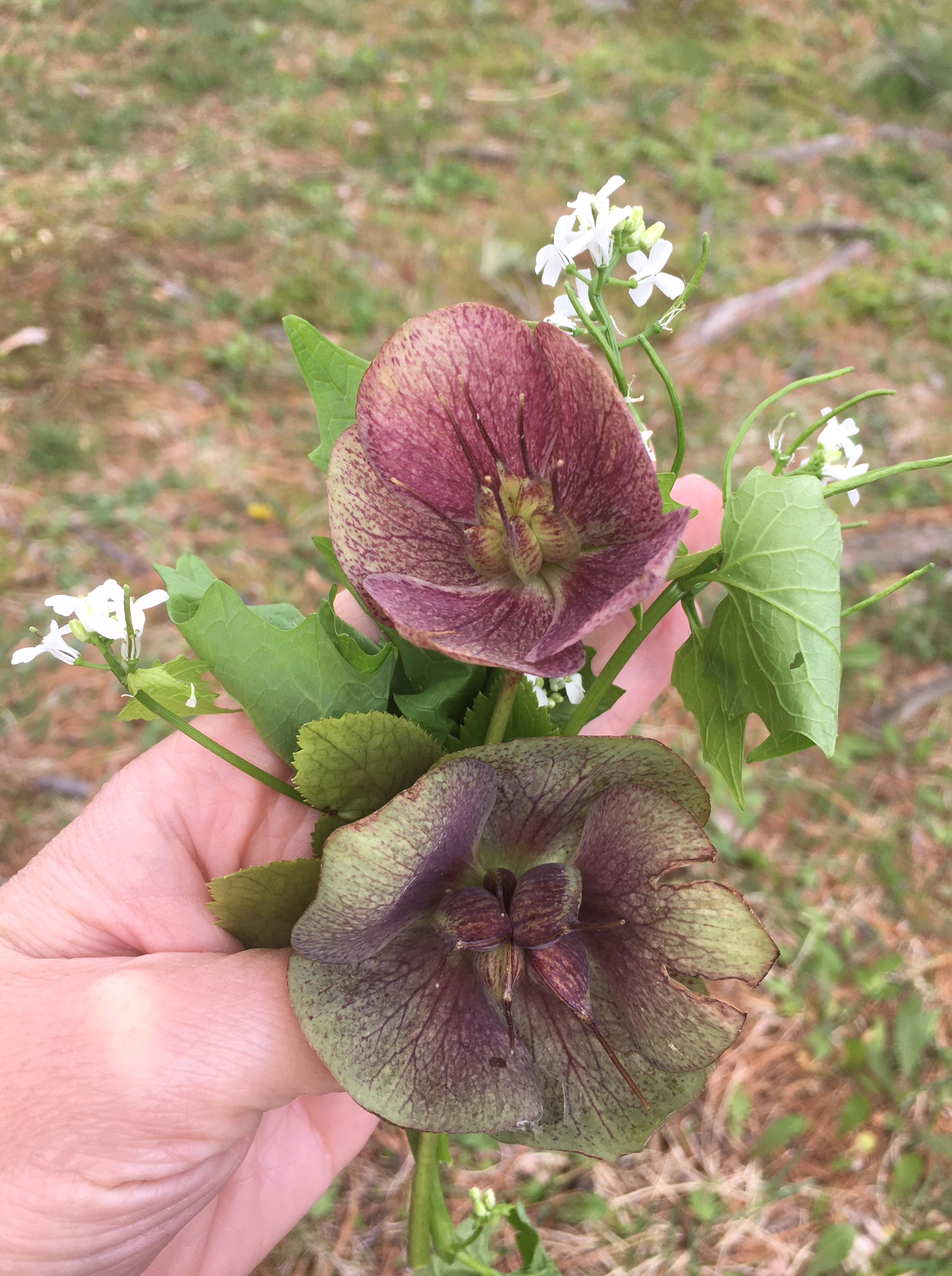
A visual metaphor is more common for a homily on Flower Communion Sunday. Notice, not the bird song or the choir, but the flowers. The message is the same. We are a blend of beauty together. Each singing our own note and each blooming with out own beauty. But together we are an abundant bouquet to behold.
Rev. Dr. Martin Luther King talked about the choice between chaos and community. King witnessed the nation struggling to live into the true dream, struggling to allow the disparate voices blend into something beautiful and just. It is a painful truth to notice how often our voices do not blend and instead give rise to the cacophony of noise.
The news this holiday weekend has been about states re-opening and how some folks want church buildings to reopen early. Perhaps it is just the news I’ve tuned into, but it does seem discordant to my ear, like a clanging gong. The science tells us it is not safe to meet in person at this time. So, we will stay open as we have been all along and when it is safe to meet in person again, we will.
To help me get back on topic, my wife generously pointed out to me that flowers are opening up now too. As the refulgent spring around us opens from bud to bloom, my wife also helpfully added, “some flowers are poisonous, you know.”
So, yes – it breaks my heart to not be doing a real Flower Ceremony with you all. The symbolism is beautiful – each of you has a unique beauty to add to the mix. Each of you brings a flower to the service to symbolize that each one brings something to the table. Everyone takes a different flower home at the end of the service. Everyone receives something unexpected to take away with them. And … and to be blunt I don’t want any of you to receive this coronavirus as the unexpected thing you take away with you.
Another line from the choir song we just heard says, “And we shall care for each other with all our soul & our might.” Cacophony and symphony: chaos is certainly an option on the table. Discord and disease still walk our streets. But King knew that was not the only option, not the option most people wanted. We know it too. We know that we are here to care for each other with all out soul and our might. That’s what it means to still be open as a congregation.
So, I will send you all the link https://www.youtube.com/watch?v=0pArJOtflDc to listen to the song and watch the flowers slideshow again as often as you want. That’s what you get to take away today as a blessing to remind you of our community and of our faith.
And these words shall be forever within our hearts.
And we shall teach them to our children.
And remember them in our lives.
We are One.
In a world without end, may it be so.
Standing in the Doorway

Standing in the Doorway
Rev. Douglas Taylor
UUCB
5-10-20
Normal. Part of the trouble is the things considered normal. Arundhati Roy, in that excellent piece we heard as our reading, https://www.ft.com/content/10d8f5e8-74eb-11ea-95fe-fcd274e920ca says we don’t want to go back to normal. She says this pandemic is a portal through which we can move – not back to normal – but forward into a new way of being. This got me thinking, if normal is not what we want, what do we want instead?
Later, at the end of the month, I will offer a companion sermon “Rowing Toward Home” on the topic of how this pandemic will leave a lasting impact on how we Unitarian Universalists worship and gather in community. For today, I focus on how this impacts our nation. Today let us consider this pandemic portal and where it might lead for us as citizens of our country: back to normal or on toward something new.
Author and activist, Sonya Renee Taylor has recently said:
“We will not go back to normal. Normal never was. Our pre-corona existence was not normal other than we normalized greed, inequity, exhaustion, depletion, extraction, disconnection, confusion, rage, hoarding, hate, and lack. We should not long to return, my friends. We are being given the opportunity to stitch a new garment. One that fits all of humanity and nature.” (Note: I misattributed this to Brené Brown.)
What Sonya Taylor is saying is much the same Arundhati Roy was talking about in her article. Roy described the many ways in which the pandemic and the Indian government’s response to the pandemic have revealed glaring inequalities and the tragic consequences of prejudices.
At the time she wrote her piece, shortly into the month of April, Roy sited that “The number of [CoVid-19] cases worldwide … crept over a million. More than 50,000 people have died already.” Today, five weeks later, those numbers are still climbing globally. We’ve gone from 1 million to 4 million confirmed cases worldwide in those five weeks; from more than 50,000 dead to more than 275,000 dead worldwide. Roy, as I’ve said, was writing about her own country of India, but we in the United States, are superlative – as always. We have 1.3 million of those 4 million cases right here in our country. And we’ve had nearly 80,000 deaths so far. This is hitting us hard. And we are not done.
And that is just the virus. This is a pandemic crisis as well as a political crisis and an economic crisis and healthcare crisis. Arundhati Roy talked about how the caste system in India has amplified the pandemic problem. In our country we have a similar impact – poor people and minorities are disproportionately hit harder by this pandemic because of the way our society is structured and the way our government has responded.
If this pandemic is to become the portal we need it to be, we must approach this with an active hope toward the world we long to create. Right now may be a pivotal moment of what some are calling the great turning. In the environmental movement, people talk of the Great Turning. https://livingthegreatturning.com/the-great-turning/ Joanna Macy’s elegant articulation about choosing a middle way between blindly ignoring and denying the problem versus getting stuck in feelings of despair and powerlessness. That middle way is to see the world at a turning. It calls us into active hope. I see this pandemic bringing these similar responses from people around me: active denial, active despair, and active hope.
The Great Turning is not something that might happen to us, it is a choice we can make together about how we will respond. For Johanna Macy the climate crisis it is not about saving the planet or saving humanity. The active hope found in the Great Turning is not about promises of a particular outcome. It is instead about facing the reality we are in now and responding in our best way.
We can’t avoid the CoVid-19 crisis – it’s already here. We are living in it. (And Macy will tell you the same thing for Climate Crisis – we’re already in it) The big question is not how we can avoid a disruption, but how we will navigate it. How can we steer our way as it crashes around us?
The pandemic crisis reveals these other crises. As a country we are in the balance of either drifting politically into full oligarchy with shades of fascism and plutocracy or perhaps a recommitment to a democratic republic with greater ecological, economical, and social balance. Something will come from all this. We should take part in determining what. Something different will rise in our society from this pandemic.
With the healthcare atrocities continuing to unfold around us in the form of shortages and profiteering, we can perhaps push more strongly now for a single-payer solution, to pull for-profit healthcare from the equation if possible. With the record-level unemployment we are experiencing even as the Dow Jones rebounds, we can perhaps push the conversation of minimum income or at least a real living wage level for the minimum wage. I’m not suggesting anything all that radical, just things that are civil and, dare I suggest, functional for a healthy society.
The goal is to not be reactionary. I’m not suggesting we react in panic to swing a pendulum as far to the other side as possible. No. Our goal is instead to be intentional. It is to view what is happening through the lens of our values and connections. And then to lift up what we know and point toward the future we want to create together.
Look toward the systemic changes needed. We will get to the other side of this pandemic. Will we drag our old baggage along? Or perhaps, in looking at the things we’ve done to get through this, we can choose to continue some of them on the other side of this; such as caring about the vulnerable among us, such as valuing health workers and teachers more, such as prizing flexibility in a workforce rather than blind obedience. Perhaps the tools that have seen us through this are the tools we want more permanently in place as we emerge.
In her book Emergent Strategy, Adrienne Maree Brown says “Change is constant.” We are in the midst of obvious change. Let’s lean into it rather than fight for a return to ‘normal!’ Brown offers an outline in the book, strategies for navigating change. Her guiding principle is to recognize that change is constant. She also says “Never a failure, always a lesson,” “Move at the speed of trust,” and “What you pay attention to grows.” Her list is a little longer than that, but I just want you get a flavor for her elements of emergent strategy. We can be strategic through the change, noticing what emerges and how we can nurture the parts we most want.
Adrienne Maree Brown talks about change as not only constant but also fractal and iterative, interdependent and intentional. The thrust of her message and the point I am attempting to raise here is this: We have a part to play in how this all unfolds. Something is emerging in this time of difficulty and we can nurture it along in our own personal lives, in our circles and communities, and we can call for it as our nation winds its way through this trouble.
Arundhati Roy said:
“Historically, pandemics have forced humans to break with the past and imagine their world anew. This one is no different. It is a portal, a gateway between one world and the next.”
She reminded us that we don’t have to trip along and come gasping out of this pandemic crying out for a return to income inequality, a return to hyper-polarized politics, a return to prejudice and hate, a return to fetishizing our police officers while devaluing our teachers, or a return to the sick, sick way we have commodified health. We don’t need to simply stand in the doorway wondering what might come next. We can, instead, choose to rise up and walk through this portal with a plan. We can, instead, choose to cross this tragic threshold with an eye toward the world we intend to create. We can, together, make of this pandemic a portal toward the more just and fair society that is emerging among us even now.
In a world without end
May it be so
Earth Teach Me

Earth Teach Me
Rev. Douglas Taylor
UUCB
4-19-20
It is a blessing to still go out for a walk in these days of self-quarantine. Nature continues to be a source of renewal and grace for me. Have you been outside lately? In the past, before the time of self-quarantine, I would pull my car out of the garage without even stepping outside. I’d drive off to some parking lot somewhere and walk across the pavement until I entered a building. That was my normal day, my normal limited daily experience of being outdoors. Of course, I would make time for a walk, but not often enough. I would make some time to be in the yard, but not often enough.
Now, every time I go outside, which is no longer a daily event, I prepare myself. It’s different. I have slowed down. I am more intentional. I notice more. There is a dogwood tree at my front steps that is in bloom right now. I have, in the past told a story about that tree and how cheated I’ve felt to have the tree move from blossom to bloom and then drop all its flowers in a ridiculously short amount of time. I’ve been watching the tree every day now. I notice how gracefully it is moving from blossom into bloom. I’ve slowed down. I notice more. Has this pandemic slowed you down?
In the article we had for our reading, https://tinybuddha.com/blog/4-lessons-from-the-forest-dealing-difficult-times/, the author uncovered 4 lessons offered by the old forest. The first one is to slow down. This pandemic has forced me to slow down. Or, another way to think of it: In heeding the wisdom of the old forest’s lesson, I am better equipped to thrive in this pandemic. The earth teaches me to slow down.
The second lesson the author found, that old forests offer for how a community can thrive, is to have a strong foundation (roots hold me close). What are the roots you rely on in this time? Some of the obvious foundations I’ll tell you about are things I’ve been talking about for a while: The foundation of sharing and supporting each other, the power of compassion. For a moment, though, let me share two key foundations: hope and truth.
A month ago, the internet got really silly with a story about how dolphins had returned to the canals of Venice Italy. It made many people so hopeful. With people no longer clogging the water ways, the canals had the ability to rebound, to become clean and clear. And this story popped up that dolphins were seen swimming in the canals. It was quickly proven false; but for a moment the internet got very gleeful with this story.
Truth is so very important at a time like this. The pandemic virus is not going to magically disappear if we hope hard enough. And protesting with assault rifles and confederate flags will not change the virus one bit. The only thing this virus responds to is reality. But, keep truth at your foundation and hope can arise from within that. There are no dolphins in the canals of Venice; but the canals are cleaner and clearer, which is a hopeful sign about the Earth’s capacity to heal. It is a true echo of what could happen for you as well. Is your life growing clearer now that the canals of your days are less clogged.
The third lesson from the article is that disturbance is not bad. The reading talks about lightening killing a tree which allows an opening for new trees to grow. I will not be so crass as to suggest a direct analogy, but let me offer something else. Part of why we so love nature is the pastoral healing grace we find there. The old forest is tranquil, steady, strong. And, at certain times and in certain ways, nature can offer a prophetic warning. Lightening does strike. Illnesses do happen. Predators kill and eat prey. These things are part of nature, they are part of life. There is loss and suffering and death. What makes these things tragic is when they are avoidable, twisted to serve selfish goals rather than the communal balance.
Disturbance is not bad, but a disturbance can reveal a grave imbalance which is bad. Fires, for example are a regular destructive occurrence and a natural part of the life of a healthy forest. When humans suppress fires, it creates an imbalance such that when a fire does eventually happen it is overwhelmingly devastating.
Illness is a disturbance. But because we are so very out of balance with nature as a society, we are being overwhelmed. This will be devastating. The pastoral grace of nature is one part of what Earth teaches me. The harsh destruction – particularly when experienced out of balance – is a harder lesson. Normally, disturbance is not bad, it is simply part of the dynamic reality of nature. We ignore the prophetic warnings of nature to our folly. Does this ring true for you? Do you see some imbalances revealed by this pandemic? Are there imbalances in your own life that you can work on now while work toward correcting the larger societal ones together over time?
The last lesson from the article is ‘if you can’t get over it, grow around it.’ Another way to say this might be ‘work with what you’ve got,’ or ‘grow where you are planted.’ What it also hints at, however, is the hopeful message that persistence will be rewarded. The roots will eat away at the boulder. The people will rise to create a better society. The obstacle will not last. Yes, the pandemic is awful. Yes, it is twisted into an atrocity by the obstacles created by out immoral and unbalanced national situation. But the earth teaches us that the slow and grounded community will persevere through the upheaval and difficulty. If you can’t get over it, grow around it.
Listen to the wisdom of the forest. There are lessons for how to thrive as a community revealed to those willing to look. Slow down. The way through this difficult time is not found in rushing around or demanding a speedy return to normal. We will never return to ‘normal’ from this. Slow down. Settle into your foundations. Seek your grounding, your roots. I suggest the nuanced dance between truth and hope, but you find yours, that’s what you need. This is a disturbance and it will change us. Something new can grow when we are ready to allow it. And the obstacle will not last, we will persevere and together build the beloved forest of faith that will always be our home.
In a world without end,
May it be so.
Easter Inside (2020)
Homily “Easter Inside” by Rev. Douglas Taylor
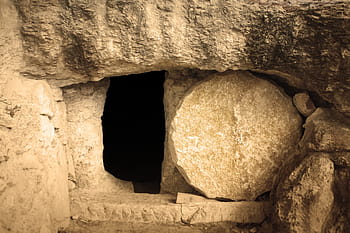
In the bible, each of the four gospels offers a version of what happened on that morning. Mark’s Gospel ends most simply and mysteriously with the ‘empty tomb.’ Mary Magdalene and other women went to the tomb on the third day to anoint Jesus’ body. They discovered the stone had been moved already and an angel sat waiting for them, but no Jesus. The angel tells the women that Jesus is not here, that he has been raised. All of this is also reported (with various additions and adjustments) in the other three gospel narratives. The remarkable part of Mark’s version is that this is all he gives us: an empty tomb. Mark does not go on to show the risen Jesus in any way. We are left wondering … what happened to Jesus? Where is he? In Matthew, Luke, and John we are shown: Oh, there he is. But in Mark, it is left as just an empty tomb. It’s a new day. He could be anywhere!
As Rev. Root warned us in the reading (an excerpt from here: https://kara-root.blogspot.com/2012/04/unthinkable-alternative-aka-resurrected.html), “A Risen Lord is dangerous. Unpredictable. A Resurrected God means Jesus Christ could meet us anywhere. In anyone. At any time.” It is much the same message as in the story about the dwindling abbey, in which the rabbi says, “The Messiah is among you.” God could be anywhere, anyone.
And most dramatically, because of all that, the empty tomb signals that everything has changed. Easter is about transformation. It’s a new day. The empty tomb did not call the disciples to return to their old lives. It did not imply the oppressive regime has succeeded. Instead it declared the old ways finished. We can’t go back to normal. The tomb was empty. God could be anywhere now.
Allow me to step back for moment. I am sharing with you the Easter story as a non-Christian. I am looking at the deep message of resurrection and transformation, lifting up the ways this story reveals a life-giving word for anyone. We are atheists, pagans, Christians, mystics, Buddhists, Jews, and seekers together gathered for a moment around the central, holy story of our Christian siblings in faith. We see truths here that nourish us, whether or not we believe the story as fact.
The root message of Easter is transformation. Things are never going back to the way they were before. But we don’t exactly know what’s next. That was a frightening prospect.
We approach this story today from inside a global pandemic that will leave an indelible mark on us as a people. We may long for things to return to normal as soon as possible, yet we know deep down, things will never return to the way they were before. So, we hear this Easter story and wonder what might be possible.
In the Easter story, and echoed through countless interpretations and retellings, we hear that it is not only Jesus who has risen. The message he brought rises as well. And within each hearer there is a rising. In the midst of anguish and loss, amidst betrayal and denial, even through cruelty and death, … something rises. What if that message of love and promise, of hope and power – what if that message is true? The disciples asked themselves then and we ask it still today: What if God is still among us luring us, encouraging us, calling us to rise? The tomb was empty! God could be anywhere, in anyone.
My colleague Kendyl Gibbons posted her Easter message early, so I know she will be saying to her congregation: “What if we, too, on this Easter morning of Corona virus danger and death, are called to rise again, and make a new world? … This isn’t the first time the world has fallen apart — it just seems more devastating because it is ours.”
At the end of the narrative from Mark we read that Mary and the other women fled in terror. We too experience some terror in our situation today. The pandemic is revealing the seismic brokenness of our healthcare system, of our economic system, and of our political system. This brokenness in our society is revealed as the unnecessary and preventable suffering unfolding in front of us.
No, we do not want things to go back to normal. And, amazingly, here is the best part: The very things that are helping us survive this pandemic are the things we want in place on the other side of this pandemic. Love that knows no borders, creative solutions for isolation, and willing acts of compassion to care for the most vulnerable among us. We will carry each other through this together, we will rise with truth and with hope. For such are forces that the empire of Jesus’ time did not understand and that the empires of our time do not understand.
Yes, we will suffer. We will all lose someone. Our mutual well-being may weather this intact, but individuals among us will not. Some among us will perish. We will all suffer. The world we knew it is finished. And yet the tomb is empty. Which means the empire will not win. It is a new day, and we don’t know exactly what is next. And that is what faith is all about: it is a willingness to trust that we can rebuild a shattered world, trusting that we can do better this time; it is trusting each other to rise.
The sane response to what is going on is to feel lost, afraid, sad, and anxious. And that is where Easter finds us. It says, yes, the danger and cruelty are real; yet through it all, from somewhere deep inside and also from beyond us, the refrain continues: “Rise.” it calls to us of love and hope and power. “Rise,” spring sings to us as a sign and a promise. “Rise,” we hear in the words and deeds of Jesus of Nazareth. “Rise,” the refrain comes again and again in the Easter message. This dusty and lonely place of fear and loss will not last. “Rise.” We hear the call. It is for us to respond.
In a world without end, may it be so.
 Rev. Douglas Taylor