
All I Know So Far

All I Know So Far
Rev. Douglas Taylor
10-27-2024
Sermon video: https://youtu.be/n1zNy_MKmpI
Several years back I started collecting a playlist of positive songs that were written as advice from a parent to a child. When I was a teenager, Rod Stewart did a cover of “Forever Young.” This song was all over MTV during my senior year in high school; and later when I was a new minister, someone used it during a private Child Dedication ceremony. I think that’s what cemented it for me. I had played “Cat’s in the Cradle” by Harry Chapin and “Father and Son” by Cat Stevens, but they were less examples of what I longed for and more cautionary tales. This old Bob Dylan song offered a message I wanted to embody as I entered adulthood.
Then, in the ‘90’s, as a young father, the radio was playing “You Gotta Be” by Des’ree.
You gotta be bad, you gotta be bold, you gotta be wiser
I love this song.
Listen as your day unfolds
Challenge what the future holds
Try and keep your head up to the sky
This was peak wisdom for me as a young parent. I loved it. This is what I wanted to instill in my children. I particularly resonated with the message that you gotta persist – you have to keep at it. You don’t have to be perfect, but you do have to be bold.
Over the years I added more songs to my playlist. 93 Million Miles by Jason Mraz; Growing Up by Macklemore, I Hope You Dance by Lee Ann Womack, and Dear Winter by AJR; I’m sure you have your own playlist, your own songs that carry wisdom down through the generations.
All I Know So Far is the most recent addition to my playlist. It is a song written by Pink just a few years ago (2021). Pink says the song was envisioned as an advice-filled love letter to her daughter. The lyrics talk about finding strength in the face of adversity and fear.
And when the storm’s out, you run in the rain
Put your sword down, dive right into the pain
Stay unfiltered and loud, you’ll be proud of that skin full of scars
That’s all I know so far
It is a call to be open to the hard parts of life, to be vulnerable. That’s all I know so far. Pick reveals some hard-won wisdom in this song. If you have some time, listen to the full song by Pink. It’s worth it.
This morning, my focus is to offer something akin to these songs on my playlist – a sermon highlighting my message; not to my children but to the world. They say every preacher has only one sermon they keep repeating and reframing and revising over and over. Which makes me wonder: what is my one sermon?
I toyed with the idea of asking all of you to answer for me; to set aside some time for any of you to share what you see my one message to be. What is the overarching message you’ve heard from this pulpit over these past 20-plus years? But then I figured that was a tricky question to put you all on the spot with. And honestly, if I’m doing my job right, your answers would be more about you and what you’ve needed to hear than they would be about me and what I’ve been trying to say.
I’ll give you a preview – a small hint of what is to come. It’s going to be about love. And I don’t mean the soft, commercialized stuff we are sold in ads. I mean the transformative power of love. I mean it the way James Balwin was talking about when he said:
The longer I live, the more deeply I learn that love—whether we call it friendship or family or romance— is the work of mirroring and magnifying each other’s light. Gentle work. Steadfast work. Life-saving work in those moments when life and shame and sorrow occlude our own light from our view but there is still a clear-eyed loving person to beam it back. … In our best moments, we are that person for another.
(From Nothing Personal)
But I’m getting ahead of myself. I only meant to give you a hint, a small clue for what I think I’ve been saying from this pulpit these past 20 years. Because let’s be honest – I don’t only preach about love.
I feel like I have a fairly wide range of sermons week by week. I preach on social issues and theological questions, UU history and various holiday themes. I preach about grief and anti-racism, forgiveness and covenants.
On Sundays, I share my own collection of influences such as the various Bible stories and key passages from the Tao Te Ching, and a myriad of poems and song lyrics. I share with you my fascination with Process Theology, Annie Dillard’s poetic naturalism, and Winnie the Pooh’s simple way. I have an eclectic taste.
Consider the recent few sermons from September and October so far. I preached about political divisiveness one Sunday, war and peace the next, followed by a climate revival and then a homily on forgiveness, before rounding it all out with a collaboration Sunday message about the ethical harvesting of sweetgrass as it applies to your own living.
What is the common thread through all of these different topics, nestled in each of those sermons? Maybe it is something about how to be human together. Or, as I’ve already hinted, maybe it’s all about loving and being loved.
Let’s sit with that first idea for a few minutes; maybe every sermon I preach is something about ‘how to be human together.’
I have not done a comprehensive review, but a recent perusal of my sermon catalogue revealed to me three prominent themes that I keep circling back to – each of which does feed into the idea that every sermon might be about ‘how to be human together;’ or more broadly about love.
The first theme I hear myself bringing up a lot is brokenness. The Ingathering Sunday story about Celia and the Sweet Sweet Water in which she almost made it home with the saving water but she tripped and broke the glass.
I talked about how we are all broken, we all have broken places in our lives and in our hearts. And how many times have I quoted that Leonard Cohen song in which he claims there is a crack in everything, that’s where the light gets in. Our brokenness hurts, but it also opens us. And our brokenness is a path into empathy as we see the brokenness in others.
From this root idea I talk a lot about vulnerability and courage, trust and compassion. From this root idea of brokenness I challenge ideas such as perfection and shame and Original Sin and the illusion of self-sufficiency. In short – I talk about love. I talk about ‘how to be human together.’
A second theme I hear myself bring up a lot is resilience. If we are broken, it is because we fail and we fall and get hurt. It happens. And after we fall, after we break – we rise. Helen Keller is remembered for saying; “Although the world is full of suffering, it is also full of the overcoming of it.” Yes, there is trouble in the world, and so we will rise to meet it.
From this root idea I often speak about the resiliency of nature after disasters and devastation. Healing and resilience are natural qualities – it is what nature does with even the slightest bit of life remaining. And from there I talk about how we are part of nature and we, too, are resilient. And from there I talk about how we can create communities of resilience. In short – I talk about love. I talk about ‘how to be human together.’
A third theme I hear myself bring up a lot after brokenness and resiliency is something about community. I learning I’ve more recently come to articulate is that healing doesn’t happen in isolation, real healing is a communal experience. I often frame this as something this congregation can be – a healing community.
From this root idea I talk about the theological concept of Beloved Community, about liberation theology and liberative justice. From this root idea I talk about covenant and the bonds that set us free, that hold us accountable, and compel us to grow. In short – I talk about love. I talk about ‘how to be human together.’
So that is how I see myself able to have such a variety of topics and themes on any given Sunday but the one sermon I am preaching over and over is about how to be human together – about loving and being loved.
There is a book by Prentis Hemphill called What It Takes To Heal. A colleague put out a call over the summer saying she wanted to read this book and to have a group of colleagues who would read it with her and process it with her. It’s a good book. Near the end of the book, Hemphill talks about a transformative experience they had centered around love.
Kasha was my friend for many years before anything romantic happened. It wasn’t until the passing of my grandmother, not too long after her grandfather had died, that we fell in love. It surprised us both, that our grief opened up the door for love.
On a visit to see her in Hawai’i, she built an altar for my grandmother and her grandfather. They sat next to each other up there, framed and smiling, encircled in leis. She sat just below, and asked me to tell her stories about my grandmother. I was overwhelmed by the beauty of this invitation. Did I deserve to be loved like this?
I shared and she listened with a steady presence. She gave me room to feel, and instead of being repelled by my vulnerability, she moved closer. The tears poured and she didn’t rush to wipe them, just put a hand on my back, asked another question, or let the silence wash over us.
[Later]… At the airport as I was leaving, I said to her, “I wish a love like this for everybody. Imagine what it could do.” (p194-5)
Imagine what that could do. James Baldwin wrote:
“Everyone wishes to be loved, but in the event, nearly no one can bear it. Everyone desires love but also finds it impossible to believe that he deserves it.”
― James Baldwin, Tell Me How Long the Train’s Been Gone
Imagine what it could do if everyone could experience the love Prentis Hemphill received at that ancestor ritual in Hawai’i. Imagine being loved yourself. Imagine others being loved – maybe even people you can stand, people you hate. What if someone loved them? Imagine what that could do.
Listen as your day unfolds
Challenge what the future holds
Try and keep your head up to the sky
Lovers, they may cause you tears
Go ahead, release your fears
Stand up and be counted
Don’t be ashamed to cry
It’s okay to be a little broken, indeed it will help to be broken open. Your humanity will grow as you are open to the light that shines through the brokenness of others around you. Don’t be ashamed, go ahead and release your fears. We have each other to help heal each other. This is how we are human together.
All I know, all I know, love will save the day
In a world without end,
May it be so.
—
Listening for the Healing Shift

Listening for the Healing Shift
Douglas Taylor
10-6-24
Sermon video: https://youtu.be/j4xqvhi_vhE
It has been a long-standing practice for me to bring a sermon on the topic of forgiveness during the Jewish high holy days each year. My internship supervisor modeled this practice for me saying, ‘they always need it.’ Some years I focus on a piece of Jewish lore around the holidays, other years I outline the steps for making or accepting an authentic apology. I’ve preached on forgiveness from Buddhist and Christian perspectives, I’ve reflected on scientific studies on the how forgiveness effects our health. I’ve grappled with large scale forgiveness practices such as the Truth and Reconciliation process. And this year is not the first year I have devoted a multi-generational service on Forgiveness.
Today, I bring not a full sermon, more of a thought to consider as you go through your week – a thought I hope will resonate for you if you are 4 or 24 or 84 years old.
What most of us want is healing.
But we get sidetracked on our way to that. Most of us, to some degree on other, have experiences of brokenness, of mistakes that we’ve made and injuries we’ve suffered. Certainly, we want to repair what is broken, but a part of us also wants to end up being right. We want to fix what has gone wrong, but a part of us also wants to be the hero in the end, to be vindicated, to be justified in our actions – whether we need to forgive or be forgiven, we want to also end up being right.
If we can set that aside and reach back to remember, the true yearning we have is for healing. I was reminded recently that the Hebrew word for peace, “shalom,” conveys not only peace but more accurately wholeness, completeness, and wellbeing.
I will tell you another story.
This one is about Rabbi Levi Yitzchak, as told by famous storyteller Doug Lipman. It is called, “Defending His Property.”
…
One day, an innkeeper came to Rabbi Levi Yitzchak of Berdichev. “Rabbi,” he said. “Is a man permitted to defend his property?”
The rabbi said, “Of course. What needs defending?”
“My inn,” said the man. “So you’ll give me your blessing?”
“That depends. Who are you defending it against?”
“Rabbi, the local peasant boys break into my kitchen at night, to steal the food that I keep for my customers.”
“I see,” said Rabbi Levi Yitzchak. “And how do you plan to defend yourself from them?”
“Rabbi, I’ve been at my wit’s end. I’ve yelled at them when I saw them running off with my food. I even bought a guard dog. But they fed it! When I got up in the morning, the dog was eating the stolen meat they gave it. So I got rid of the useless dog. But now, I have no choice. I’m off to the city to buy a rifle. Please give me your blessing on my journey!”
The rabbi stroked his beard, thoughtfully. “The loss to you is serious. These boys seem determined to steal. But how will the rifle protect your property?”
“I’ll fire it into the air; they’ll hear it. And if I see one of them on my property, I’ll point it at him. Nothing else will work with these ruffians, Rabbi. They only understand force!”
Rabbi Levi Yitzchak looked down for a moment. Then he spoke. “I can’t bless this journey. Do you think that peasant boys can’t get rifles, too—even more easily than Jews can? I’m afraid you’re only encouraging them to become even more clever and violent.”
The innkeeper’s face grew red. “Then I’ll go—without your blessing! A man has to defend his property!” He slammed the door behind him as he left.
Rabbi Levi Yitzchak watched the man climb onto his wagon, pick up the reins, and begin to drive off. Suddenly, the rabbi ran out into the street and yelled, “Wait! I’ve changed my mind!”
The man stopped his horse, dismounted from the wagon, tied his horse to a tree, and returned to the rabbi.
The rabbi said, “I MAY give you my blessing—will you submit to a brief test?”
“What kind of a test?”
Rabbi Levi Yitzchak raised his arm and slapped the man on the face.
The man was incensed. “Why did you do that, Rabbi? You don’t have to hit me!”
The rabbi beamed. “Ah! In that case, I owe you an apology.”
The innkeeper rubbed his cheek.
Gently, Rabbi Levi Yitzchak put his hand on the man’s chest. “You see, for a moment, I thought that YOU only understand force. But I was mistaken. You—the one who understands that violence isn’t always necessary when talking is possible, who would never point a gun at a child —you, I give my blessing to.”
The man put his hand over Rabbi Levi Yitzchak’s hand, which still touched his chest. His face softened. “Thank you, Rabbi. I think I might have been a little mistaken, myself.”
The man got on his wagon, and turned it around toward home.
Later that evening, when the moonless night provided a perfect cover for thieves and mischief-makers, the innkeeper heard a noise outside his inn.
Opening the door, he saw someone standing twenty paces from the inn, with a cloth sack at his side. “A thief,” he thought. He strode toward the intruder. As he got closer, he saw that the thief was facing away from him. “Who are you,” he said. “Get out of here!”
The figure turned to face him. The man gasped. “Rabbi! What are you doing here?”
Rabbi Levi Yitzchak said, “A man has to defend his property! So I came to help you, by standing guard.” He lifted the sack, and showed the innkeeper the bread and cheese inside. “When the boys come, perhaps I can feed them and talk to them, the way they tamed your dog.”
Speechless, the innkeeper just looked at the rabbi.
Rabbi Levi Yitzchak put his arm on the man’s shoulder. “But while I was standing here, I noticed what a beautiful night it is. Don’t you think?”
For a long time, the two stood there, looking at the vast night sky.
“Defending His Property.” Lipman, Doug. © 2002. https://www.learningtogive.org/resources/defending-his-property
—
In the end, the innkeeper learns some important lessons that we also can learn. I thought up three.
First, that violence is called up too readily, not as a last resort, that other methods are possible when we consider not merely the right and wrong of a situation but the wholeness and healing we yearn to experience. Do not limit yourself to seeking your own satisfaction or even your own healing. Instead of only asking – what do I want to resolve this situation, ask – what do all those involved want to resolve this situation. Consider the full view if possible. Healing is not an individual activity – it is done in community. We need each other to all grow more whole.
Second, you can always call your local clergy person for counsel – your rabbi, your pastor, your sangha leader perhaps, … me. I can’t promise to stand outside your backdoor with a loaf of bread and some cheese to befriend your local hooligans. But I also can’t promise to slap you on the face when I think you are being foolish. I’m no Rabbi Levi Yitzchak! But I can listen and help uncover a possible path toward healing.
And finally, the third great lesson I found in this story: when we make space for healing, we also can discover an opening for other experiences such as beauty and joy, peace and friendship. Remembering that Shalom is about wholeness as much as it is about peace – wholeness is found in the healing, in the beauty and joy and friendship.
In a world without end,
May it be so.
Prevailing Green
Prevailing Green
Rev. Douglas Taylor
9-29-24
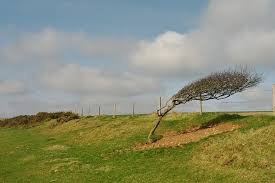
Friday night (Sept 27) Hurricane Helene made landfall. It was a category 4 storm and by Saturday morning, reports revealed it left a path of destruction through ten states, causing millions of residents and businesses to lose power, and leaving over 50 people dead so far.
NOAA hurricane scientist Jeff Masters has said Helene’s landfall “gives the U.S. a record eight Cat 4 or 5 Atlantic hurricane landfalls in the past eight years. (2017-2024), seven of them being continental U. S. landfalls. That’s as many Cat 4 or 5 landfalls as occurred in the prior 57 years.” (As read in Heather Cox Richardson)
This is not going to go away. Record-breaking hurricane events have become part of our regular experience of the climate crisis we are in. Do we have that in our awareness living here in upstate New York? I know the people down in Florida and Georgia have had to grapple with this a they consider the messages they are receiving from their political leaders. But do we hear it up here? We have regular record-breaking natural disasters now.
Have you ever ridden the teacups at a carnival? I remember one time when our oldest Brin was maybe 3 years old there was a rinky-dink carnival set up in the parking lot of a run-down mall. They had very little business at that hour and we climbed into the teacup ride.
Brin were so excited. The operator smiled at us and started the ride. If you know the ride, you know the whole thing starts slow and builds up in speed, and as the whole ride circles around, each teacup can also spin. So we’re spinning away and I look at my child’s grinning face and ask, “Do you want to go faster?” They nod excitedly.
I no longer remember exactly how it worked, if I leaned forward or leaned back to get it spinning faster, but all the sudden we started whipping around. And the blood drained out of my child’s face. The operator of the ride noticed and quickly shut down the ride. Nice guy. I bought Brin some ice cream to help them perk back up. I double checked online recently to see if my memory of this ride was correct and found the line: “Under modern H&S guidelines children’s rides should not spin faster than eight times per minute.”
My point in telling you this story is that like the mechanical tea cup ride, we can manipulate the situation to spin faster if we want to. In the past century or so, the human species has made great strides in eradicating some major diseases, dramatically extended the average lifespan, and created an abundance of luxury available at our fingertips – or at least at the fingertips of some.
Our distribution of the abundance we have extracted from the earth is still problematic but the amount is indisputable. We have pushed the carrying capacity well beyond the limit because we have manipulated the situation to spin faster. We are spinning our tea cup beyond the guidelines for such rides, spinning faster than is recommended. We can reign it in. We can adjust our use of this ride we are on to better match the outcome we need.
Back in 2006, Al Gore’s film Inconvenient Truth came out. I bought a copy the DVD and we showed it here in our sanctuary. A few years later, our congregation was on its way to becoming a Green Sanctuary. We were buying reusable bags, changing out our lightbulbs, and boycotting bottled water. Eventually we got solar panels and air source heating and cooling units in the building, working to reduce our carbon footprint. And our renovation was grounded in a commitment to environmental awareness. We’ve been working on this for a while.
And we are far from the only ones. Did you hear in that list of positive stories we had for our reading https://www.weforum.org/agenda/2024/06/energy-transition-positive-climate-change/, that clean, renewable energy will likely become the world’s largest source of power by 2025? Did you hear the part about the vast offshore windfarm at full capacity, and the countries functioning fully under renewable energy, and the commitments to hold companies accountable for destruction of the environment? There are measurable actions happening that have noticeable impacts on the environment. The last line of our reading notices that we are headed in the right direction. And it ends with the question: are we traveling fast enough?
I would argue that question is irrelevant. That question is loaded to take us into a fruitless conversation of hand-wringing and apprehension that will undermine the work we have underway to build a better way forward. That question leads us into saying ‘yes’ or ‘no’, tempts us into either denial or despair.
But the better answer is the one I often pull up when talking about climate change. Johanna Macy’s ‘three responses.’ Some stay in denial, refusing to acknowledge to looming disruption. Some succumb to despair, seeing no hope in the looming disruption. I refuse to either ignore the situation or despair of our chances. And Macy proposes the third way, the way of the Great Turning, the choice to hold hope. Not denial or despair; decision. Make the decision to keep seeking a new way, to remain hopeful, to keep working toward the better world. In Darwin’s theory of evolution, when we wrote about the ‘fittest’ surviving, he was referring to those that can accurately perceive their changing environment and adapt to it.
I remain hopeful that we will harness the creative resilience that has marked our species throughout time. Resiliency is the response nature offers after environmental trauma. We do well to lean into the fact that we are part of nature and our species can also be resilient. Creativity is the key. New solutions are always unfolding. In many ways, the biggest trick is to adjust our perspective enough to reimagine a new era together. The spirit is always moving among us as we respond.
And bell hooks reminds us “Rarely if ever, are any of us healed in isolation. Healing is an act of communion.” We are meant to respond to life as a collective. We don’t need to find a super hero. We need to collectively become the answer we need. That list of positive things happening for the environment did not have a single person saving anything. It was all about the community doing the work together.
And here I want to emphasize, ‘the work’ may not be what you think it is. Because the trauma is spread around and the impacts show up in many ways. There is an intersectionality to the crisis and there must be an intersectionality in our response. All our efforts weave back into each other. Nearly every justice effort needs climate justice to be included. And climate justice needs every other justice effort included to be effective.
If you are passionate about fair housing or food scarcity, about racism or immigration, about voting rights or universal healthcare – there is a climate component directly or indirectly tangled up in the issues.
Locally, we can get involved in voter registration and voter turnout. We can work with groups creating better access to food and fair housing. We can take part in efforts to better empower marginalize people and vulnerable populations – locally, right now.
Because for us to see improvement toward environmental resiliency, we need to also see improvement in these other areas. The issues are connected and the traumas are overlapping. So the call this morning is not to drop everything and start campaigning for the environment. It is to notice and honor all the work we are doing and the ways it intersects with the work others are doing.
We are in this together, supporting disaster relief for the south and responding to food scarcity in Binghamton’s first ward. We are in this together, staffing the phone banks for voter registration for Pennsylvanians and donating blood at our next blood drive on Tuesday. We are in this together, lobbying congress to take up green energy bills and supporting local programs for at-risk queer youth.
There is so much we can do to support our earth and each other. As my colleague Rev. Julián Jamaica Soto writes, “All of us need all of us to make it.” As we respond to the call for Climate Justice, as we respond to another devastating hurricane, as we hear the question – are we doing enough … We are the answer, together. We are the answer, together.
In a world without end
May it be so.
—
“You Did Not Create Us to Kill Each Other”

You Did Not Create Us to Kill Each Other
Rev Douglas Taylor
September 22, 2024
Sermon Video: https://youtu.be/YhArffGrIUs
Yesterday, September 21st, was the official UN designated International Day of Peace, or World Peace Day. The original proposers of the day back in 1981 were Costa Rica and the United Kingdom. It was 20 years later that they locked the celebration’s date onto September 21st specifically and began calling for a day of ceasefire. Celebrations, and commemorative events began developing around the world as well.
“A survey by the Culture of Peace News Network found internet reports concerning more than 942 celebrations of the International Day of Peace from 93 countries around the world in 2023.” http://cpnn-world.org/new/?p=32258
Perhaps this year, we will see reports of over a thousand events from over a hundred countries for yesterday’s celebration of the International Day of Peace. I’ll watch the news for reports.
Spirit of Peace and Life, may our World Day of Peace stand as a symbol of humanity’s common vision of a world at peace. May it remind us to seek peace and harmony in our lives as well as in the world community. May peace prevail on earth.
One significant feature to the day is the call for ceasefire and non-violence in places around the world experiencing conflict. And yet our wars continue. The decades long war in Myanmar has killed over 12,000 people so far this year. Nearly 22,000 people have died this year in the current version of the war in the middle east. Russia’s war with Ukraine has seen just over 34,000 deaths in 2024. The insurgency in Maghreb has also passed 10,000 fatalities so far this year. The ongoing Sudanese civil war and the Mexican drug war are also on the list with under 10,000 each for this year. “The List” I refer to here is simply the Wikipedia list of “ongoing armed conflicts” around the world. https://en.wikipedia.org/wiki/List_of_ongoing_armed_conflicts
Our world is too steeped in violence and war. And while the United States is not actively engaged militarily in any of these wars, we are involved in several of them through humanitarian aid and military support – such as with Ukraine and the Middle East. One part of our individual work for peace is to apply what pressure we can on our institutions and government officials to promote peace.
Ultimately I must share, I am not a full pacifist. I understand the ways in which careful use of force can aid in the creation of peace. I acknowledge that there are situations, Ukraine is an example, in which it is not enough to simply say ‘no’ to a bully. And the use of force, for defense and to stop a bully’s aggression, is warranted. I know this makes the conversation more complicated because now we may need to parse out exactly where best to draw the line, but I believe that is the world we live in and this is the real struggle we face. Where do we draw the line to say this violence and war is acceptable, and that is not? I’ve given a general answer for where that line might be for me, and I hope you will spend some time struggling with that question yourself – not just with wars, but perhaps all forms of violence.
War, however, is my topic for this morning, with World Peace Day, and I want to spend some time with the aspect of war that is tangled up in religion. Religion is a common element in war. It is often mis-used and perverted into a tool to perpetuate war. I am among the camp of people who believe the only legitimate interpretations of religious beliefs, doctrines, and scriptures are those interpretations that are life-giving instead of life-denying. As such, when religion is used to promote violence and war, I see it as a perversion of the truth in religion.
Consider the Israel – Hamas war; it presents as a war between Islam and Judaism. It is, of course, also a war about nationality, a war over land, a war fueled by political extremism, but religion is a huge part in the conflict.
Religion can be a call toward peace, a call for harmony and grace. Religion can also be used as a call for sectarianism and division; a call to do violence against the heretics and the unbelievers, the heathens and the infidels.
This, despite Islam’s claim that Peace is so central to their faith the word Islam translates as Peace. This, despite Christianity’s claim that Jesus is the Prince of Peace. This despite Buddhism’s claim that peace is the path. The behaviors of violence witnessed in the name of religion do not align with the language of loving peace offered by those same religions.
Spirit of Peace and Life, may this day of peace shine as a reminder that every day can be a day of peace. May our religions speak their true messages of peace for all people. May peace prevail on earth.
Thankfully, there are numerous voices among religious leaders calling for peace and peaceful behaviors, urging people toward deeper understanding of one another. Pope Francis recently shared these remarks at an interreligious youth event in Singapore:
“All religions are paths to reach God. They are—to make a comparison—like different languages, different dialects, to get there. But God is God for everyone. If you start to fight saying ‘my religion is more important than yours, mine is true and yours isn’t’, where will this lead us? There is only one God, and each of us has a language to arrive at God. Some are Sikh, Muslim, Hindu, Christians; they are different ways to God.” (September 13, 2024)
It is interesting he used ‘different languages’ as a comparison. We can learn to talk with each other, we can learn each other’s ‘languages’ without fearing them, and then communicate with each other about important things we share.
For religions, violence and the urge for dominance begins with making a group into ‘the other,’ with the dehumanizing of a set of people. It begins with “mine is true and yours isn’t.” But if we can remain human with each other, there remain opportunities for peace. If we can meet and talk, the whole world becomes possible. Catholic theologian Hans Kung has said, “No peace among the nations without peace among the religions. No peace among the religions without dialogue between the religions”
We must be able to talk with each other and see one another as fellow human beings. Circling back to the example of the Israel – Hamas war, one significant impact in Israel of the walls and the check points and the two-tier justice system and the rhetoric is to keep Palestinians and Israelis from meeting each other as fellow human beings. Certainly part of the point is to create safety for one group and cause harm for the other. But another impact for both Israelis and Palestinians, is that is dehumanizes the people on the other side of the wall. It keeps the two groups separate and not talking to each other.
For dozens of years, countless Non-Government Organizations and other grassroots unofficial groups have worked to bring peace and to bring change for Palestinians and Israelis. Certainly there are many outsiders lending support, but most notably there have been a significant number of Palestinian and Israeli people working together to build bridges of understanding and to dismantle the structures of violence and injustice through whatever means possible.
Some are activists, some are business people, some are former combatants, and some are artists. I remember learning a lot about the situation ten years ago when the Children of Abraham hosted a program and a speaker on the topic. I learned then about schools that were teaching both Arabic and Hebrew. I learned about theater groups and music groups comprised of people from both sides creating art with a message of unity and peace. I learned about a publishing house putting out graphic novels to reach as many people as possible. All working non-violently to build a better future for all the people in their area.
I imagine much of that work is lost in the rubble after this past year. One poignant lesson I take from this is that it really is through the efforts of regular people that anything meaningful can be achieved. However, if that work does not also move the governments to participate in the work for peace, there will be no peace.
Spirit of Peace and Life, may we always stay open to the possibility of peace though our words and our actions. May the violence and horrors we still find in the world neither dishearten us nor tempt us into cynicism. May peace prevail on earth
What can we do to keep each other human through these wars?
Some players on the world stage do not want peace. They want power and money and one way to obtain that is through the chaos and destruction of war. Be mindful of the motives of your leaders. If you want your neighbor to stop attacking you and threatening you – seek out their motive, what do they fear? What are they trying to protect?
In the Middle East, those seeking war and resisting a peace process are doing so out a yearning to eliminate a perceived threat. I don’t think it is unrealistic to say they want to make their people safe. But the path they are choosing is the path of war – to eliminate the perceived threat.
It certainly seems as though Netanyahu’s Israel is not seeking peace. Neither is Hamas leadership for that matter. But pressure from their partners such as various Arab countries and the United States could push them toward the negotiating table and toward a two-state solution which would bring dignity to the many different people in the area.
But this leads me back to that question: What can we do to keep each other human? I don’t have any influence on the leaders in Israel or Palestine. But I do know Jewish and Muslim people here at home, and I can do my part to ease the division, to keep my colleagues and my neighbors human. I don’t have any sway with the current US administration to pressure our leaders to use our leverage for peace. But I can reach out to you all here and to elected officials closer to home with my message of hope and peace. We can write letter and attend rallies of solidarity. We can build our own grassroots networks here that can build peace in the places we have influence, and trust that it will have an impact, and trust that it will grow.
We must call up the true words found in each of our various faiths leading us to peace. We must challenge those interpretations of the religious texts that call for violence. We must challenge those beliefs that call for separating out those who are different, that dehumanize others. We must call out for peace with all our hearts.
Spirit of Peace and Life, may our minds be set on peace with freedom and justice. And may a song of peace take root in our hearts and sing to us gently through all the tumultuous days ahead. May peace prevail on earth.
In a world without end
May it be so
—
Note: My sermon’s title comes from a line in the prayer I read this morning. The prayer was composed in mid-October 2023 – shortly after the war began – by two religious leaders together, one Muslim and one Jewish. https://www.jenroseyokel.com/p/sunday-poem-12-prayer-of-the-mothers
“Prayer of the Mothers” By Rabbi Tamar Elad Appelbaum and Sheikha Ibtisam Mahamid
Translated by Rabbi Amichai Lau-Lavie
God of Life
Who heals the broken hearted and binds up their wounds
May it be your will to hear the prayer of mothers.
For you did not create us to kill each other
Nor to live in fear, anger or hatred in your world
But rather you have created us so we can grant permission to one another to sanctify Your name of Life, your name of Peace in this world.
For these things I weep, my eye, my eye runs down with water
For our children crying at nights,
For parents holding their children with
despair and darkness in their hearts
For a gate that is closing
and who will open it while day has not yet dawned.
And with my tears and prayers which I pray
And with the tears of all women who deeply feel the pain of these difficult days I raise my hands to you please God have mercy on us
Hear our voice that we shall not despair
That we shall see life in each other,
That we shall have mercy for each other,
That we shall have pity on each other,
That we shall hope for each other
And we shall write our lives in the book of Life
For your sake God of Life
Let us choose Life.
For you are Peace, your world is Peace and all that is yours is Peace
And so shall be your will and let us say Amen.
—
How to Disagree with a Friend

How to Disagree with a Friend
Rev. Douglas Taylor
September 15, 2024
Sermon Video: https://youtu.be/E7u-Nl8y-vc
I wonder how many of you did not watch the recent presidential debate (Sept 10, 2024) back on Tuesday night. If you didn’t watch it, I’m guessing you’ve heard about it, picked up some news or conversations about the debate.
Do you know who won? I’m pretty sure I know who won. But I’ve learned the answer depends on who you ask. Generally, the winner was whoever you were hoping would win. This is one of the deeply frustrating features of modern politics. Not only are we divided in our politics, we seem to be divided in our recognition of reality.
As a side note I will notice that what we witnessed last Tuesday, while billed as a debate, was not in fact a debate. It was entertainment. A real debate has rules and judges, and the candidates would actually debate their policy differences with facts, reason, and evidence. But that is not what happens in what we call presidential debates now. All of which is simply more fuel for the division among us politically.
I keep hearing the presidential race is tight, it could go either way, the point spread is easily within the margin of error for a standard poll, it’s too close to call. In other words, the division is not overstated by a vocal minority who happens to have seized a modicum of airtime. The division runs deep through the country.
It can be hard to engage with people who have an opposing view. And I am not talking about internet trolls and random people you may bump into in the real world. I’m talking about friends and family members with whom you disagree. It has grown harder in the current divisive climate to have an open conversation or reasoned disagreement with a friend. We’ve grown hostile and are pushing the extremes.
And I want to pause for a moment and clarify the scope of my invitation today with a James Baldwin quote. James Baldwin, writer and civil rights activist who died over 35 years ago. This past summer would have been James Baldwin’s 100’s birthday, (2024) on August 2. And I’ve made a commitment to myself that I will bring a Baldwin quote in my sermons at least once a month for the course of this church year to honor his legacy and his message to American religion and life.
Baldwin said, We can disagree and still love each other unless your disagreement is rooted in my oppression and denial of my humanity and right to exist.
I am not advocating that we push ourselves into harmful engagement with friends or family on political and social issues. And I will concede that there are multiple ways that our political discourse as our country has grown harmful. There is violence and the threat of violence happening against women, against the LGBTQ+ community – particularly our *trans siblings, against school children through gun violence, against Haitian immigrants in Springfield OH – indeed against all the citizens in Springfield OH at this point … all due to “disagreement” rooted in someone’s oppression and denial of their humanity and right to exist. So, when I encourage you all to engage with your friends and family across the political divide, I need you to hear the caveat that if there is harm against you in so doing – then don’t.
And, our political divisiveness is a problem. Interestingly, it is also a path toward the solution. Historian Kathryn Schulz suggests our division is not the root of the problem, merely the context. She writes, “The United States only stabilized as a nation when it gave up the dream of being a one-party utopia and accepted the existence of political opposition as crucial to maintaining a democracy.” [from Being Wrong, Kathryn Schulz, 2011; p314]
Her point being that different political perspectives are crucial for our country’s stability. This is why Freedom of Speech is such a key feature to democracy. We need to engage our differences in our common spaces, particularly in the political arena, so that the best ideas have a chance to rise and we can continue to move forward together.
But that version of political engagement is not what we are doing anymore. We’ve stopped meeting each other, stopped listening to different viewpoints. We’ve grown stuck in our conceptions and misconceptions with no way of uncovering the difference between them. It is a problem.
But it’s not a new problem!
A Bill Bishop book from 15 years back talked about this. His book “The Big Sort” is focused on a longitudinal study of census data and election results data at the county levels spanning five decades. (The Big Sort, the clustering of like-minded America, Bill Bishop, 2008.)
The major finding of the study was that for the past half-century, Americans have been sorting themselves into homogenous geographies. In the 1950s, the book states, people with college degrees, for example, were rather evenly distributed across the United States. Nowadays, college-educated people are disproportionately concentrated in major cities like Berkeley, California; Cambridge, Massachusetts, and similar places along the east and west coast. In these communities, people tend to be more interested in politics and less likely to attend church. They tend to listen to National Public Radio, vote Democrat, and own cats.
People without college degrees tend to be found in places like Lubbock, Texas; Gilbert, Arizona; Lafayette, Louisiana; or Allentown, Pennsylvania. These communities tend to be less densely populated and have bigger lawns. People in these communities watch Fox for their news, they own guns, volunteer and participate in clubs and churches, vote Republican, visit relatives a lot, and own dogs.
These demographical descriptions are 15 years old now and I imagine they have shifted a bit – the I suspect the trajectory still holds. We have been, over the past few decades, sorting ourselves into geographic clusters of like-mindedness. The internet over the past 15 years has not helped. Despite early predictions that the internet would globalize our neighborliness and democratize our access to information, it has done nearly the opposite – because we are more easily monetized when we are more carefully compartmentalized.
One pertinent observation from this longitudinal research is that like-minded groups tend to enforce conformity and grow more extreme through a self-reinforcing loop. Mixed company tends to moderate while like-minded company tends to polarize.
As political liberals and conservatives keep themselves in enclaves, they grow more zealous and become more distrustful of each other. Churches, even our diversity-loving liberal Unitarian Universalist churches, do not escape this clustering of like-mindedness. Many is the time I have heard a person comment about how great it is to have found a church home and to be around like-minded people. And yet, mixed company tends to moderate while like-minded company tends to polarize.
And, this is old news. We knew this was happening for at least a generation. This leads us to the title of my sermon this morning: “How to disagree with a friend.” We need to break out of our like-minded enclaves and hear each other.
I’m going to give a shout out to a new board member, Bob Neigh. Bob sent me a note about a group called Braver Angels and he encouraged me to look into them because he knew I would be preaching on this topic.
Braver Angels formed shortly after the 2016 election with the goal of political depolarization and civic renewal. On their website, https://braverangels.org/ they say: “Braver Angels is leading the nation’s largest cross-partisan, volunteer-led movement to bridge the partisan divide for the good of our democratic republic.”
They have a podcast and information available, they host events and workshops, they supply members with talking points for engaging across political differences. Their leadership is explicitly comprised of a balanced number of Democrats, Republicans, and Independents.
They describe their approach https://braverangels.org/our-mission/ this way:
We state our views freely and fully, without fear.
We treat people who disagree with us with honesty, dignity and respect.
We welcome opportunities to engage those with whom we disagree.
We believe all of us have blind spots and none of us are not worth talking to.
We seek to disagree accurately, avoiding exaggeration and stereotypes.
We look for common ground where it exists and, if possible, find ways to work together.
We believe that, in disagreements, both sides share and learn.
In Braver Angels, neither side is teaching the other or giving feedback on how to think or say things differently.
The one that really struck me is “We seek to disagree accurately.” I love that. Just as some basic advice you can work with for a one-on-one conversation with a friend or family member, can you offer that ground rule? I want to talk with you about this, not to change your mind or have you change mine. I just want us to disagree accurately. Can we do that?
Another one that seems easy but in practice is proving quite difficult – Can we treat people who disagree with us with honesty, dignity, and respect? I can see how it is helpful to have a non-partisan organization hosting the conversation. These ground rules are theirs; we don’t have to start with an argument about making these ground rules. The Braver Angels organization can host the event and participants just need to agree to participate. Wouldn’t it be helpful for us to bring that here to Binghamton?
My mother Rev. Dr. Elizabeth Strong had participated in something like this, many years back. She was an outspoken Pro-Choice advocate in Syracuse while serving at May Memorial UU Society in the 90’s. She was invited to participate in a conference hosted by a Common Cause group focused on the abortion issue. She wrote in one of her sermons about the experience; how they spent the first part of the workshop just meeting each other without knowing which side they were on. Then they split off into sides and engaged each other from their perspectives of pro-life and pro-choice. But by then they knew each other as human beings, which greatly aided the conversations.
She wrote:
It was an amazing experience. From it I developed a very powerful relationship with a young woman who was Pro-Life. We went on a radio talk show to share our beliefs. I remember one caller was angry that we could even talk with one another much less understand and respect the other’s beliefs.
… I know that in Syracuse, at least for a time, the volatile environment eased and the work that came out of the Conference and the dialogues between those of us who were Pro-choice and Pro-Life helped many who were open to listening with respect came to a deeper understanding of all the dimensions of this issue.
A better way is possible. A braver way. The vitriolic divisiveness does not have to be the only story in this election season. We don’t have to burn all the bridges with ‘the other half’ of our country’s population. (Actually, the other third. In the 2020 election 1/3 voted blue, almost 1/3 voted red, and 1/3 didn’t vote. – so you can hear that as a call to encourage more voter participation – which is a different sermon.)
And hear me when I say – this is not a call to quietly take some abuse from someone who does not care one whit for decency or your humanity. It is a call to engage in good faith toward understanding and mutual progress. And, remember, convincing us to get angry and push each other away is one of the tactics being used against us. Resist. Move a little closer and hold each other with a little more grace.
A better way is possible. But it is not found in huddling among the like-minded and bemoaning the situation. That can be personally healing and at times necessary. But to truly move forward, we need to lean in a little closer to these brave conversations.
In a world without end,
May it be so.
 Rev. Douglas Taylor