
Grandma’s Hands
Grandma’s Hands
October 29, 2023
Rev. Douglas Taylor
Sermon video: https://youtu.be/ajeqN2tgBY0
There is a classic writing tip that is given to fiction writers, to people working on a novel. Give your hero a tragic backstory, they say. Make it something terrible that happened to them which helps make their character more noble for being good. A relatable hero needs a tragic backstory. This is why there are so many orphans in literature. The best example in my mind is from Roald Dahl’s James and Giant Peach. His parents were out shopping in London when they were killed by an angry rhinoceros that had escaped from the zoo. Poor James. So relatable. In truth, we have all had trauma in our lives. We don’t need to all become orphans to know the suffering wrought by trauma.
Over the past handful of years, I have been learning about the impact of trauma on our lives. I’ve taken workshops and attended trainings that talk about being ‘trauma informed.’ There three very interesting things about all of this that I want to share. The first is that trauma lives in our bodies.
As human beings, our bodies have deep wired reactions for self-protection. When presented with a threat, we have a physical, visceral, non-cognitive reaction commonly recognized as the ‘fight, flight, or freeze’ response. Psycho-biology has continued to bring good research around this aspect of our complex living.
And I need to emphasize, trauma lives in our bodies. This isn’t about how you might have an old hurt you will not forgive. This is about experiences that become written into our pre-thinking reactions. Think about how during a horror movie, a scene can make you jump – even though you know it is a movie, when you cognitively know there is no actual danger, your body still reacts. Our bodies react to fear and pain without needing to wait for our cerebral cortex to think up a logical response first. When we have a significant trauma experience, the reaction can become coded into our brains as part of that basic reaction.
Have you ever experienced another person’s reaction to a situation and think to yourself, that person’s reaction is not in proportion to the situation. It feels like an overreaction. If you are really attentive, you might even notice when you do it. Usually what it means is the situation is not all that’s going on for that person. One possibility is that the person has a trauma experience also at play.
It is a little like the two arrows story in Buddhism. Buddhists talk about suffering in the Four Noble Truths. And the story of the two arrows helps clarify what is meant by suffering. When we experience something that hurts us it is like we are pierced by two arrows. The first arrow is the pain that occurs, the actual event that hurts us. The second arrow is our reaction to the event that adds to our pain. The Buddhists call the first arrow the pain and the second arrow the suffering. The pain is inevitable. The suffering we can work on.
Trauma causes pain, and how we respond to it, the story we create about it, the defenses we build up as reaction – that’s all part of the suffering. Trauma is rife with suffering.
In his book My Grandmother’s Hands, Resmaa Menakem reveals that
“We can have a trauma response to anything we perceive as a threat, not only to our physical safety, but to what we do, say, think, care about, believe in, or yearn for. This is why people get murdered for disrespecting other folks’ relatives of their favorite sports team.” (p7)
But here is where it begins to get very interesting. Every person’s response is different because everyone processes their experiences in different ways. It’s not just that people have different experiences, but every person processes those experiences in unique ways. And over time, we build up protections around the trauma, defenses that keep us safe from further harm. And those defenses become ingrained in a way that is also physical and visceral; reactions that come before our cognitive brain kicks in.
Resmaa Menakem is a trauma counselor and has led trainings in a breadth of communities including public schools, domestic violence centers, police departments, military bases, and community centers. Early in his book, My Grandmother’s Hands, he shares the story behind the title.
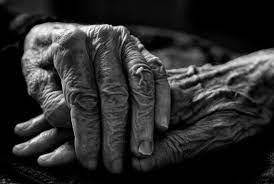
When I was a boy I used to watch television with my grandmother. I would sit in the middle of the sofa and she would stretch out over two seats, resting her legs on my lap. She often felt pain in her hands, and she’d ask me to rub them in mine. When I did, her finger would relax, and she’d smile. …
She wasn’t a large woman, but her hands were surprisingly stout, with broad fingers and think pads below each thumb. One day I asked her, “Grandma, why are your hands like that? they aren’t the same as mine.”
My grandmother turned from the television and looked at me. “Boy,” she said slowly. “That’s from picking cotton. They been that way since long before I was your age. I started working in the fields sharecropping when I was four.” …
She said “The cotton plant has pointed burrs in it. When you reach your hand in, the burrs rip it up. When I first started picking, my hands were all torn and bloody. When I got older, they got thicker and thicker, until I could reach in and pull out the cotton without them bleeding.”
My grandmother died last year (the author concludes). Sometimes I can still feel her warm, thick hands in mine.” (p4)
And I’ll repeat something I said just ahead of this quote. “Over time, we build up protections around the trauma, defenses that keep us safe from further harm.” Human beings are resourceful and adaptive. We learn and grow so we can continue to function. We all experience trauma in our lives. Different people process it in different ways. We learn and adapt; and we create defenses to protect ourselves from trauma.
Later in our lives, the defense mechanisms we’ve had that helped us at first begin to get in the way. The grandmother’s hands were covered in thick calluses and scar tissue that had protected her in her youth, but caused her pain in her later years. The image of having ‘built a wall’ is common. We build an emotional wall or some other type of boundary to protect ourselves. In time, however, we often find the wall then impedes our ability to connect and build new friendships.
And such traits, created in response to trauma, can be passed down through generations. This is the second very interesting piece I’ve been learning lately that I want to share this morning. Trauma doesn’t just impact the individual experiencing the event. It can be passed down. A classic example that many might recognize is how alcoholism runs in families. There is nothing genetic to alcoholism. It is not passed down like blue eyes or a predisposition to heart disease. But it is passed down. And it often comes with layers of trauma and defense tactics.
And while we name this as a ‘generational’ experience, I would expand that beyond families to include communities. The impact of the Holocaust is an example. There are more than a hundred thousand Holocaust survivors still alive today. But countless Jews who were born after World War II carry the echo of a trauma they didn’t experience firsthand. Generations of Jews are now carrying a self-protective response to situations in which Jewish people are targets of hate and violence. To a non-Jew, the reaction may seem like an overreaction or in some way out of proportion. Or, we can recognize it as a trauma response echoing through the generations.
I suspect that is a part of the story with the war between Israel and Hamas. There is more than just the story of this missile and that bomb from this past month. It is generations of trauma and suffering for all the people involved, leading to what seems like senseless violence and extreme retaliation.
Or consider the impact of slavery and Jim Crow segregation. Consider the near genocide of the indigenous Indians from this land. Consider the long shadow of the clergy sex abuse scandals which were not just about the abuse but also the covering up of the abuse. Consider the immigrant experience – especially the asylum seekers fleeing violence. The trauma does not just impact the person who experienced the traumatic events. We pass the responses to the trauma down the line – sometimes healthfully but usually not.
Usually not … because the ‘trauma response’ is responding to a trauma that may or may not still be going on – it is decoupled from the actual event. We are stuck is a cycle of trying to resolve something that may not be happening anymore. All we are getting is the second arrow in the Buddhist story.
Do you begin to feel heartbroken by the enormity of it all? The impact of trauma is everywhere and impacting everyone. “Be gentle with one another,” Dick Gilbert said in the meditation. Be gentle, we are all hurting. And that brings us to the third topic I want to share this morning. When learning about trauma I’ve learned that healing is possible.
I’ve learned that trauma lives in our bodies. I’ve learned to recognize the heartbreaking extent of all the trauma, the generational echo of trauma. And I’ve learned that is not the end of the story. We can unlearn the defenses we’ve built up when they no longer serve or are no longer needed. And we can heal what we pass on to the coming generations.
I think I’ve used the example before, but I grew up in an alcoholic household and one defense mechanism I learned was the language of sarcasm – keen and biting. And I was good at it. During the first decade of my marriage, I had to work at unlearning that language, to stop myself from letting the biting remark slip out of my mouth.
Healing is possible. I think of the story we heard in the reading by Rayla Mattson. https://www.uua.org/braverwiser/strength-defines-us Rayla’s son was struggling with how other people reacted to his long hair. The story reveals how Rayla helped him navigate the harm, helping him avoid the second arrow of suffering even though the first arrow still hurt. The pain caused by the bullies was still felt. But the suffering didn’t have to happen, he didn’t have to build a wall of protection and shame for his heritage. One of the things Rayla did that helped was to bring a photo Rayla found of an indigenous man with long hair. The photo was a stand-in for an ancestor. Rayla’s son received a gift of strength and resolve from his ancestor in that moment.
Our ancestors do not only pass down trauma and defensive reactions. We also inherit their strength and pride, their resilience, their sadness, their fierceness, their grace. Healing is possible. The cycle of suffering can be eased and even broken. When you do your own work, you begin a new cycle and pass along a new way.
Resmaa Menakem shares another story in his book, this one about the healing. He writes:
Mental illness runs in my grandmother’s family. When her sister became schizophrenic and had to be hospitalized, my grandmother willingly took in her two young children and raised them as her own.
My other grandmother did the same thing with my aunt’s four kids. When my aunt became a cocaine addict and lost most of her ability to be a caring parent, my father’s mother didn’t hesitate to take over.
When I witnessed both of these changes in our family, I thought it was because my grandmothers were kind, loving, generous women. That was generally true, of course. But something else was involved – something more important. Both of my grandmothers recognized the need for someone to step in a fulfill that role. Both also had the capacity to wholeheartedly take on that role. They didn’t have to do this. …
I didn’t realize until I was in my early fifties, but both of my grandmothers also helped to create greater room and resilience in my body and nervous system. Their actions taught me to shoulder responsibility. (p288)
No act of health and healing is ever wasted. Such actions also echo and ripple out to the children, the communities, and the generations to come. Being gentle with each other is not only a kindness that offers a little rest and ease. Being gentle with each other heals. Our world needs healing. Our own broken hearts and aching bodies are where we begin to heal the world.
This is the whole focus of my call as a minister. I am here to pass the blessing along, to help anyone also find their healing, to share God’s love, to ease the suffering of the second arrow, to create more fertile ground for more flowers to take root. This is our work. We are here to be gentle with each other. To heal from the wounds of our days and days gone by. That we too may one day become the ancestors our communities need.
In a world without end
May it be so
Roadmap to Repair
Roadmap to Repair
Rev. Douglas Taylor
9-24-23
Sermon video: https://youtu.be/-sbABswwfG4
“We feel the season turning. The early sunset glancing through the red-tinged leaves. (These words penned by a UU lay worship associate for the Yom Kippur season) The newspaper arriving in the cool morning air. The flock of migrating swallows. A feeling of being on the edge of something new. These are the Days of Awe. A time to welcome a new year and a time to make the old year right before we lay it in its place on the shelf of our memories. We bless the wine and drink. We bless the braided bread and eat. We dip apple in honey, and savor its sweetness. May the sound of the shofar carry us across the threshold where lie the possibilities we imagine for ourselves and our children.“
(Author – Ben Soule, UU lay Worship Associate)
Yom Kippur, the Day of Atonement, is the holiest day of the Jewish year. It comes as the tenth day of the Days of Awe, the first of which is Rosh Hashanah, the new year. The ten days of the new year are called the Days of Awe because people feel fear as well as reverence during this special time of judgment and forgiveness. Yom Kippur, in particular is a day of fasting, of self-reflection, and repentance.
Yom Kippur’s new year is a time to do an inventory of our living. In one story about the Days of Awe, it is not simply a self-inventory we are invited to do. Each human’s deeds are reviewed and judged by God. This is where we hear about the Book of Life. Each year there are three books open before God. The Book of Life, the Book of Death, and the Book of Judgment. The names of good and saintly people are already inscribed for the year in the Book of Life. The names of the wicked are already inscribed for the year in the book of death. The rest of us have our names listed in the third book, the Book of Judgment.
Throughout the Days of Awe, each person’s name comes up for review. The three books remain open for the whole ten days, during which time people are confessing, atoning, and repenting to help assure that their name will be found in the Book of Life for another year. Nothing is final for the year until the books are sealed shut at the end of Yom Kippur. This is the prompt, then, to do your repentance work so the deeds of your past year will result in your name being inscribed in the book of life.
There was a clever side story I’ve heard before. A humble shopkeeper sits down to make a list of all his misdeeds and sins over the course of the year. At the same time, however, the shopkeeper made a second list as well, detailing the woes in the world attributable to God. When he finished, he looked at the two lists and said out loud. “All right. I was not honest about the freshness of that fruit I sold last month, but you let that little girl down the street die from disease. I let my temper get the best of me when I was talking with my brother, but you created mosquitoes. I took your name in vain when I hit my thumb with the hammer, but that storm a few weeks back ruined a lot of the crops for the farmers in this area. …” And on it went until at last the shop keeper said, “So I’ll tell you what; If you’ll forgive me, I’ll forgive you. We’ll call it even and start fresh with the new year.”
I find this little side-story delightful. Unfortunately, that’s not what true repentance is about. True repentance, the real work of Yom Kippur, is to change our behavior and return to our better selves. In our little story, the shopkeeper bargains with God but doesn’t ever change or improve.
The text I’m using for today’s sermon, and for the UUA Common Read workshops we will have in October, is Rabbi Danya Ruttenberg’s On Repentance and Repair. Her book is an exploration of the teachings of Maimonides on the topic of repentance. She tells us that Maimonides Laws of Repentance outlines five steps for this work.
- Naming and Owning Harm
- Starting to Change
- Restitution and Accepting Consequences
- Apology
- Making Different Choices
I read you this list not to in hopes that you will memorize it and get to work, but so you will become curious and want to know more. Let me tell you a little more.
The whole process starts with a form of confession, “Naming and Owning Harm.” In our society, this is a non-starter for a lot of people. Lawyers will tell you to never admit fault or culpability. Instead, we have a cultural norm of making non-apology apologies, of minimizing situations, focusing on our intentions, listing our glowing character and reputation, or simply out-right denial – all instead of “naming and owning harm.”
But ultimately this is an act of truth-telling. The thing is, you are invited into doing this truth-telling on yourself. “I caused harm.” And this is not just on the level of teaching our children to not lie. This is also about speaking the truth about how our institutions have caused harm or how our country has caused harm. If we can’t name and own the harm caused – with specifics – then we will never be clear as we try to move forward.
This is a pretty big deal. And it is a very hard step if you don’t understand how you have caused harm. So often we cause harm without noticing or understand that we’ve do so. As Rabbi Ruttenberg clarifies:
“This is true for the person who chronically picks up the phone while their partner is talking; the person who borrowed, without permission, something they didn’t realize was an heirloom; the cis person whose curious question of their trans neighbor dehumanizes them; the organizational culture that habitually silences women’s voices at meetings; the city whose zoning laws reinforce structural racism and decades of disenfranchisement.” (p 27)
To even get to the first step of Maimonides’ stages of repentance is significant. Yet, to name and own harm to another is still just step one. The next step is to “begin to change.” When I first read through the list I thought, “That’s subtle. All we do in that step is start to change, we don’t have to fully change.” Another way to think of it though is to say, step one is to admit we’ve been doing harm and step two is to stop.
Following those first two steps are the parts about making amends and making apology. Step 3, according to Ruttenberg is “Restitution and Accepting Consequences,” Although she acknowledges that Maimonides didn’t specifically include ‘accepting consequences’ as a concept in his writings, it is clear to her our society needs the reminder. And following all that, the apology as step 4. It is interesting to note that there are several action steps prior to the part where we say the magic words of apology. Often, (and I do this too – so I mean it when I say, “we,”) – often we rush to begin the process with apology.
“Let me begin by offering my deepest apology …” But in Maimonides’ outline, before we apology we have already named and own the harm we’ve done. We’ve begun to process why it happened and start to change our behavior. We’ve even begun to make restitution and amends for the harm – and then we apologize. The apology at this point is less likely to be a non-apology.
“I’m sorry you feel that way.” “I’m sorry if you were offended.” “I’m sorry but it takes two to tango.” “I was just kidding; can’t you take a joke?” “Ugh, fine! I’m sorry. Are you happy now?” There are countless ways to fake an apology, to pretend you care, to go through the motions just to get it over with.
Because the real work is not to just say sorry or get forgiven. The real work is to repair what has been broken. This is not about forgiveness, but about repentance. The real work is to change. I saw a line a few weeks ago that said, “Changed behavior is the best apology.”
The last step in Maimonides’ list from the Laws of Repentance is to Make Different Choices. We start with ‘Naming and Owning Harm,’ followed by ‘Starting to Change.’ From there we offer ‘Restitution’ and eventually make our way to ‘Apology.’ All that brings us to ‘Making Different Choices.’
Throughout the book, and if you join me for the Common Read workshops in October, you’ll notice Rabbi Ruttenberg regularly calls the process of repentance a process of transformation. The end result is to be people who makes different choices, who choose to live in a way that is more in keeping with the better version of ourselves we long to be.
There are some people who witness the process involved in Yom Kippur and the work of repentance and think – it is all so focused on what you’ve done wrong and about what a bad person you must be. In fairness, that is certainly one aspect of the holy work. But it is also fair to say, this process provides a way to face what is going on in the world and in our lives.
The troubles in our lives and in the world will not be improved or repaired with cheap apologies and false declarations of humility. The make the world a better place we need to make ourselves into better people. That means we do the work of repentance when we are called upon to do so. Yes, it means we need to face our faults and flaws. It means we must face the ways we have caused harm to others. But listen to this perspective from Hasidic teacher Rebbe Nahman of Breslove,
“If you believe that you can damage, believe that you can fix. If you believe that you can harm, believe that you can heal.”
This reframing, I think, is quite important. It reminds me of one of the traditional prayers recited during Yom Kippur. It is a prayer of confession with the lines “We have sinned,” offered by the whole community. One year, I had us enact this confessional prayer together during a service. We place our fist over our heart and with each line we thump our fist against our chest. The lines are statements of confession like “We have lied. We have stolen.” Everyone at the service recites a number of possible sins, partly so everyone has a chance to publicly confess to any sins they have committed in the preceding year while still saving face. But following the service in which we did this prayer together, I heard from several people about how strong a negative response they had to it. Yom Kippur is hard work!
This year, a rabbi colleague posted the “Ahavnu Viduy: A Loving Confessional for Yom Kippur” composed by Rabbi Avi Weiss. I offer it to you in the spirit of the earlier quote: If you believe you can harm, believe that you can heal.
I invite you to place your open hand over your heart and – if you are willing – repeat each line after mean, tapping your heart each time.
We have loved,
We have blessed,
We have grown,
We have spoken positively.
We have raised up,
We have shown compassion,
We have acted enthusiastically,
We have been empathetic,
We have cultivated truth.
…
We have been merciful,
We have given full effort,
We have supported,
We have contributed,
We have repaired.
Now is the time for turning, for the turning of the season and the turning away from old habits that no longer serve. As we witness the turning of the leaves and of the birds in migration, we turn as well, with the new year. Now is the time for turning away from the harm we have caused, away from the wrongs we have done; it is time for turning toward the holy and the good, for returning to the better, more loving versions of ourselves.
In a world without end,
May it be so
Let Our Service Begin

Let Our Service Begin
Rev. Douglas Taylor
9-17-23
In the recent past, we did our Joys and Sorrows ritual differently because of the pandemic. Because we were online and then multi-platform, we were collecting the written ‘Joys and Sorrows’ and prayer requests throughout the service in the zoom chat and on cards. Then at the end of the service, after the postlude, one of the ushers – usually K.T. – would come to a microphone and read them out to everyone.
Eventually, K.T. shared that it was a little uncomfortable to finish the ritual but not have a closing benediction. It felt odd to just stare out at everyone and say, “and that’s all we have.” The Worship Committee talked about it and decided a fitting tagline was this old chestnut: “Our service has ended, let our service begin.”
Thus, for a few years, that was our parting benediction together. “Our worship service is over, now let us go serve others.” But then we didn’t.
I’m going to let us off the hook a little in acknowledging the pandemic. It has been hard to find ways to serve people in need in the midst of a global pandemic when everything was shut down. We are not the only congregation to experience a decline in our service, our social actions, and justice-making events.
I have said many times that our current experience, coming up out of this pandemic, puts us at square one for many of the kinds of things we used to take for granted as a community. We had to relearn how to do coffee hour together. We’ve had to rebuild our children’s Sunday School program from scratch. It took us a minute to remember how to host a Christmas Eve service in person. It stands to reason; we need to rebuild the ways to engage in meaningful service.
Let us start at the beginning. I am working from the framework that people have certain needs they are trying to meet when they become part of a congregation such as ours. People need intimacy, ultimacy, and agency. People need to make connections, make meaning, and make a difference. Today I am focusing on the agency portion of that framework – the need to make a difference, to be part of something larger and serve needs greater than our own, to have an authentic experience of impact.
The Bengali poet Rabindranath Tagore wrote, “I slept and dreamt that life was joy. I awoke and saw that life was service. I acted and behold, service was joy.” I have certainly felt this at different times. I have dreamt of joy and happiness in the midst of difficulty, I have awoken to hardship, to busyness, and have wondered how I might eek out a modicum of simple pleasure amidst the constant and frenetic pace of living. It is an enticing idea Tagore offers – that our joy and our service can be entwined.
When I was still in seminary, I was given a book that touches on this topic. Transforming Liberal Congregation for the new millennium, (1996) by my colleague Roy Phillips. Phillips presents the argument that people do not come to congregations to join committees. We come instead as seekers looking for deeper meaning and richer connections. Phillips says “People come to our congregations looking for bread. We give them the stones of busyness and pseudo-power.” (p 6)
This book was written back in the mid-1990. But we are still struggling to break out of the old model of how to do church from the 1950’s. Phillips called us to stop thinking about being members and start thinking about being ministers – to think of what we each do around here as ministries that we all take part in. Rev. Phillips was not the first, nor the last to issue this call to liberal congregations. The point is not merely to serve. The point is to find the way that also nourishes you as you serve needs greater than your own.
In a slightly more recent book, another UU minister Erik Wikstrom writes, “Just getting involved is not enough.” On the first page of the introduction of his new book, Serving with Grace: Lay Leadership as a Spiritual Practice, (2010) Wikstrom writes:
Common wisdom holds that people come to church for a sense of belonging, and that getting involved with a committee or task force is a great way to meet people and feel more connected. You do meet people while serving on a committee, and, yes, working together in common purpose can create these bonds. But perhaps this is not really why people come to church. Though this is often why they say they come, I think there is an even deeper reason – to have their lives transformed.
We are called to serve. “I slept and dreamt that life was joy. I awoke and saw that life was service. I acted and behold, service was joy.”
Service as a means toward transformation. That’s big. And I’ll let us off the hook again, just a little. Not everyone is here seeking the same thing. Different people are yearning for different experiences, arriving with different needs. You might find transformation in another aspect of our congregation’s life. Social Actions and Justice-making may not be where you are going to spend a lot of your energy. But we all want to be part of a congregation that does have this justice-making aspect among us.
My point is less that everyone needs to get busy doing social actions and getting transformed, and more that those of us working for justice here do well to also attend to our spirits. The work of justice-making is not merely work. The way of service is not merely to deal with some tasks. We want to be also nourished in our service.
I remember sweeping sand off the front bricks leading up the main door of the lodge at camp Unirondack. This was a number of years back now, when I was working up there for a summer. We were preparing for the next session of campers and I was sweeping the sand off the front bricks. There is sand all over that hill where the lodge sits. Within a matter of a few hours those bricks would be covered with sand again.
The director of the camp noticed this and commented to me about it. By the end of our conversation, we agreed that I was not doing a task. I was performing a spiritual exercise. Any small activity you do can be done in this way. As you work consider for whom you are doing it, consider it metaphorically if that fits, consider it as an offering of yourself in some small way.
With such small examples, can it not be true for larger activities as well? Teaching Sunday school, helping cook a meal for the hungry, tending a community garden: consider for whom you are doing it, consider it metaphorically if that fits, consider it as an offering of yourself. And we begin to see that the task itself is not the point. It is the connections and the meaning found in serving in this way that matters. Service can be a spiritual practice, a way of deepening yourself, of learning about yourself, of opening yourself to transformation.
Now, you might be saying, “Whoa! I just want to bring some cookies I baked for coffee hour – I didn’t sign up for transformation.” To which I would say: perhaps it is more important that you brought the cookies than the fact that there were cookies. Perhaps it is more important how the board moves through its agenda than the fact that it got through the agenda. Perhaps it is more important how you sweep the sand or serve the meal, more important with whom or for whom you fold the special mailing or attend the protest rally. Perhaps the quality of our relationships, the quality of our living, is the point – not the fulfilling of the tasks.
The work of the church is not as important as the quality of the experiences – no, that’s not right. The work of the church is the quality of the experiences we have while doing the work of the church. This is not to say the cookies and the agendas and the justice projects and all the other tasks are unimportant. Only that there is something that is more important, and it is the reason we are a congregation in the first place: a hunger for intimacy, ultimacy, and agency, for richer connections, deeper meaning, to nurture your spirit and to help heal the world.
“I slept and dreamt that life was joy. I awoke and saw that life was service. I acted and behold, service was joy.” Consider this: serving needs beyond your own can be the single most enlivening and fulfilling practice you can do here for your spirit. It can deepen and transform your life. And as is the case with so many of the everyday spiritual practices: all it takes is a shift in how we see the world and one another.
To be clear, the shift I am highlighting is to not focus on the task or project as much as the people and relationships. It is important to be in your context rather than imagine you are simply out there in a vacuum ‘doing good.’ Ethicist and Unitarian Universalist Dr. Sharon Welsh has said, “a single actor cannot be moral.” One must be part of a community, grounded in a context.
Who are we? With whom are we in relationship as we act with justice and compassion? What does it mean to do Social Action in the context of this congregation? Or, perhaps I can ask – what will it mean? Who will we become? What will we do and with whom?
Back in the spring of 2020, during the early stages of the pandemic, an essay came out from author and activist Arundhati Roy https://www.ft.com/content/10d8f5e8-74eb-11ea-95fe-fcd274e920ca entitled “The Pandemic is a portal.” The premise of the essay is summed up in this quote:
“Historically, pandemics have forced humans to break with the past and imagine their world anew. This one is no different. It is a portal, a gateway between one world and the next.”
And soon after the essay was published, I used it as the centerpiece of a sermon about our response to the pandemic as a congregation. In that sermon https://douglastaylor.org/2020/05/12/standing-in-the-doorway/ I said:
[Roy] reminded us that we don’t have to trip along and come gasping out of this pandemic crying out for a return to income inequality, a return to hyper-polarized politics, a return to prejudice and hate, a return to fetishizing our police officers while devaluing our teachers, or a return to the sick, sick way we have commodified health. We don’t need to simply stand in the doorway wondering what might come next. We can, instead, choose to rise up and [move] through this portal with a plan. We can, instead, choose to cross this tragic threshold with an eye toward the world we intend to create. We can, together, make of this pandemic a portal toward the more just and fair society that is emerging among us even now.
And here we are now, a few years on and still wondering what’s next. Let’s make a difference. Let’s choose to move across this threshold into the world we are yearning to create. Who will we become? What will we do and with whom?
I encourage you to hear these as real questions you are invited to respond to with me after this service. We have a Chapel Chat scheduled immediately after the service and we are re-launching the Social Action HUUB to support the ideas and actions that are emerging.
When we say – our congregation does Social Action – what does that mean? What do you think it can look like? Who are we becoming? What will we do, and with whom? Come create the next transformative step for our congregation. Come join me in service.
In a world without end,
may it be so.
Church: Why Bother?

Church: Why Bother?
August 27, 2023
Rev. Douglas Taylor
Back at the end of spring, a few months ago, I offered a Credo class specifically for young adults on writing a personal statement of beliefs and values. The word Credo is Latin for “I Believe” and is often seen in Unitarian Universalist circles up against the word Creed because we don’t have creeds in our tradition. We instead encourage every member to develop their own Credo.
Granted it was a small sample size, there were six young adults in the class, it struck me that none of them are official members of the congregation and most of them don’t attend on Sunday mornings. But all of them have a connection to the community and have been involved in varying ways over the years. They feel an affinity with Unitarian Universalism and even with this congregation, but that connection does not translate into showing up on Sunday mornings or officially signing the book to join.
I want to emphasize here that I am not trying to present that as a problem. It is simply the reality we are in. It is the way things are. Aside from my anecdotal experience of six people, there is a recent study by the Barna Group on Gen Z with a focus on culture, beliefs and motivation. https://www.slideshare.net/gatotg/generation-zthe-culture-beliefs-and-motivations-shaping-the-next-generation-by-barna Gen Z is generally considered to be any under the age of 25 or 26 at this point. This broad study documents (among other things) the decline of church attendance and the disinterest of Gen Z with organized religion. Interestingly, the study shows a growing disinterest from each earlier generation. This is not too surprising as this has been the trend for some time. Religion is becoming less and less relevant as each new generation comes into adulthood in our country.
All of this is not new. For the past dozen years or so I have been reading articles and attending workshops talking about this decline. And I am not interested in merely issuing a complaint about the young people these days. I can well imagine a multitude of preachers offering exactly that from their pulpits in response to the decline. But I suggest we side step that distraction of fear and blame.
Instead, I am interested in learning from the reality we are in. Why is church attendance not important for so many, and what could we be offering that might be needed? My question is less, ‘how can we convince them or change them?’ and more ‘what can we learn from them? And what do they need?’
Over the years I have preached about the value of congregational life many times. It occurred to me, however, that most of my sermons about the benefits of being part of our congregation focused on exactly that: the benefits. We come together for the acceptance and the challenge. Here we find spiritual nourishment, ethical encouragement, and we get to sing in public. We find friends and create community, we are invited to be of use, to ask deep questions, and to offer our gifts to the world.
That is what I usually sound like when I make that pitch. That’s what we offer and it’s pretty good. Now I want to listen more for ‘what else?’ What else can we be to meet the needs of a new day? Of a new generation?
There is that old story of a company who sold drill bits and when it was time to change the question of mission came up. Is the job to sell drill bits? Or is the job to make holes? The second way to think of it opens us to seeing the true goal beyond just what we currently offer.
Last week during the worship service, I invited people to write two things down on sticky notes which we later put up on the windows in the fireside room. We were talking about how Unitarian Universalism is a ‘progressive religion,’ one that allows and encourages growth. For the sticky note activity, I invited people to think about their beliefs. Then on one note, to write one thing you used to believe but no longer believe. Then on the second note, to write one thing you used to believe and still do. The responses are up on the windows in the Fireside Room still this morning.
During the week as I looked over the responses, I was struck by how many people commented about no longer believing in traditional Christian doctrines such as the Trinity and Hell. A few people commented about not believing in their sinfulness anymore.
I am convinced that one of the reasons for the decline in church attendance in our country is essentially a rejection of the shaming and judging that too often get caught up in traditional Christian doctrine. People are hungering for spiritual nourishment and are too often given wounds instead. Fear and hypocrisy do not draw people in. What we want is authenticity.
And I will start, as I mentioned earlier, with a clear note that there is more than one way to do this. If a group of young adults have a connection with our congregation but don’t show up on Sunday morning for worship – that is not a failure on our part or theirs. It is simply the reality of how things are. For me, I see it as a reminder that many ways into this community. For me, it is a reminder that while Sunday morning is very important, it is not all there is or the only way to be part of what’s going on.
While I was at the Unitarian Universalist General Assembly this summer, there was a very popular workshop hosted by the Community Church of NYC which they titled “Disrupt Church.” Their suggestion focused around the questions “Where and when does church happen?” “How is it structured and who is welcomed in?” Essentially their recommendation was to shift our focus away from the centrality of the Sunday Morning worship experience. Let “church” pop up in unusual times and places. They shared a story of hosting a Christmas Eve service on their front steps at a busy downtown street in NYC.
Or in the example I shared a few minutes ago – it can happen over a series of Tuesday evenings in the late spring as a handful of 20–30-year-olds talk about their beliefs and values together. Or it can happen over a root beer float on a Sunday afternoon during Veggiefest. Or maybe there are a few people who only connect to our community through one of our Small Group Ministries that still meet online by Zoom.
It is my considered opinion that we need three things from a healthy and authentic faith community: Intimacy, Ultimacy, and Agency. This is my answer to the question posed in the drill bits vs holes question. The deeper mission of our congregation is to offer Intimacy, Ultimacy, and Agency.
When I say ‘Intimacy’ I mean we need connections, to be known, to have an authentic experience of community. When I say ‘Ultimacy’ I mean we need to be spiritually nourished, to ask deep questions of meaning and purpose, to have an authentic experience of the holy. And when I say ‘Agency’ I mean we need to be able to make a difference, to be part of something larger and serve needs greater than our own, to have an authentic experience of impact.
Why bother with church? Why bother being part of a congregation such as ours? Intimacy, ultimacy, and agency. To make connections, make meaning, and make a difference.
You may be listening to me and thinking you are really only here for one of those three things. I say, that makes sense. There is an ebb and flow to what we need in our lives. And there are other communities where we find and receive nourishment. But from the perspective of our congregation as a whole, these three aspects are where we put our attention – each individual in our community doesn’t need to be actively involved in all three.
Examples of plans for this year:
Intimacy – we are reviving our Small Group Ministry program using the Soul Matters format
Ultimacy – I will offer Credo class again this fall – and other classes
Agency – next month, we will reenergize our Social Action work
Or maybe it is other ideas: listen to what others are saying, what people are yearning for. Maybe it is a drumming circle or a bible study class. Maybe it is circle suppers or movie nights. It could be community meals or classes on how to can food or creating a garden at the county jail. I’m not suggesting we do anything and everything. I am suggesting instead of looking around at what we already do well, let’s listen for what may be needed and then look for our opportunities to offer that.
What do people need? Ask yourself what you need. Strike up some conversations with others around here. But more than that, listen to the voices beyond our walls. Check in with some people who are younger than you.
I believe our congregations are places that save lives in creating the kind of community where we can make connections, make meaning, and make a difference. That certainly seems worth the bother to me.
In a world without end
May it be so.
Prayer for Peace

Prayer for Peace
Rev. Douglas Taylor (Unitarian Universalist)
For the “Interfaith Vigil for Peace” held at the Jewish Community Center
March 9, 2022
(Barely two weeks into the Russian war on Ukraine)
Two days ago, renown cellist Yo-Yo Ma played a concert at Kennedy Center which he began with the Ukrainian National Anthem. Earlier that same day, Yo-Yo Ma was reportedly seen by several people playing his cello alone outside the Russian Embassy. A lone cellist, playing in protest to the violence.
It is reminiscent of the protest by Vedran Smailovic 30 years ago during the 1992 Bosnian war. Smailovic was the principal cellist of the Sarajevo Opera at the time and witnessed a bombing that killed 22 people. So, the next afternoon, dressed in his formal concert attire, Smailovic set up in the place where the shell had burst and he played Albinoni Adagio in G Minor. He returned day after day to the same place to play the same piece. He played for 22 afternoons while the war ravaged the city around him. He played one day of music for each person killed in the explosion.
Blessings upon cellist Yo-Yo Ma this week for reminding us of this act of courage and defiance, of protest and beauty, this prayerful call for peace and dignity in the midst of violence and destruction.
A reporter had asked Smailovic 30 years ago, what he was doing, what he hoped to accomplish, if he might not be a little crazy – risking his life to play his cello in the middle of the street in the middle of a war day after day. Smailovic responded:
“You ask me if I am crazy for playing the cello. Why do you not ask if they are not crazy for shelling Sarajevo?”
Let us be grateful for the reminders we find in these days. Reminders that we need not be drawn into responding to violence with more violence. Reminders of courage and human dignity, reminders that offering beauty in the midst of violence can be an act of prayer and of protest. We are still here. We still care about our world. The human spirit is stronger than this war, and peace will prevail on earth.
—
O Spirit of life, God of us all
We gather for healing and for peace this day
We see conflict in the world and indeed even in our own hearts
We long to build a peaceful world and to be a peaceful people
We pray: may we be restored and made whole
We pray for peace in the world,
for peace among all nations and people
For peace in our neighborhoods
and in our families and for peace in our hearts
But not only for peace, O God, we pray also
For hope and human dignity, for grace and strength to lift us up
With humble voices we lift our hearts seeking a balm
When we are discouraged help us know we strive not in vain
Fill us, O Spirit with faith and with courage
And with the audacity to believe we can make a difference
And that peace will one prevail on earth.
In the name of all that is holy
We pray
May it be so
 Rev. Douglas Taylor