
Sometimes, Things Break
Sometimes, Things Break
September 28, 2025
Rev. Douglas Taylor
Sermon Video: https://youtu.be/Yev2xYItGh0
Yom Kippur, the Day of Atonement, is the holiest day of the Jewish year. It comes as the tenth day of the Days of Awe, the first day of which is Rosh Hashanah, the new year. The ten days of the new year are called the Days of Awe because people feel reverence tinged with fear during this special time of judgment and forgiveness. Yom Kippur is a day of fasting, of self-reflection, and of seeking and offering forgiveness. This year Yom Kippur begins at sunset on Wednesday Oct 1.
There is a particular ritual practiced during some Yom Kippur services, a ritual of confession in which the whole congregation recites a list of sins together, confessing to them, regretting them, and making the commitment not to do them again. “We have lied, we have stolen, we have broken promises.” The point is not to suggest that each individual in the community has actually done every behavior listed in the confession. The point is to help people experience the communal aspect to it – or more accurately, that is one of the points. I offered a version of this ritual one year here in our congregation and it was profoundly unsettling for several people.
There is a very different understanding and experience of confession in the Christian community compared with the Jewish community. The communal aspect of personal behaviors is a tricky piece to work with. I suspect our Jewish siblings in faith are better equipped to navigate that.
In our reading this morning https://www.uua.org/worship/words/reading/already-home-without-knowing-it, my colleague Rev David Schwartz reflected on how our Puritan roots in this country have had a significant impact on our culture into our modern times – particularly in the Puritan perspective on shame and a fear of our imperfection and brokenness. One result Schwartz shares is how the shame tangled up in the brokenness leads to a certain self-righteousness because we build up a denial of our imperfection and brokenness.
I would add that the culture around us – perhaps due to our Puritan roots, although I’m not certain – our culture around us also makes this fear of imperfection and brokenness into a deeply personal issue … as if I’m the only one who does it. This push to be perfect, Rev. Schwartz tells us, leads us unnecessarily into shame and a rigid inability to admit mistakes or make amends when things go wrong. Our modern concept of crime and punishment is caught up in this old story of a Puritanical, judgmental God even when vast numbers of Christians no longer believe in that version of a God; never mind the number of people who no longer believe in any concept of God. And yet the impact of that old story remains strong among us.
Thomas Berry, 19th century priest and cultural historian, talked about this same impact from the perspective of the old ‘science vs religion’ debates and the stories we collectively tell ourselves.
“It is all a question of story,” He writes. “We are in trouble just now because we do not have a good story. We are in between stories. The old story, the account of how the world came to be and how we fit into it, is no longer effective. Yet we have not learned the new story.” He goes on to say, “our old story … sustained us … We awoke in the morning and knew where we were. We could answer the questions of our children. We could identify crime and punish transgressors. Everything was taken care of because there was a story. ‘God is in his heaven and all is right with the world.’ It did not necessarily make people good, nor did it take away the pains and stupidities of life or make for unfailing warmth in human association. It did provide a context in which life could function in a meaningful manner.” (Science and Religion, p.123)
Earlier this hour I spoke with the children about the message Hosea Ballou brought about God’s Love and Universalism. Ballou was bringing a different story. What would our culture be like if we rooted the cultural ‘story’ of ourselves in a loving God of grace rather than a judgmental God demanding perfection and shame? What impact might that have on crime and punishment, on our expectations of children, on how we talk about mistakes we’ve made?
I remember a conversation I had once with the father of a person who committed murder; our lives intersected by chance and circumstance and I was offering a moment of pastoral support. The young man had committed what looked to be a ‘crime of passion,’ not premeditated – but still lethal. The father lamented about the long-lasting impact resulting of 30 seconds of thoughtless action. In my experience, most actions like this are part of a recognizable pattern. But I did not try to correct his mischaracterization of the murder. I had just bumped into him in the parking lot; we did not really know each other and I did not have his trust enough to challenge the stories he tells himself about his family.
But I have heard this sort of framing before – the perpetrator of a violent act made one mistake, this line of thinking suggests, had one moment of bad judgment, and will now suffer the consequences for a very long time. I am sure the father was not suggesting the consequences were unfair or undeserved. I can graciously presume this father was not trying to minimize the impact on the deceased victim. But that is part of what he was doing, minimizing the impact. But what troubled me more was his suggestion that the violent act was an aberration.
Rebecca Ann Parker once said something about how we too often think of violence as an interruption, like a flash of lightning breaking onto the landscape. Suddenly the event takes place and, like an afterimage on the back of our eyeballs, slowly fades. For people who think of violence this way, it may seem like we are suddenly seeing a new level of crime, violence of a harsher order. But that is not the only way to see it. It is perhaps more useful to recognize that violence in not an interruption, like a flash of lightning, rather it is like poison in the ground water, always present, a part of daily life for some, a part of what is going on in the world around us all the time. You may not be directly dealing with the poison in the water, but people around you are if you are willing to notice.
People occasionally say it feels like our country has taken a strange turn in which suddenly there is more violence, more anger, more hate. But I would argue we have long had a shadow of those traits at our heart. Shadowed, I say, because some of us are privileged to be in denial about it. Yet it is a deep part of who we have been as a country since our inception. It is something we can change, but it would be easier to change if we could stop pretending the violence is an anomaly that we don’t quite understand.
The Yom Kippur prayer of confession invites us to recognize the water we are swimming in. It invites us to see not only our part in things directly, but our part in the network of culture and experience in which we participate. We can shift away from asking who is to blame for this act of violence or that harmful behavior and begin to ask instead, what do people need to help them navigate their fear and anger in a healthful way? Love leads me to ask this differently. We can shift away from only seeing the 30 seconds of a violent outburst to recognizing the years of anger and the years of how people respond to a person’s anger and fail to provide the tools to deal with the anger. We can shift away from seeking to punish each transgression to seeking to support each need.
I was drawn to today’s message initially from a parenting blog that a colleague pointed out. https://www.majesticunicorn.biz/blog/2015/10/20/broken-things
The post talks about how the author, trained therapist with a swath of training in mental health, women’s health, family systems, and neurodiversity. The particular post my colleague highlighted was about anger and an incident with her son. She writes:
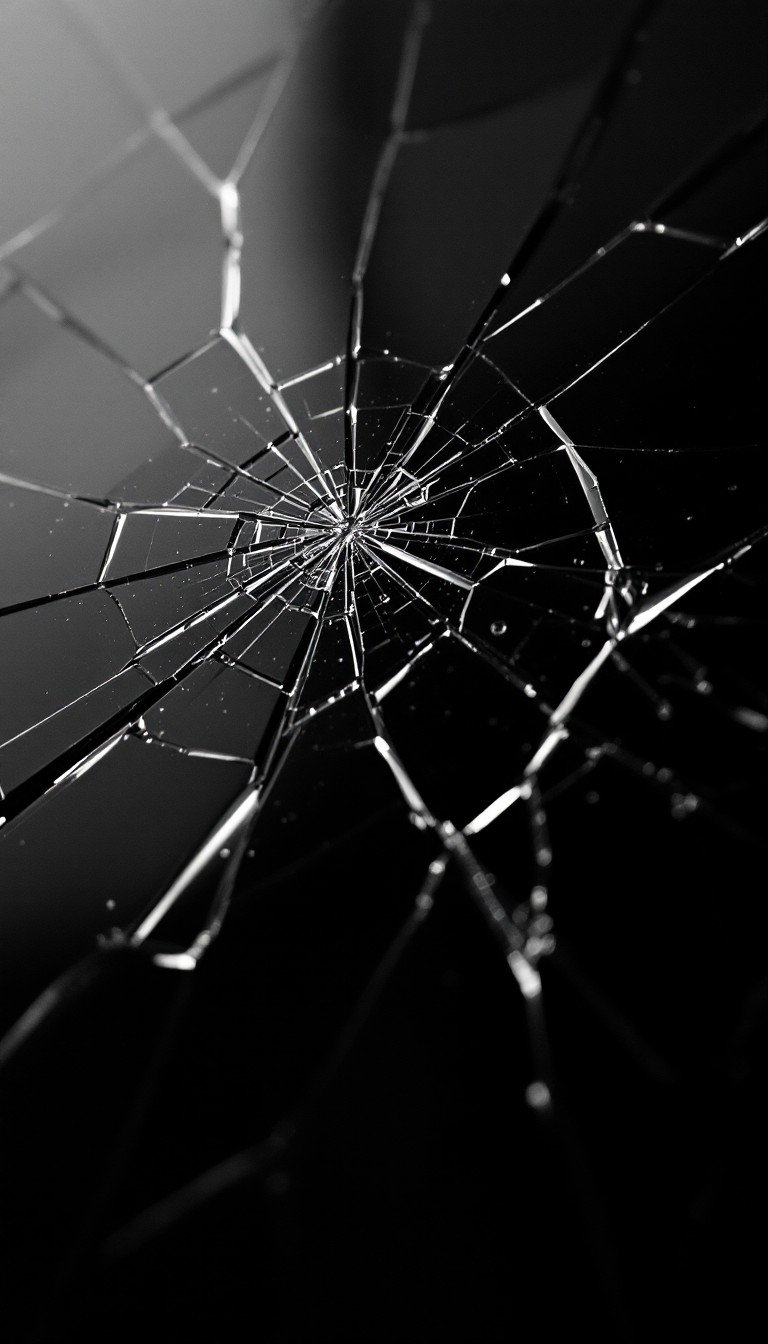
It took my breath away when my son stormed into the bathroom, frustrated, angry, fed-up for his very own, very significant to him, reasons. And when he chose to SLAM the bathroom door, causing the heavy mirror mounted to the front to slip out of the hardware holding it in place and crash onto the floor – a million, BROKEN pieces were left reflecting the afternoon light.
In her post, the author Kathleen Fleming reflects on anger and compassion, on how we can help our children navigate big emotions without harming ourselves or others, on how to be a parent with a child dealing with mental health needs. After dealing with the immediate safety concerns, after getting her own reactions in check, after checking in with her child and processing a bit, the two begin cleaning up.
And we cleaned up the broken pieces. We swept and we vacuumed. It was quiet work. It was careful work. It was thoughtful work.
Sometimes things break. Sometimes we break them. It’s not the breaking that matters, the how or why. What matters is how we choose to respond to the broken-ness. Does it kill us? Does it throw us into a downward spiral of blame and punishment?
OR
Does it help us remember how to love deepest? Does it push us towards compassion and over the hurdle of “rightness” and “wrongness” into LOVENESS?
Hear me, please: I am not saying there is never a need for consequences or punishment. I am not saying the rapist or the murderer should not have consequences or punishments. My point is to question why punishment seems to be our first and only response so often. My point is less about forgiveness this year, and more about grace. My point is that sometimes things break. But that doesn’t mean we need to jump to punishment. Sometimes we can thrive and grow in our imperfection, through our mistakes.
What if, when something breaks, we don’t rush to set blame, mark out punishment, or fall into shame. What if, when something breaks, we turn toward each other to find out what could make things better.
What if the child – or the grown adult – is angry about something unrelated to the moment? What if slamming a door is where they feel some control when they feel they have no power over a bully at school or the rejection of a friend or the expectations at a job or school. What if we could help people learn some control in those situations where they feel they have none instead of merely punishing them?
We find out a child breaks a mirror, and we sit with how hard it is to deal with big feelings like anger. Or we are suddenly sitting alone after we have broken something as an adult. There is a push to say ‘anger is bad and unacceptable – stop having anger.’ What if we can teach each other more about how to navigate our anger in ways that don’t cause harm instead of pretending we can just choose to not have anger.
What if we began with the basic premise that God loves you rather than the notion that God is going to judge you. What if we began with the fact that you are loved. Would that change how we respond to each other? Would that change how we navigate brokenness and broken things in our lives and in our hearts?
Sometimes things break. That doesn’t mean we are bad people. We can thrive and grow when broken, (perhaps only when we are broken.)
How we respond to the brokenness builds the world around us. It’s not the brokenness that matters. What matters is our response. What matters is the love.
In a world without end,
May it be so.
 Rev. Douglas Taylor