
Keep the Circle Unbroken

Keep the Circle Unbroken
Rev. Douglas Taylor
September 27, 2026
Sermon Video: https://youtu.be/c6wPZP6yKH4
I wonder how many of us have a memory about coloring outside the lines as a child, or learning about the importance of staying inside the lines. I don’t have such a memory myself, but it is a common enough experience that many adults can reflect back on it.
My colleague Rod Richards says
“We humans are the line-drawers. We are the border makers … the census-takers. We draw a line to separate this from that, so we can see clearly what each is. We create a border to define our place, so we can take care of what’s there.”
Rod goes on to say, however, that compassion does not have such boundaries, “God has no borders.” “The lines we draw,” he says, “disappear when viewed with eyes of compassion.” We can say, perhaps, that God loves those who color outside the lines.
In the September 17th issue of Braver/Wiser from last year, UU leader Clint Nicely https://www.uua.org/braverwiser/crossing-lines reflected on this, sharing his experience at the Smithsonian at age 8:
“I learned that lots of great art doesn’t have clearly defined lines. It was an epiphany, and within a few years I was questioning everything. Some musicians, as it turned out, didn’t always play the music as written. Teachers didn’t always follow the textbook. My mother often took liberties with recipes. Though I was not yet consciously aware of it, crossing and blurring the lines had become a metaphor for everything in my life, a new way of experiencing the world.”
Last week I preached a sermon about breaking out of unhelpful cycles, patterns of harm. https://douglastaylor.org/2026/09/21/breaking-the-cycle/ I urged us to break with tradition. Following Nicely’s reflection, I urged us to not play the music as written, to not follow the textbook, to take liberties with the recipes. As Unitarian Universalists, I think we’ve come to expect this sort of perspective from our pulpits. It was Ralph Waldo Emerson, after all, advising the Harvard Divinity School graduates to
“Let me admonish you, first of all, to go alone; to refuse all good models, even those which are sacred in the imagination of [humanity], and dare to love God without mediator or veil.”
Eschew tradition, break the cycle, dare to be original, color outside the lines! Allow me to moment to acknowledge the power and importance of all that, and to say – we don’t need to do that every time. It is worth learning when to cross the line and when to hold it. There is a value in knowing how the break the cycle and how to keep the circle unbroken – because both behaviors are needed depending on the circumstance.
I was at a multi-day minister’s conference a few years back, the topic was on leadership and authority. There were a few dozen of us participating, and when we came in to the room after our lunch break on the second day, the presenters had set up a game for us.
There was masking tape on the floor dividing the room into thirds. We were each assigned a section with most of us in one section, a smaller number in the middle section, and about five people in the last section. We were given only one rule – don’t cross the lines.
At first, knowing the course was about leadership and authority, we played along. After about ten minutes, we started crossing the lines just to see what would happen. When nothing obvious happened, most of us roamed the room. Some people pulled up the tape and used it to make art or create new boundaries. I started at the big end, but over the course of the activity I occupied every section of that room you can be assured. Eventually I sat down and started a rousing hymn sing.
Some of what we learned while processing the experience is that when left with no direction or aim, no leadership, people tend to accomplish a significant amount of nothing in particular. We also learned from our experience something about our basic anti-authoritarian streak so prominent among folks in our faith tradition.
We Unitarian Universalists tend to be ‘boundary crossers.’ We are iconoclasts. Our favorite stories from our history are the ones about the rebels, the heretics, the trail blazers, and tradition breakers. A. Powell Davies, the Unitarian preacher serving in Washington D.C. during the McCarthy Era, wrote “How strange and foolish are these walls that separate and divide us.” But are all walls foolish?
My middle child is an artist. He draws with ink and pencil, and more recently has learned to draw digitally. When he was little, he spent months tracing pictures out of books. We had a reem of that really thin printer paper – the kind that was all connected but folded along perforated lines … and it had the punched holes along the edges to spool through the printer which you would need to tear off after it was ready. Do you remember that paper? It was very thin and we had a lot of it. Our son would hold a piece against one of his books about whales and trace the creature. Month after month! We had so many sheets of traced whales. So many! He spent so long just tracing other people’s art.
And now he can freed-hand all manner of creature. He can sketch a heron in a few minutes. I saw him create a frameable drawing of three bears climbing a tree in an afternoon based on just a conversation in the morning with someone. My point is that he started by not even coloring inside the lines – he just drew the lines exactly as they were. Not all walls are foolish, not all lines need to be crossed, we don’t need to break every rule. Such boundaries are supposed to serve a purpose, to protect something important or support someone in need.
We had a shift in our Unitarian Universalist ministry when we were training new ministers to be change-makers, border-crossers. This was when immigration was becoming a central issue in national politics, when authoritarianism was beginning to take root. A few prescient teachers in our seminaries saw that we needed to develop this mindset and these skills in our communities.
I admit when I first learned about the focus of ‘border crossing,’ or ‘boundary crossing’ as it was called originally, I was concerned. I had spent my seminary training and the first handful of years as a minister navigating the impact on our ministry of inappropriate boundary crossing. My seminary training occurred in the shadow of the clergy sexual misconduct scandals. I learned the importance of ‘healthy boundaries.’ While I have never had a personal or direct connection to any such misconduct, the reality of it impacted the breadth of society. Not all boundaries are bad; there are useful walls that divide.
Useful dividing walls serve for when we want to make the lines clear between what is mine and what is yours, such as with your bank account or my body. Conversations of consent and rape culture are a response to a type of ‘boundary crossing’ that is harmful.
Tearing down a wall can be a good thing and it can be a bad thing depending on the boundary, what it was meant to protect, and why it is being crossed. In our game at that minister’s conference, we tore up the tape boundary without establishing first what the boundary was for or clarifying if it was a boundary in the service of justice or of injustice.
Becca Beorger, the author of our reading this morning, reminds us of lessons from cell biology – lessons that are analogously applicable to maintaining individual integrity and the health of a community. She wrote that the reality for our cells, and a goal for our communities, is to have boundaries that are flexible. That our lines, walls, circles, what have you, give us both support and stability as well as the ability to change and grow; protection for what is precious and invitation to something new.
When Jesus exhorted his followers “love your neighbor as yourself,” it was less about tearing down the division between Jews and Samaritans, and more about finding one’s integrity and compassion given the divisive social structures of the day.
“A certain man was going down from Jerusalem to Jericho, and he fell among robber.” Priests refused to help the man, passing on the other side of the road instead of stopping to help; until finally, a Samaritan came by. “When he saw him, he was moved with compassion.” (Luke 10)
The parable of the Good Samaritan recognizes that humanity must find a way to deal with the divisive instinct within us. The deeper question is not if the boundary should be held or torn down. The deeper question is how can you live with integrity given the reality of the walls around us. That is the discernment question to know how to respond to our walls, which to maintain and mend, which to challenge and tear down.
Crossing boundaries is good and just when we are partnering with the oppressed, when we are meeting the ‘other’ across our differences, when we challenging a status quo that causes harm. Crossing boundaries is bad when we are abusing our power or other people, when we are taking advantage of the trust that has been given to us, when we see every boundary as just a challenge rather than as a guide to navigate the needs of the individual with the needs of the group.
Boundaries are a tool, how we use them is the question. We do need to break harmful cycles. We also need to hold close to the unbroken circle of love and connection which is the tap root of what we are building as a community. With all the destruction and division that abounds in our world, yes, we need to also tear down the barriers that cause harm. But more importantly, I contend, we must hold the line for the integrity of our values, keep the rule of kindness and inclusion, mend the wall that holds up the world we are building together.
We must stay within the unbroken circle, because that is where we all heal and grow.
In a world without end
May it be so
Wild Wonder
Wild Wonder
Rev. Douglas Taylor
8-23-26
Sermon Video: https://youtu.be/KhREu2uqyb8
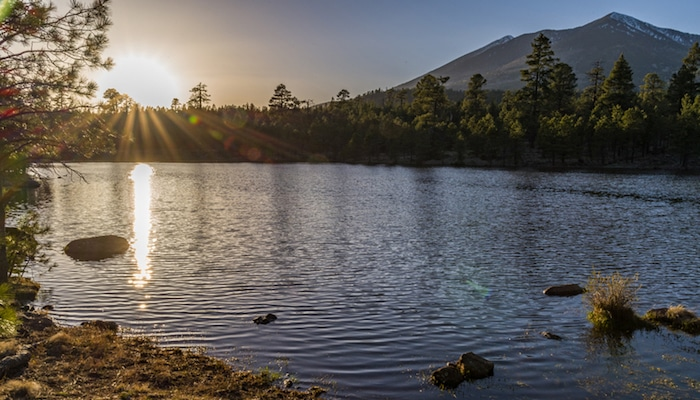
Researchers call it “soft fascination.” Which makes it sound like a new-age meditation technique. Soft fascination is a state of effortless, gentle attention. Which is almost, maybe a meditation technique. But really, Soft Fascination is when your mind focuses on gentle environmental stimuli: think dappled sunlight on trees or creek water trickling around stones or branches swaying in the breeze. We are drawn to such sounds and movement in nature – not as a meditation technique, simply as a reality. We all do it. And it’s not because they are loud and amazing or demanding of our attention; but precisely because they are not.
Evolutionarily, these sounds and motions are a sign that all’s well – no danger or threat looming. Watching a thunder storm from a dry porch is certainly an amazing experience. Standing at the Grand Canyon is a phenomenal way to gain perspective. But that’s not the experience researchers are talking about. It is instead the soft, gentle, effortless stimuli we are naturally drawn to which allow our otherwise overtaxed minds to rest and heal.
And, I will add – this is not just cool background sounds like from a white noise machine – although such devices are not unhelpful. It’s not background. This experience of “soft fascination” is when your attention is on the experience. Studies have shown for decades that experiences of Soft Fascination are calming and restorative.
Other studies highlight benefits with stress reduction and anxiety reduction. There are studies about blood pressure, and pain perception, and general immune support. One hitch is that folks struggle to determine exactly why being in nature this way helps. We just know that it does.
I have always loved the woods and wilderness. I love the wilderness from my experiences growing up with many opportunities to explore and play and (every now and then) to simply be in the woods near my home. I grew up in the Bushnell Basin near to where the Erie Canal runs through the southern suburbs of Rochester, NY. Glaciers created the basin long ago, which accounts for the many sudden hills and lowlands. Across the street from my house was one such lowland. The ground dropped down several dozen feet to a broad swath of trees and clearings that we called The Flats. (not really enough to count as ‘wilderness’ but as a child it was enough.)
Every spring and fall the Flats would become a maze of flooded creeks and overgrown puddles, and all winter there would thick patches of ice everywhere. The land was not useful for farming or development and so was left to go wild with trees and shrubs, left to grow wild for the imagination and exploration of children.
Once I was old enough to be outside on my own, I spent nearly every nice afternoon down in the flats. I wandered a stretch of several miles, sometimes with a friend or sibling, more often alone. I explored, learning the boundary of the creek, memorizing where flats turned to cornfield, finding the biggest trees, making up games, having adventures.
I developed a strong sense of ownership to the Flats. ‘Ownership’ is too possessive a word – I developed a strong sense of identifying with the Flats. Like the wilderness was a gift for me to open anew each day. I spent years down there, like it was an extension of my own home.
When I read about environmental psychologists studying the benefits of being in nature, I am reminded of the woods of my youth. When I hear people talk about hiking or camping, I am reminded of the woods of my youth. When I venture out into the woods as an adult, I am reminded of the woods of my youth.
There is a potion of Walt Witman’s poem, Leaves of Grass that I’ve always identified with. “There was a child went forth every day,” Whitman wrote. And I was that child.
And the first object he looked upon and received with wonder or pity or love or dread, that object he became, And that object became part of him for the day or a certain part of the day … or for many years or stretching cycles of years. The early lilacs became part of this child, And grass, and white and red morning glories, and white and red clover, and the song of the phœbe-bird
Whitman continues, listing many things in nature and people that became part of this child. The point he makes is that such encounters form our identities. Time in nature, or in any setting really, shapes who we become. I think we tend to down play the impact such experiences can have on children in particular. As adults we can still have formative experiences, but our brains are most ready for such things when we are younger.
When people think about ‘spiritual experiences’ we usually imagine big events, like a grand epiphany or dramatic turning point. What if a regular childhood practice like rambling through the woods could count as a spiritual experience. What if we’re talking about simple quiet experiences? Not just the grand dramatic ones?
In her most recent book The Wonder Paradox, philosopher, poet, professor Jennifer Michael Hecht writes about the value of poetry for non-religious people to engage in the thing religious people call ‘spiritual experiences.’ Her book explores how poetry can open us to wonder and awe. She offers a biographical context for herself early in the book:
My physicist father didn’t believe in God by kept quiet about it when we kids were young. I believed from the time my mother told me God was there until one day when I was twelve, standing in my parents’ living room, when I had an uncanny mental shift. I suddenly knew I might be anybody, anywhere, but instead I happened to be here, being me.
The proximate cause was ordinary loveliness: a steep slant of late-afternoon light serrated in the folds of a diaphanous blue curtain; nylon maybe. Yellow sunlight in a glowing fabric curlicue. I saw that we are just one species among great nature, and as the trees very slowly rot, so do our pampered haunches. That’s it. There is no reason to imagine a guy in the sky bowling to make thunder and brooding over how we fail him. Then the sounds of the world returned to my hearing. I never lost interest in such perspective shifts and I never again believed. (pp5-6)
I was fascinated by her description. One person can see a shaft of sunlight through the curtains and interprets a loving God, another the utter lack of a God, and still another can take no meaning whatsoever beyond that it is lovely. My point is less about the conclusions we may reach and more about honoring that such moments can and do shape us profoundly.
Hecht called what she experienced a ‘perspective shift.’ Perhaps it is this perspective shift that makes an ordinary experience of “soft fascination” into a spiritual experience. I’m beginning to devolve into analysis of semantics, for which I apologize. I’m very interested in our experiences of the natural world that lead us into wonder and healing.
I recently pawed through an old copy of the book The Geography of Childhood (1994). The book is a series of essays by naturalists Gary Nabhan and Stephen Trimble in which they present their hypothesis that children need wild places in their lives. Using mostly stories from their own lives and the lives of their children along with a sound base of theory, the authors make a compelling case. The hypothesis is not that everyone needs wild places, but that children need wild places.
Children in particular need wild places for developmental reasons. Surveys claim that less that ten percent of adults see the quality of the environment as an important issue, “over ninety percent of our children feel it is the major issue in their lives.” (p 40) They are drawn to wild places like moths to a flame. My experiences and feelings about nature fit well with what these authors suggest.
I remember how they talked about studies done around how young children use school playgrounds. In one situation, they replaced “an acre and a half of asphalt with a diverse group of traditional playground swings and bars; structures and sitting area; and a half-acre of fishing ponds, streams, woods, and meadows.” (p 66) Then they watched the children to see where and how they played. One aspect they found was how “the natural area of the playground saw wider ranges of activities and more mixing of the genders.” (Ibid) The bit of asphalt they left was used primarily by boys for competitive ball games. This is how some of the children described the natural area: “It’s a very good place. Really quiet. Lots of kids just sit around there and talk.” “It’s just perfect.” (Ibid) Children make themselves at home in the wilderness.
Slides and swings and playground climbing equipment are all really great. Kids love those things. They are exciting. And there is something altogether different and important found in wild spaces. All experiences of wonder are important and valuable. That experience of pumping on the swing and getting up so high! Holding on to a powerful ATV or snowmobile as the landscape flies past! Visiting the elephants at the zoo! All of these experiences can be experiences of wonder. They are curated, contained, commercialized. And they’re good.
But wild wonder is something else. Wild wonder is nourished by chirping crickets and shifting patches of sunlight, burbling creek water and fields of undulating wheat moving like waves on the ocean. Wild wonder hums and shines in a way that eases our minds and brings spiritual restoration. Wild wonder allows your nervous system to settle and heal. We are drawn to these natural experiences. We don’t need to force our minds to be empty or to recite the supplication in the correct way. We simply need to show up and allow our brains to do would they might naturally do when offered the context of the gentle natural world – to experience wonder.
May we each fall in love anew with the quiet murmurings of the natural world. May we ‘rest in the grace of the world.” May we be led into the presence of “green pastures” and “still water.” May we re-acquaint ourselves with the companionable ease found in being present where we belong – in nature, among the dappled leaves and gentle buzz of life. May you slip into moments of Soft Fascination. May it bring you rest. May it restore your soul.
In a world without end
May it be so
—
To Save or Savor
To Save or Savor
8-31-25
Rev. Douglas Taylor
Sermon Video: https://youtu.be/OEj-ifcUj5I
I know E.B. White as the author of beloved children’s books like Stuart Little and Charlotte’s Web. Perhaps you know him for that definitive book about English writing – Strunk and White’s Element’s of Style. Then there is a vast collection of pieces he wrote of the course of years he spent as a regular essayist for The New Yorker. One of his pithy pieces is the starting point for my reflection today. E. B. White once wrote, “I arise in the morning torn between a desire to improve the world and a desire to enjoy the world. This makes it hard to plan the day.”
In my description of today’s worship service, I suggested that in the full quote White decides that savoring is more important. This is not true. The full quote only heightens the tension revealed in the shortened version.
The full quote was from a piece he did for the New Yorker in 1969 – after he’d won awards like the Newbury, so he had people’s attention.
“If the world were merely seductive, that would be easy. If it were merely challenging, that would be no problem. But I arise in the morning torn between a desire to improve the world and a desire to enjoy the world. This makes it hard to plan the day.” The New York Times (11 July 1969)
Do you improve or enjoy the world? Do we save or savor the world? E. B. White is not remembered as an activist, exactly. His name is on the list of amazing writers, but not really on the list of social reformers or change agents who tried save the world. He certainly spoke about the issues of the day, advocating for justice and civil rights, for democracy and virtuous principles. But he said his desire was to improve the world and one can easily argue that he did.
He lived and wrote during challenging times. But they were not only challenging, they were also, as he says, seductive. His books and his pieces in The New Yorker had an impact on our lives – but the character of his writing leads me to believe he was able to enjoy the world splendidly. E. B. White seems to have been able to both improve and enjoy the world.
How do you plan to spend your day?
White said the times in which he lived were challenging. We also live in challenging times. It has become numbingly normal to get news about the erosion of our democracy or attacks on the rule of law perpetrated by the executive branch of our federal government. Meanwhile thugs in masks are kidnapping people on the streets under the protection of our government. Meanwhile our trans siblings are losing protections and seeing society encouraged to fear them. Meanwhile our health care system is being run by conspiracy theorists instead of scientists, our Homeland Security is run by white nationalists, and our federal intelligence agencies are actively colluding to cover up the Epstein Files in plain sight. Plus we have a war in the Ukraine and a genocide unfolding in Gaza, and ridiculous international trade wars we are paying for here from our own pocketbooks. Billionaires keep getting richer and AI companies are stealing our data and identities for their own profit.
So, yes. I do arise each morning with the desire to improve the world. Do you want to save the world too? I want to protect the immigrants and refugees, I want to fight for better healthcare and vaccines, I want to defend the rights and protections of LGBTQ people. I see our unhoused and hungry people right here in Broome County and want to do something about it.
I have this desire to improve the world, and thankfully I’m part of groups that are doing exactly that. Our congregation just co-hosted a huge community barbeque that served over 400 meals. The UUA launched a campaign around Abolition with a focus on prison – and our congregation is going to tap into that this year. Our Systemic Housing Crisis social action team is working to raise funds and awareness of local legislative changes we can make and have partnered with a community land trust to create more sustainable housing to people. The Interfaith group that I am a part of is rebuilding itself after the pandemic – we are reestablishing local interfaith relationships. And our first official action was a Peace Walk at which we talked with and listened to each other – especially about Gaza. And so much more – we’re in the middle of this, in the thick of it together. We are acting on that desire to improve the world, responding to the challenging times in which we live.
And it can be a lot. And is anyone here feeling overwhelmed by it all? Are you feeling scattered, frustrated, and numb? Sometimes I need to check out, escape, just drop everything and stare at some patch of earth or a quiet stream for a bit – or play keepy-uppy with my granddaughter for a while.
How about you? I am reminded that the better world we are building does not need me exhausted and burned out. This is more than just a conversation about self-care or justice-fatigue. You’ve heard the argument that we need to do our justice work like a choir singing a prolonged note together – different choir members take their breath at different times so the experience of the note is sustained while the individual singers each get to breath and no one person is carrying the whole prolonged note alone. You’ve heard that metaphor perhaps? That’s not what I’m talking about.
E. B. White said the world is seductive. And he arises with a desire to enjoy the world. To savor it. This part is not just about taking a break. It’s about pouring some of your good energy into loving the world powerfully – savoring the beauty of it, enjoying life. Do you enjoy life?
This is not simply a matter of scheduling your day to do some improving in the morning and wrap that up to have time for savoring by 3:15. There is a way in which the desire to improve the world is borne from a critical dissatisfaction with the way things are. Things could be better, let’s get to work on that. But the desire to enjoy the world is borne from a recognition that the world is beautiful right now, just as it is.
Look at that amazing sunset! Listen to this elegant piece of music. Can I describe to you this cool game I found that I’m loving? Check out my new shoes – they look great and are soooo comfortable. If all my energy is on improving what’s wrong, how much energy do I have for enjoying what’s right?
Ah! But if I am so invested in savoring what’s right – am I blocking out or in denial about what’s wrong in the world around me? How might we both save and savor? Enjoy and improve?
Here’s a trick that works against us: we live in a late-stage capitalist society that pushes us to be dissatisfied with trivialities – Does your body smell wrong? Are you performing masculinity wrong? Is your dry skin keeping you from dating the right people? What if you are embarrassing your children because you drive the wrong car or buy the wrong food!
We certainly need to step back from this manufactured dissatisfaction and instead simply love the world as it is. The world is already amazing and so are you! You don’t need to be perfect to be loved.
And if you still feel compelled to be dissatisfied, let me gently tell you: no one cares about your ear hair – but brown-skinned people are being profiled by ICE, the CDC has stopped promoting vaccines, and the Epstein Files are still being covered up.
E. B. White did not resolve the dilemma. White intentionally kept the tension of this dual yearning to both enjoy and improve the world. He did not want us to have the solution; he wanted us to experience the tension. I was wrong when I suggested that E. B. White’s full quote revealed his conclusion that savoring is more important than saving. He didn’t say that. It was a farm and garden blog I read that said that.
Katie Spring is a health-conscious, modern young blogger who writes about tomatoes and cabbages, about women-owned seed catalogues and ‘5 ways to stay grounded and avoid burnout when while starting a farm.’ In one of her posts, she raises E. B. White’s dilemma about saving and savoring the world https://katiespring.com/save-savor-world/ and says:
“It resonated so fully within me: the pull between wanting to protect, defend, and fight for the world and wanting to laugh, explore, and sink into the world’s beauty. The two acts appeared so separate.”
She eventually realized that the two are not separate, but intwined – and indeed they begin with savoring. “Savoring leads to saving,” she writes, “because savoring leads to love.” It’s that simple.
I found her reasoning quite sound. “Savoring leads to saving because savoring leads to love.” That reminds me of a quote I had on a t-shirt when I was a teenager in the ‘80’s. The quote is by Senegalese conservationist Baba Dioum, who wrote: “In the end we will conserve only what we love; we will love only what we understand; and we will understand only what we are taught.”
We will only save what we love. So my goal is to encourage you to love the world, to love you neighbors, to love those who live at the edges. To love the beauty you see in the world. “Savoring leads to saving because savoring leads to love.”
E. B. White loved the English language. He enjoyed the creation of an elegant English sentence. That one he wrote about enjoying world or improving the world was a product of his love. And it has spurred generations so far to grapple with the concept. Just in that one small example, he has improved the world.
Go read that cozy romance, play your lute, take a dance class, hug your people, make pithy protest signs, take someone on a hike to your favorite view, savor that fine meal, love your neighbor, and enjoy this world. We will only save what we love. Savor life, that you remember why it is so worth saving.
In a world without end,
May it be so.

