
Redeeming Omelas
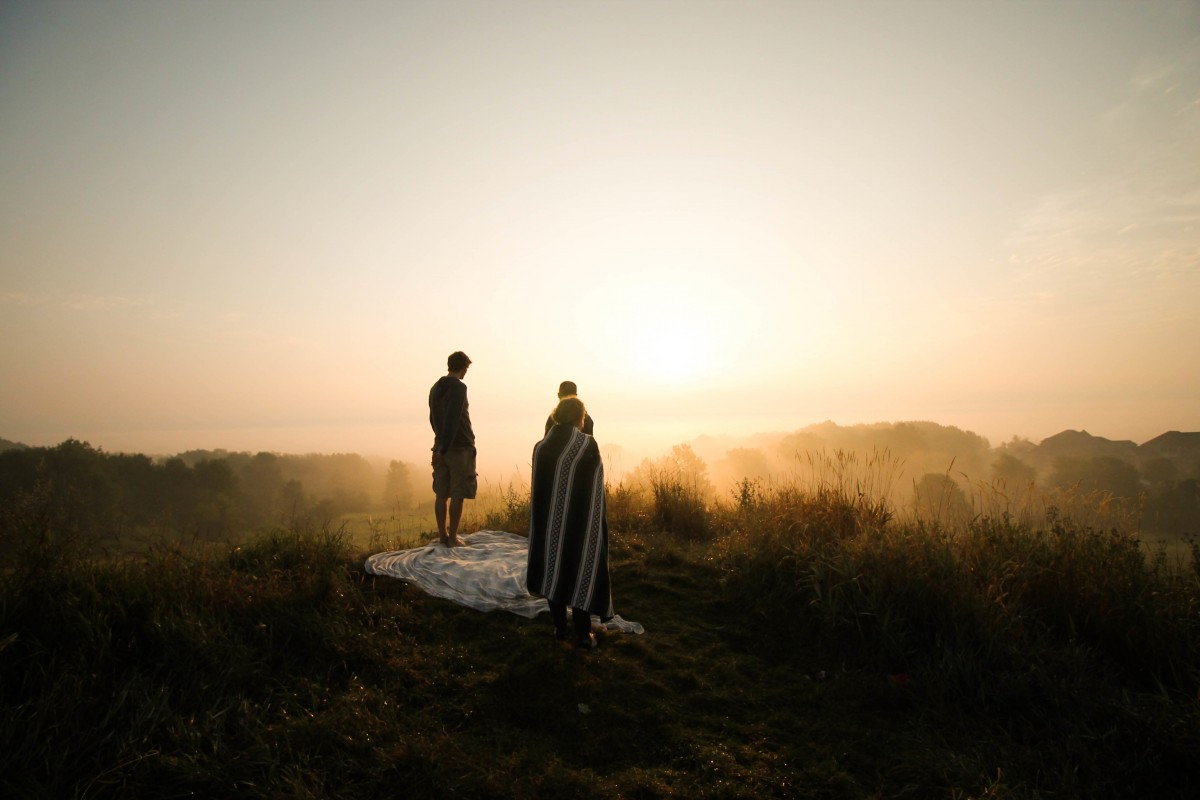
Redeeming Omelas
Rev. Douglas Taylor
10-25-26
Sermon Video: https://youtu.be/nmmtLKy9vTM
Omelas? What’s an ‘Omelas’?
Omelas is the name of a fictional city in a short story written by Ursala Le Guin a little over fifty years ago. It won a Hugo Award for Best Short Story in 1974, clocks in under 3,000 words, and is categorized as “Philosophical Fiction.” Le Guin has noted that The Ones Who Walk Away from Omelas (OH-meh-lahss) has “a long and happy career of being used by teachers to upset students and make them argue fiercely about morality.” (Here is a free pdf version of the story: https://shsdavisapes.pbworks.com/f/Omelas.pdf)
The story is about a summer festival in the utopian city of Omelas. After describing the joy and prosperity on display, the happiness evident at every turn; the narrator reveals one final element: the one atrocity. All of the utopian prosperity is dependent on the perpetual misery of one child.
Le Guin credits Dostoyevsky for the original idea which comes from a brief quote in his 1880 book The Brothers Karamazov. It was Dostoyevsky who outlined the utopian city with one suffering person at the center. Le Guin built her story to include the added component that every person, at a certain age, had it all explained to them. And that most of the citizens would even make a visit to the cell where the child is kept to witness for themselves. Thus, everyone is aware of the arrangement.
And it is described as an arrangement – although Le Guin is vague about the how this is accomplished or with whom the city has made such an arrangement. That part is not important to the deeper question. What we are drawn to the experience of the citizen upon learning of the arrangement. How would you respond to learning that your happiness depended on this one miserable child?
Le Guin explains that some people feel shocked, sicked, or disgusted when they learn of the atrocity, that a child is kept miserable so that the rest of the population may have prosperity and happiness. In learning about the arrangement, “they feel anger, outrage, impotence, despite all the explanations. They would like to do something for the child. But there is nothing they can do.” None are willing to sacrifice the happiness of everyone on the possibility of happiness for the one. ‘The needs of the many outweighing the needs of the few or the one.’
After that initial reaction, our narrator tells us, the young people go through a time of deep anger. They “go home in tears, or in tearless rage, when they have seen the child and faced the terrible paradox. They may brood over it for weeks or years.” “Their tears at the bitter injustice dry when they begin to perceive the terrible justice of reality, and to accept it.” Most of the people, we are told, accept it. And then there are a handful who do not. Some people walk away; they remove themselves from the moral paradox and they become the ones who walk away from Omelas.
Of course, all of this is meant to prompt discussion among blossoming minds, questions about morality and justice, fairness and suffering. I was not given this story when I was in middle school. That is the common time when a story of this sort is put forward for young minds. I instead watched the short film adaptation of Shirley Jackson’s “The Lottery” which also raises the similar moral question of sacrificing one for the continued ease of everyone else. And that is the point with which I wish to wrestle this morning. Rather than trying to grapple with the details, consider this moral question it poses to us still today:
Who is suffering that we might thrive?
I imagine over the decades, this question has had a variety of answers. Who does the miserable, tortured child of Omelas represent for us in our current society? Who is the one we sacrifice? Of course, one obvious point I would make in translating this into our current lives when asked: Who is the one we sacrifice? ‘Only one?’
We sacrifice thousands. We sacrifice dozens of children to school shootings every year now. https://everytownresearch.org/maps/gunfire-on-school-grounds/ The number of Trans people murdered in the US at least doubled in the past ten years, https://www.congress.gov/118/meeting/house/117016/documents/HMKP-118-JU00-20240321-SD011.pdf and hundreds of Trans people over this past year have died by suicide or other violence. https://tdor.translivesmatter.info/reports 1,500 women are killed annual through domestic violence and intimate partner violence in the United States alone. https://www.ncbi.nlm.nih.gov/books/NBK499891/ They estimate that 3 million children die from hunger worldwide each year. https://wfpusa.org/news/10-facts-child-hunger/
Closer to home, we’ve seen the deaths of people on the margins here in Broome County – Peter Bennedum beaten to death last spring; and six people died in the Knights Inn fire at the end of June – three of whom were children. And I’ll add to this the suffering of all those detained by ICE over the past year who were housed at our Broome County jail and beyond.
There are so many humans we sacrifice, many swept under the rug and demonized to ease the conscience of the broader community. And were this a Faustian bargain, aren’t we supposed to be thriving as a result of all the sacrifice? Aren’t we supposed to be blessed in an idyllic utopia? Or is it only the exploiters, predators, and colonizers who prosper?
We have not only a multitude of people suffering, our society as a whole is not thriving as a result. The sales pitch to hate immigrants and trans people, Palestinians and those seeking the release of the unredacted Epstein Files, … that sales pitch from the fascists offering a beautiful society gleaming in toxic patriarchy and Christian Nationalism has lost some of its luster by the rising cost of food and gas I suppose. I will confess it is heartening to see reports that ‘government corruption’ matters a bit more to voters than the cost of gas as we go into the midterms. https://www.cnbc.com/2026/10/23/corruption-midterm-election-cnbc-poll-trump.html
In the story about Omelas, the only moral option seems to be to walk away. Many, in the story, (most, in fact,) settle into an uneasy rationalization in which they accept the atrocity against the one child and let it settle into the back of their minds. They then treat all others around them humanely, with kindness and care – especially children – because they are aware of the atrocity.
And for those for whom that bargain is not enough to allow them to sleep at night, there is the option to simply walk away. We do not have that option.
We cannot walk away from society. Oh, I know many of you have that little liberal fantasy of moving to Canada. And I suppose there are some who do. But you know Canada has troubles too. No. The solution is not “love it or leave it.” The solution is “love it and change it.” It always has been.
And Ursela Le Guin would say the same. She knew the solution she posed in her story was not a real one for our living. Le Guin was holding a mirror up to society, not merely a moral question for middle school minds. She also offered a witness to how we handle atrocities and suffering as a society. I think she wanted people to question the assumption that there had to be some suffering in the system for it to work well.
Does there need to be suffering for there to be good things and joy? Sit with this question for a moment. That there is suffering is certainly a reality, a fact. There are atrocities and traumas in our world, in our lives. And there is joy and beauty, love, agency, and happiness. They blend, yes. “Joy and woe are woven fine,” Blake tells us. But do we need suffering for joy to be manifest?
Maybe. That might be an assumption I’ve been holding, unexamined. I certainly recall my own evolution into emotional literacy as a young adult dealing with depression. I recall learning how to allow sadness and even depression into my life because I had grown emotionally flat. Allowing myself to experience grief and sadness allowed me to better experience love and happiness.
I am hesitant to assume my personal growth experience is the template for the whole world. But even still, let’s go with the argument that my experience translates to how society should be run – that suffering and joy are intertwined. Does that mean we must have our suffering? I think Le Guin is suggesting in her story that we are too enamored with the idea that someone most be suffering for society to thrive.
How are we to respond to the suffering among us? I don’t want to walk away from Omelas. But I don’t want to see the suffering in our city and accept it either. I want to make it better. I want to break with that bargain of ‘acceptable suffering’ and bring kindness and healing to all who suffer. I want women to walk freely in the evening without fear of being attacked or stalked, rather than learn better techniques to protect themselves. I want children to eat and grow and learn and cry and laugh without being bombed or starved. I want trans people to be welcomed as beloved instead of scapegoated by a fascist regime.
I want the kindness and care, the joy and prosperity that Le Guin describes in her story, that politicians promise in their stump speeches, that scripture proclaims is possible, that our values lead us to build together. I want it without the assumption that somewhere, out there hidden away from us, someone is suffering so we can thrive. No. I want the truth.
We don’t have to hurt each other. I want to know about the hurt. And I want us to be heartbroken by it instead of resigned to it. I want it to spur us to be better. I want us to want to change things. I want us to build something better. I believe we can.
In a world without end,
May it be so.
Tea and Purpose

Tea and Purpose
Rev. Douglas Taylor
12-14-25
Sermon video: https://youtu.be/wS0h-ziD9V4
The amazing Terry Pratchett once wrote: “There’s always a story. It’s all stories, really. The sun coming up every day is a story. Everything’s got a story in it. Change the story, change the world.” (Terry Pratchett, A Hat Full of Sky)
As Pratchett suggests, we do well to pay attention to the stories we are telling ourselves about the world we live in and the world we long to live into.
Last week we talked about Star Wars and the power of hope. One of the things we saw in those stories was how resistance shows up against the forces of Empire. Star Wars is a form of dystopian fiction. Dystopian literature offers a bleak perspective on the future – things have gone wrong and now we need to work to make it better. Good dystopian fiction will go one better to reveal what is going wrong now, not just in an imagined future. It will be about our present condition more than anything else.
Today I want to talk about some utopian fiction. And in a similar vein, good utopian fiction reveals not just some imagined happy future, but how we are living with the seeds of that future even today. “Change the story, change the world.”
The story I am excited about this morning is about robots. I will confess, I’ve never been a huge fan of robot-based science fiction. And upon reflection I think that has to do with the way robots have been portrayed in science fiction over the years.
One of the things about stories is how they have a surface level entertainment and a deeper level of impact. On the surface, a story about robots may be a fun exploration of technology and imagination. On a deeper level, robots offer a mirror to explore what it means to be human. When Science Fiction leans into a character who is non-human, the author is able to help the reader better understand what it means to be human.
Isaac Asimov offered the classic version of robot stories. For Asimov, robots were an exploration into ethics and logic and the hope for a better future for humanity based on ethics and logic. Asimov wrote his robots as tools or servants to humanity. And while he did critique the premise in some ways – that was the premise. Robots were the perfect servants.
Later versions of the genre had the robots take on different roles. Think about The Robot from the Lost in Space series: “Danger! Danger!” The Robot was a powerful and loyal piece of equipment. Think about The Terminator, who was really just a weapon – and then remember how most advances in drone technology are rooted in military research these days. Think about the Droids in Star Wars who were really just a plot device and sometimes comic relief. And then think about the way Gene Rodenberry’s Star Trek portrays the character of Data as a sentient being with relationships and a unique place in the crew. Data was the first (and until recently, the only) robot I enjoyed.
The Monk and Robot series by Becky Chambers offers a radically different robot from the loyal equipment or perfect servant of earlier versions of this literary mirror. Where Asimov’s robots are essentially tools of humanity and society, Chambers’ robots are peers with humanity seeking purpose and community. Where Asimov’s robots are stand-ins for a conversation about racism and law, Chambers’ robots are conversation partners on the topic of freedom and liberation.
And most alluring for me is that freedom is not an either/or scenario – it is not an apocalyptic uprising of the machines. They do ‘rise up’ but their freedom frees the humans too. And that is how this story changes the mirror of what robots reveal about what it means to be human.
The description on the inside jacket of this book categorized as ‘cozy sci-fi’ tells us this:
It’s been centuries since the robots of Penga gained self-awareness and laid down their tools. Centuries since they wandered, en masse, into the wilderness, never to be seen again. Centuries since they faded into myth and urban legend.
One day, the life of a tea monk is upended by the arrival of a robot, there to honor the old promise of checking in. The robot has one question: “What do people need?” But the answer to that question depends on who you ask, and how. They’re going to need to ask it a lot.
How would you answer? What do you see that we need?
I mentioned near the beginning that this is a utopian story. Part of the premise as the book begins is that the people have resolved their basic needs. There is no poverty, no inequity on injustice leading to homelessness or hunger. It is a society in which everyone basic needs are met. In a world where people have what they want, what more do we need?
In the second book, there is a scene when the robot, Mosscap, first comes to a community and asks it’s question: “What do you need?” The small town of people who turned up to see the oddity of a robot were confused by the question at first. Nobody quite knew how to respond.
After a long pause, a bearded man piped up from the back of the crowd. “Well, um … I need the door to my house fixed. It’s a bit drafty.” (PCS p23)
Sometimes it can be hard to think beyond the immediate needs of our daily rounds. What do you need? Maybe not ‘what do you need help with?’ Maybe not ‘What do you need a robot to do for you?’ Because I don’t have a real robot tucked up here in the pulpit with me. And I’m not so good at fixing your drafty doorway. So what do you need? Really?
I imagine many answers in our current situation might land in the category of righting a wrong, answering an injustice, fixing a gross inequity. I need ambulance rides to be fully covered by insurance and for teachers to be valued more than celebrities. I need oligarchs and abusers to be held accountable and removed from power. I need my society to really care for the wellbeing of all the people in our society.
So, if that were accomplished, as is suggested in our little novel about a tea monk and their robot friend, then what would you need? Pretend we’ve solved our injustices and we live in a Star Fleet type of universe. What do you need?
This begins to drift into theological territory. What is the Human Condition? Many theologies are built around an assumption of sin or fallenness and how awful we are compared with God and what God expects of us. I don’t have time for that sort of sour thinking. Yes, we are imperfect and broken, but not is a sinful or bad way worthy of judgment. We are imperfect and broken in the way all the world is.
I believe our Human Condition is one in which we need to be loved – and we are loved. We may forget this truth or trauma can chased this truth from our knowing, but we are. I believe our Human Condition is one in which we are intrinsically part of the holiness that pervades the whole universe. We are interconnected – thus what I need is not only what I need, but what we need. And we need each other. I think any answer to the question ‘what do people need?’ must include the answer: each other. We need mutual thriving.
In this story I’m inviting you to read, the author makes multiple references to our need for each other. It shows up when the story talks about various things from interdependent ecosystems to friendships. What do people need? Each other.
One of the characters is the robot, the mirror of humanity revealing a deep truth about ourselves. The robot brings the question and raises thoughtful and emotionally mature reflection on the responses it hears from the humans. The other character is Dex, the tea monk.
Let me tell you a little about the work of a tea monk. Dex the tea monk travels from town to town helping people. They set up a small booth in the town market when they arrive. The booth has comfortable places to sit and relax, and it has tea. People visit a tea monk to talk through things they are struggling with. Maybe it is a grief or a confusion, perhaps they just need to talk through a decision they have to make. Usually people simply need a bit of companionship and a space to relax. Dex offers people empathy and they offer a cup of tea. Dex gives people what they need.
“What do people need?” the robot asks. Both the tea monk and the robot are in the business of figuring out what people need. Perhaps it is your business as well. What do people need? Each other, certainly.
In a cozy science fiction story where people’s basic needs are met, where folks don’t need to fight against Empire or join the resistance – they still need things. Surprisingly, what people need to fight Empire is also what people need in this Monk and Robot story – mutual thriving.
Later, during the book discussion I’m planning in January, we will talk more about mutual thriving as well as topics of economy, ecology, freedom, pleasure, our relationship with nature and with technology, as well as the meaning of life. And I’ll serve tea. I promise.
For now, I leave you that question to ponder. What do you need. May you uncover surprising answers as you wind your way through this holiday season.
In a world without end, may it be so.

