
Know, and Be Not Still
Know, and Be Not Still
March 8, 2026
Rev. Douglas Taylor
Sermon video: https://youtu.be/HrUGJuAzVP4
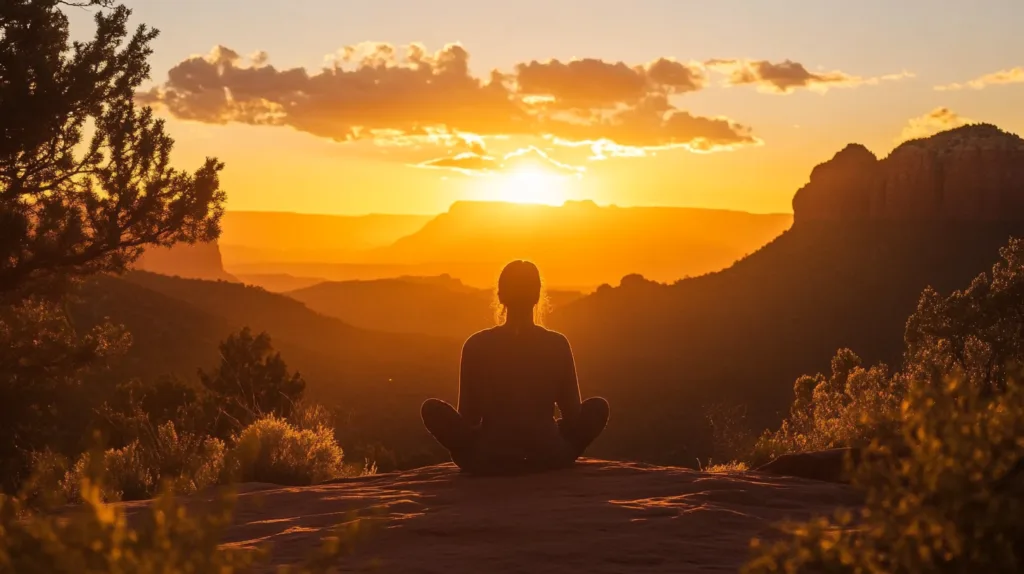
Friends, there is a great amount of trouble swirling around us in our lives. Wars and violence, corruption and greed. I hear from many of you that you are struggling. With all that is going on, it is healthy – physically and spiritually – to step back from it all from time to time and breath. I asked you all a few months back to find your center, to build an altar, to get grounded. One simple and profound path is simply to breath with intention. To be still for a moment and breath.
One of my favorite meditations is by a colleague from a previous generation named Jacob Trapp who offers a lyrical ode to quiet stillness:
Let this house be quiet.
Let our minds be quiet.
Let the quietness of the hills, the quietness of deep waters, be also in us.
So quiet that the noise of passing events and present anxieties, of random recollections and wandering thoughts, is stilled. …
So quiet that we are renewed, we feel at one with all others, at home in a tabernacle of stillness.
So quiet that we sense the ripples of this pool of quietness and healing pass through us and out to the farthest star.
-Jacob Trapp
Do you have times of healing stillness in your life? The advice from Psalm 46 comes to mind. It is really a song about the protection God offers.
God is our refuge and strength, [it begins]
a very present help in trouble.
The Psalm goes on to say we need not fear because even though the mountains may shake and the waters roar, and even if the very earth should change – God is our refuge and strength. If nations are in turmoil and kingdoms seem about the fall – we need not fear. And near the end of the psalm we hear the line, sung as a quote directly from God,
Be still and know that I am God.
We can almost imagine what it is like during times of great turmoil and disaster – there is panic. People are in danger from the natural disaster or political upheaval. Perhaps we feel powerless and hopeless. Be still and know that I am God. When faced with trouble – the first thing to do, according to this Psalm, is to do nothing, to slow down, to look for God. Many people take this advice when the danger is less an actual earthquake and more the metaphorical kind. It is often good when in turmoil to take a beat, to stop or at least pause, allow your prefrontal cortex to catch up to what your amygdala has already suggested for solutions to the situation.
It is sound advice. I read once that the reason a long pause like this works is because your amygdala triggers your limbic system causing the ‘fight or flight’ response. But while the amygdala turns on like a switch, it does not turn off the same way. Instead, we must wait for the neurochemicals to dissipate. So, scientifically, being still and knowing God is an effective technique for dealing with situations like this. Being still and knowing God allows us to make a choice instead of having a reaction. It allows us to choose a response instead of a thoughtless reflex.
In our Unitarian Universalist circles, I suspect more of us nod in recognition about the amygdala than we nod in agreement about God. Allow me a moment on this point.
We Unitarian Universalists function as a multi-faith community. We gather around shared values such as love, justice, and transformation instead of gathering around shared beliefs about God or the Human Condition. I encourage us to become fluent in theological translation together.
If you believe in God and use that language when talking about your beliefs and spirituality – you may need to translate most Sundays when I am preaching. I will say ‘the holy’ or ‘Love’ or talk about our communal values that call us to be in the world in particular ways. When you hear me do that, you may need to stop and say to yourself – “Oh! He’s talking about God.”
If you are a pagan and you hear me talk about the caring for the environment or the beauty of nature, you may need to stop and say to yourself – “Oh! He’s talking about the Goddess.”
If you are an atheist and you hear me talk about ‘God’s love’ or quote from the bible, you may need to stop and say to yourself – “Oh! He’s talking about the high principles and deep values that guide our living.”
If you are a Buddhist and you hear me say, ‘be still and know that I am God,’ you may need to stop and say to yourself – “Oh! He’s talking about our Buddha-nature which we uncover through meditation and dharma study.”
I encourage us to all become fluent in theological translation here. Because we each have our own knowing and understanding. We each have experiences that have led us to see the world in certain ways that help us find meaning.
What does it look like in this exact example? “Be still and know that I am God.” Well, the Buddhists as I mentioned already have a deep understanding of what can be known when we are willing to be still. For pagans it might sound less like being still and more like going through the rituals or practices to reach the place psalmist is pointing toward. For atheists, the translation may sound like ‘be still and allow inner clarity to arise,’ or ‘be still and recognize what really matters in life before reacting.’
The important part is to tap into your centering values, our spiritual ground, the loving presence of God, that aspect of life that helps displace your ego and set you firmly in alignment with Love. You do not need to have a particular theology to have access to this experience.
“Be still,” the psalmist sings, “and know that I am God.” The advice is sound. It is good to stop and refocus when things are hard. And after the stillness, after the knowing, what’s next? It is worth noting that stillness is abnormal. When we are willing to ‘be still,’ we are doing something unusual – unnatural even.
Rev. David Bumbaugh once wrote “Silence is an abnormal state.” The same point applies to stillness, but hear what he says about silence:
Silence is an abnormal state.
The world is nowhere silent: the wind calls from the tree tops and whispers in the beach grass. …
Were our ears more finely attuned, we could hear the crack of granite as boulders are reduced to pebbles, pebbles to sand, sand to dust. …
The world is nowhere silent: birds sing and chirp, squirrels chatter, insects hum and whir.
They fall quiet only briefly at our approach, a suggestion that silence is a sign of fear.
Is it not strange that even as Gaia sings to us, calls to us, shouts at us, we seek wisdom in silence?
It is not a measure of our alienation that we retreat into silence, withdraw from the chorus, in order to hear the endless eternal song?
-David Bumbaugh
We are silent, Bumbaugh suggests, as a form of withdrawal from the ordinary way of things. And so it is with stillness too. Nothing is ever really still. We seek stillness as a temporary state to find clarity – not because we want to achieve stillness for stillness’ sake.
Painter Paul Gardner once said, “A painting is never finished. It simply stops in interesting places.” And the same could be said of nearly everything. It’s never finished; it simply stops in interesting places. The whole of existence is dynamic and changing.
Mount Everest, the huge mountain standing as a perfect symbol of massive, unyielding, constant, solid reality is “growing” about 2 millimeters per year as the continental plate under India pushes under the Asian Plate to its north. Meanwhile, sea levels around New York City are rising faster than in other places because the island hasn’t finished sinking into the earth’s crust after the glacial ice melt from the last ice age.
Nothing is still. The whole universe is alive and pulsing with sound and movement. Life is always changing and it is to life that we must stay true. Everything is in motion. Be still – God says. I can’t! My heart is beating, my atoms are swirling, my planet is spinning. I cannot be still. But I will pause, briefly, Oh God, I will pause and listen for what might be next.
Author Scott Russell Sanders writes a little about this in his book of essays entitled Earth Works (2012),
Since Copernicus, we have known better than to see the earth as the center of the universe. Since Einstein, we have learned that there is no center; or alternatively, that any point is as good as any other for observing the world. I take this to be roughly what medieval theologians meant when they defined God as a circle whose circumference is nowhere and whose center is everywhere. If you stay put, your place may become a holy center, not because it gives you special access to the divine, but because in your stillness you hear what might be heard anywhere… All there is to see can be seen from anywhere in the universe, if you know how to look. (p123)
The point of being still is to better learn how to listen, how to look, how to know life. Don’t be still, thinking if you can only be still enough for long enough you will somehow win. The universe doesn’t work that way. God doesn’t work that way.
Be still and know. Yes. And after the stillness, after the knowing … be not still. All the world is in motion. There are wars and violence happening around the world and in our own streets. There is trouble clamoring for our attention. When anger or impatience arises in your heart, when your neighbor or your kin causes you to want to lash out, when the mountains shake and the waters roar, when nations are in turmoil – when you feel lost or hopeless, unmoored – be still, be still, be still.
Say a prayer. Go walk in nature. Write in your journal. Perform a ritual. Sit in meditation. Gaze upon a beloved. Light a candle. Seek God. Be still. And know … know you are loved, know you have power still to affect your days, know you are not in this alone, know we can and will rise to better days, know God. Be still and know. And then … then … rise up and move.
In a world without end
May it be so
 Rev. Douglas Taylor