The World We Long For

The World We Long For
Rev. Douglas Taylor
8-30-26
Sertmon Video: https://youtu.be/iDr2ybW7LlA
Last Sunday, after leading worship here in morning, I met up with other people of faith for a Peace Walk in Otsiningo Park. This was our second annual interfaith Peace Walk. It feels good to have this positive activity together. The local interfaith group has been struggling in recent years. After covid and the shut downs, many faith communities felt the need to focus internally. We did. As folks were beginning to reach out again, the war between Israel and Gaza erupted, and locally we did not have the strength of relationship in place to navigate that together. It has been slow work to rebuild trust and come back together across our various communities of faith.
As one of the leaders in the interfaith community, I was pushing for us to keep it simple; to have discussions about the simple value of interfaith connections. In essence I suggested we not talk about the big divisive topic of the day, at least initially. Delightfully, last year we invited people to come together to offer prayers and walk together for peace. With wars and violence happening in the name of faith, we decided to meet each other in an activity for peace in the name of faith.
This is indirect – we’re not talking about genocide or about who is harming whom. We are not addressing the problem we all recognize, though we recognize it from different directions to be sure. But we are talking about what we’d like to see happening instead of the war and violence. We are talking together about the world we long for. It is a step. We are rebuilding local connections and relationships.
About three dozen of us gathered, Muslim, Christian, Pagan, Jewish, and Unitarian Universalist. A few of the clergy and lay leaders offered prayers. Then we split up into pairs or small clusters to walk around the park together with the conversation prompt: “What does your faith say about Peace?”
I walked with a retired doctor of the Muslim faith. He talked about what Islam teaches him about peace, about how his healing work as a doctor is a form of being true to the teachings of his faith about peace. I spoke about how my Unitarian Universalist faith calls me to practice justice and compassion on the road toward peace. I talked about how my faith says peace will come if we can build a true Beloved Community where all are cared for and injustices are addressed.
One of the deep values of Unitarian Universalism is Pluralism – the celebration of our diverse cultures, experiences, and theologies. We strive to live that value among ourselves as well as out in the community. We have an insert in the order of service today which shows the official Unitarian Universalist statement of values. https://www.uua.org/beliefs/shared-values You’ll see that Pluralism is one of the values we share.
If anyone asks you, “What is Unitarian Universalism? What do you all believe?” You can say – we are not a belief-centered religion, we are a values-centered religion. We have many different beliefs, but we gather around a set of values centered by Love.” And Pluralism is one of the values on our list.
And thinking back to the conversation I was having at the peace walk, Justice is one of the values on our list. When injustices are addressed, peace can occur. As Unitarian Universalist we pay attention of systemic oppressions and work to build something better in response. Over this past week, for example, we’ve had roof work done on our building. This meant we also had to be careful about Immigration and Customs Enforcement. The way ICE shows up is different depending on the community – around here lately, they have been targeting roofers who are brown and black.
So our leadership made a commitment to make our property a little bit safer for our roofers by blocking our driveways and stationing volunteers to sit out front whenever the roofers were here working. This was a good deal of added labor on our part and very inconvenient for everyone – not just ICE. It impacted our ability to prepare for our annual Veggiefest. The prep work for Veggiefest is fairly extensive and involved. With the added difficulties around accessing the building and concerns about an ICE raid – preparing for Veggiefest was untenable. So, we canceled.
We do still have musicians playing Porchfest today; and the Flea Market sale is still on along with some root beer float sales. And we are giving away ice pops along with conversations about the negative impact of ICE on our communities. But we’re not having Veggiefest this year. Which helps highlight how living our values will sometimes mean things don’t work out the way we want. Living our values doesn’t mean there are no conflicts. But our values help us navigate these conflicts and difficulties among us. Our values also help us respond to what’s going wrong in the world.
I have several complaints about what’s going wrong in the world around me. The way ICE is roaming our cities like masked and armed gangs is deeply troubling. The way unhoused people are treated by our local government and police is inhumane and cruel. The constant and casual lying and corruption is infuriating. The erosions of our democracy, the predatory capitalism, the plundering of our environment, the deregulation of food and drug safety, and the rampant bigotry and hypocrisy of this current administration is staggering.
And! … and I believe it is vital to have a clear vision of what I DO want. I have a long list of what is happening that I don’t want. But I cannot allow anger and indignation be my only response to it all. A set of values such as the official list of Unitarian Universalists values, gives me the framework for that affirming vision of the world we long for.
Here’s another example: This summer I had some back trouble which landed me in several doctors’ offices. Things are better now, but the suffering has shifted from physical pain to economic pain. We do not need to burden people with unreasonable medical debt – many other countries have figured this one out, yet we still do it. Economically, the country is in trouble. Many basic expenses like food and gas continue to rise, while medical debt, student loan debt, and housing costs sky rocket. It’s not sustainable – unless you happen to be one of the billions syphoning wealth off the rest of us. It’s sick.
But notice we have listed Generosity among our central Unitarian Universalist values. We, as a whole community, do what we can to share what we have to make the world a better place. We work to counter the avarice around us with compassion and attention. We are using our resources and several individuals are giving their time and energy to support vulnerable people in the community, to feeding people, bringing clothes and necessities to folks, treating people with dignity and respect. Generosity is not just about money; it’s about all our resources and how we share them.
The world we long for is a world rooted in the values that lift us up. Our Unitarian Universalist faith has constructed a list of values we hold as central, as defining for our identity as a religion. These values guide how we want to be as a religious community; and I argue they guide how us into the world we long to live in. I talked about and gave examples of Pluralism, Justice, and Generosity.
(And briefly, to say a word about each of the other values in our list…) We celebrate our Interdependence with our connectedness with nature and with each other. We honor the value of Equity with the way we treat all people with respect and dignity – each other and all those we partner with and who experience our activities in the community around us. And I am excited for the coming year and the offerings I will co-create for transformation and learning. All of this threaded though the central value of love!
And I want to be clear – this list of values we have is not exclusive or limiting. It’s just the list we came up with together through discussion and debate among thousands of UUs from hundreds of congregations over a span of more than 5 years just recently. But it is not to say there aren’t other values you find compelling or central to your understanding of love and faith.
We have some posters around the building that we made internally, they say
“Do you believe in kindness, peace, equality, love, inclusion, hope, and diversity? So do we.” Unitarian Universalist Congregation of Binghamton.
I want to be sure my list of values includes joy and grace and a sense of agency. I happen to like the term interconnected better than interdependent – but I still support the values listed in the official version of our UU values. I don’t need everything to fit me specifically or for every part of me to fit here – that’s just not realistic or necessary. This list is good, and good is good enough for us to heal each other and heal the world together.
In closing, I want to recast the reading we heard before the sermon. Rev. Scott Alexander’s “We Need a Religion” https://www.uua.org/worship/words/reading/we-need-religion paired various troubles in the world with the Seven UU Principles – that’s what we used to talk about our religion for about forty years before writing the new articulation about our values. I needed a new version, following Rev. Alexander’s structure, but following the values instead of the principles.
We Need a Religion inspired by Scott W. Alexander (by Douglas Taylor)
In a world with so much tyranny and oppression,
We need a religion that values justice, and works to be diverse multicultural Beloved Communities where all thrive.
In a world with so much fear and violence,
We need a religion that values transformation, and calls us to grow spiritually and ethically, adapting to a changing world.
In a world with so many persons abused and neglected,
We need a religion that values equity, and declares that every person is inherently worthy and has the right to flourish with dignity, love and compassion.
In a world with so much dogmatism and falsehood,
We need a religion that values pluralism, and embraces our differences while celebrating our free and responsible search for truth and meaning.
In a world with so much greed and corruption,
We need a religion that values generosity, and cultivates in us a spirit of gratitude and hope, where we are connected to one another in mutuality.
In a world with so much personal isolation and environmental degradation,
We need a religion that values interdependence, and leads us to acknowledge our place in the great web of life with reverence and humility.
In a world with so much uncertainty and despair,
We need a religion that is centered on the value of love, and teaches our hearts to hope, and our hands to care.
—
In a world without end,
May it be so
Not a Handout, Not a Payoff, Not a Bribe
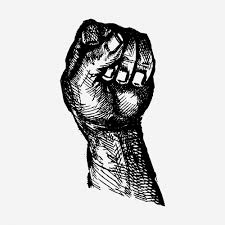
Not a Handout, Not a Payoff, Not a Bribe
Rev. Douglas Taylor
May 17, 2026
Sermon video: https://youtu.be/wAWfaR_Xoxo
When Dr. King went to Washington 1963 and delivered the speech for which he is most famous, he did say “I have a dream…” and cast into our collective awareness a vision of beloved community for which we still yearn and strive. But he also said “In a sense we have come to our nation’s capital to cash a check.” In saying that, he was speaking of reparations. He likened the Constitution and the Declaration of Independence to a promissory note written to every American guaranteeing the inalienable rights of life liberty and the pursuit of happiness.
King pointed out the ways in which our government had “defaulted on this promissory note insofar as her citizens of color are concerned.” King lamented the conditions poverty and discrimination faced by people of color back then. He called on the country to make good on the promise enshrined in our founding documents. And this was not the only time Dr. King called for reparations in his speeches or in his books.
A piece I find quite compelling is the way King framed the conversation in our shared American values as the land of liberty and opportunity. Reparations can get mistakenly framed as charity or entitlement or some sort of handout – but in truth the concept is rooted in repair. Reparations is a way to repair something broken.
In his highly acclaimed piece in the Atlantic back in 2014 “The Case for Reparations, Ta-Nehisi Coates explains the goals of the concept.
“What is needed is an airing of family secrets, a settling with old ghosts. What is needed is a healing of the American psyche and the banishment of white guilt. What I’m talking about is more than recompense for past injustices—more than a handout, a payoff, hush money, or a reluctant bribe. What I’m talking about is a national reckoning that would lead to spiritual renewal.”
—Ta-Nehisi Coates, “The Case for Reparations” (Atlantic, 2014)
I remember a conversation I had with a contractor doing some work for me on my roof. He shared with me some of his struggles as a small business owner and how working for some other big company might be the easier way. But he complained about a state program that gave financial incentives to people of color starting small businesses. He wondered where his support was. But this guy had generational wealth and support – his dad and two of his brothers all did similar work; and when he hit hard times, I witnessed his family pitch in to help him. That’s the point. Our country has systematically undercut generational wealth for Black people.
I recently read about the 2019 Yale University study revealing a dramatic disconnect in our understanding of the financial situation for Black people in our country. The story revealed that “most Americans believe that Black households hold $90 in wealth for every $100 held by white households.” (in The 1619 Project by Nikole Hannah-Jones) What do you think it really is? (The actual amount is $10-13.)
Reparations is about thinking like a community instead of like an individual. What does the community need in response to the harm that’s happened, not what do I need or what would work for me. It doesn’t really mean anything for me to say I’ve never owned slaves or stolen land from indigenous people or blocked someone from homeownership with a restrictive racial covenant or put a Japanese American in an internment camp. I didn’t do any of those things. And in so stating I’ve contributed nothing to the conversation. We need to start thinking like a community for this. Instead of refusing to be blamed, ask what we need. What do we need to repair, to heal, to bring more justice to our situation.
Reparations can often begin in education, in helping the community understand the situation we are in. New York State passed the Amistad law ten years back mandating schools to teach comprehensive instruction on the American Slave trade and its impact on our country and our people. And currently the state is hosting public hearings on Reparations.
https://www.ny.gov/programs/new-york-state-community-commission-reparations-remedies
They had a hearing in Binghamton just a few weeks ago that I regret missing. The group is currently just soliciting input and feedback with the likelihood of new legislative proposals when they publish their report later this year. They may end up talking about education again. Perhaps they’ll tackle housing, or climate, or poverty. We’ll see.
In a news article about the hearings, Commission Chair Seanelle Hawkins says,
“There’s still a lot of hurt and trauma. And healing needs to happen, especially when we see there are inequities that are still present today. We said that slavery happened many years ago but we’re still feeling the impact of that today. So, we invite the Southern Tier to be part of the healing process.”
What might reparations look like in a congregation? I suspect our monthly Special Collections are a small beginning of that work. Not because we are sending money to a group or organization doing good work; but because we are working to develop our relationships with these groups. Money is one way to approach reparations. But are root, relationships are the key.
There is a fascinating case study online about First Parish Unitarian Universalist in Needham, MA. During some research and investigation for an anti-racism workshop, the minister uncovered a deep history of slavery associated with the congregation she served. Rev. Catie Scudera went on to offer some powerful truth-telling about Needham UU’s founding slave-owning minister. There was no money involved in this example, just a facing of the harm wrought.
https://www.uua.org/uuagovernance/committees/cic/widening/restoration-reparations
Consider another example, the Akron UU church has what they call “reparations through music.” On their church website, that explain that, as part of their anti-racism work, the “Music Committee is initiating taking an offering every time we use a Spiritual in our services.” It is a recognition that we owe a tremendous debt to the catalogue of music categorized as ‘spirituals.’
The Music Committee has designated the local Akron non-profit group YEPAW (Youth Excellence Performing Arts Workshop) as the recipient of this offering because of the transformative, life altering work YEPAW does for young people in the Akron area https://uuakron.org/justice-council/reparations-through-music/
Here is a third example: I attended a UUA sponsored workshop on Reparations a few weeks ago and listened to Rev. Oscar Sinclair and lay leader Louise Livesay-Al talk about an internal racism audit they did at Unity – Unitarian in St. Paul, MN more than a decade back that laid the groundwork for their thinking and perspective when a bequest came their way of a significant chunk of money. In discussion and discernment, the congregation decided to give the money in the form of reparations to people affected by the impacts of racism and oppression. That choice from over ten years back has led the congregation to be remarkably engaged with the community around them to this day.
A final example I’ll offer is from Camp Unirondack, the UU youth camp I attended growing up. Recently the emails from executive staff have included a tag with a land acknowledgement. “Unirondack is located on stolen Haudenosaunee land.”
By themselves, land acknowledgements like this can feel less like a statement about injustice and more like virtue signaling. ‘Are we planning to give the stolen land back?’ some people will ask. A real response to this tension is not so simplistic, of course.
On the website, under the page about camperships and discounts, the camp has this:
Camp Unirondack is committed to anti-colonial justice. That is why Unirondack is free for Indigenous campers.
We recognize that the Haudenosaunee land that we occupy does not belong to us. We recognize that, while it may not be possible to fully reconcile that fact, there are many things that we can do right now to address the harms of ongoing colonial violence in our communities.
During our time as occupants here, we strive to be good stewards and caretakers of the land so that it may be in good health for future generations. We use our platform as educators to teach our campers and staff about the painful realities of colonial history in North America, and the ongoing struggles of Indigenous peoples today. We hope to inspire a generation of youth who will fight back against colonial injustice in their communities.
https://www.unirondack.org/camperships-discounts
Reparations can take many forms. It may be about sending money in a particular direction such as investment or divestment, or simply offering uncomfortable truth about our history such as about the Tulsa Race Massacre of 1921. It may be about crafting or advocating legislative changes at various levels from federal to local, or it may involve reconciliation among communities where harm has been committed. What might it look like for us?
Our Unitarian Universalist values call us to build Beloved Community. Our core values of generosity, Equity, and Justice lead us to engage with the conversations happening in and beyond our congregations to repair what is broken among us.
Most of the work of justice and repair is about relationships. I’m not suggestion a particular program or path. I’m not offering answers. I hope we will reflect together more deeply and honestly about our values and the harm we know has happened and is happening.
May we trust that we can think like a community rather than like individuals. May we lean into relationships around us where harm has been experienced. May we be curious together about what repair could look like here and in our country. May we speak truth, love justice, and move humbly through a hurting world.
In a world without end,
May it be so.
