
The System Works as Designed
Douglas Taylor
1-18-26
Sermon Video: https://youtu.be/d_DDPYDuzCY
“This is not the America I love.” I have heard people say. “We’re better than this!” “What has happened to our country? I have heard. When we say this, we are trying to articulate a positive statement that the good country founded on good principles and civic values is not apparent … and that what is going on around us now is, by contrast, not good, not in keeping with those good values, that good foundation that we see.
And I want to let you know there is a flaw in that logic, there’s a flaw in that argument. Our country was founded through the genocide of the indigenous people. Our country was built on the labor of enslaved people. There is growing awareness that our criminal justice system is built around protecting property first, and originally that included slaves – and some argue there are echoes of that still happening today. Capitalism is structured not around benefiting creators and laborers or even society in general – it is structured around benefiting owners.
There is this tension that is in place when we say something “This is not the country I know and love.” Because it is. What we’re seeing now very often has an echo that can very easily and obviously be traced back to some of the flaws, some of the injustices, some of the cruelty that was backed into our country when we started.
But you’re also not wrong. There is a tension here. We as a country came together and wrote promises, saying who we are and who we long to be. Promises about equity and equality and ‘endowed with unalienable rights of life, liberty and the pursuit of happiness.’ That all people are created good. That was part of it!
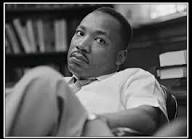
There’s a piece in the 1963 speech that King made – that is perhaps his most famous one, “I Have a Dream.” The beginning of it, before he gets rolling, he talks about a promissory note. He said, “we have come to our nation’s capital to cash a check.”
He said the ‘architects of our republic had made – with magnificent words in the Constitution and the Declaration of Independence – promises and we see this as a promissory note, a guarantee of life, liberty, and the pursuit of happiness. He said:
It is obvious today that America has defaulted on this promissory note insofar as her citizens of color are concerned. Instead of honoring this sacred obligation, America has given the Negro people a bad check which has come back marked “insufficient funds.” But we refuse to believe that the bank of justice is bankrupt.
He refused to let only the critique stay, but also that we had made a promise for who we could be.
“This is not my America,” we say. “This is not the country I love, what we are seeing in the streets.” … well – yes it is. We are flawed from the beginning. And we have greatness baked into who we could be. But we must work for that part.
The tension is that we have both the rot and the promise at our foundation and we can feed the promise while cutting out the rot. Both are true. When you wonder about what’s going wrong – part of the answer is: things are going as planned. We are at the logical outcome of the trajectory we’ve been on for a while.
But that doesn’t mean we’re done. It means there is a tension in the system. So what are we to do about that? It means we need to participate. We need to build the more perfect union. We need to engage.
In that 1967 speech (Where Do We Go From Here?) that we used as our reading, Dr. King talked about – we would say today – intersectionality. He talked about the triple evils of Militarism, Materialism, and Racism. He wove all three into this one paragraph that I absolutely love:
In other words, “Your whole structure must be changed.” A nation that will keep people in slavery for 244 years will “thingify” them and make them things. (That’s the racism) And therefore, they will exploit them and poor people generally economically. (There’s the poverty) And a nation that will exploit economically will have to have foreign investments and everything else, and it will have to use its military might to protect them. All of these problems are tied together.
The entanglement of racism and poverty has been on most people’s radar for a while, economic struggle lands disproportionally on people of color. But King is also saying poor people are exploited in our current system. Full stop. Not just that poor black people are exploited, but that poor people of every race or ethnicity are exploited. And then he ties the military in by saying the country will need to prop itself up with foreign investments that need protecting – thus a military. King lived through the use of state violence against poor people and against African-Americans in particular. And yes we usually outsource our foreign wars to proxies lately, but who knows, that might change soon. But the militarism evil that he is talking about is not just beyond our borders. It’s happening without our borders against our own people.
King called for non-violence. Often when folks wake up this reality or start calling out this reality, of this tension, of things that have gone wrong, sometimes they’ll lean into King and they’ll talk about his non-violence.
A lot of people remember King for non-violence and remember his speeches and his rallies. But it is incredibly important: King spoke of non-violent direct action. He never just spoke about non-violence. He was not in favor of passivity, of backing down, of non-violence in the sense of ‘I’m not going to get in the middle of anything because that might lead to violence.’ He was very encouraging of people getting in the middle of things, to direct action. To only speak of his non-violence is a perversion of his legacy.
Some of you have been in a class that Rev. Jo VonRue and I are co-leading over the fall. It is a class on democracy that meets online monthly with folks from several UU congregations in the area. The very first class talked about “Effective Strategic Escalation” which talked about various types and levels of protest.
We used Gene Sharp’s analysis. Gene Sharp is a decades-long scholar on non-violent action; and he has, for example, this one book that talks about 198 versions of direct action. He breaks them into three type: symbolic action, noncooperation, and alternative cooperation or Intervention
Symbolic direct action is like a rally or hanging a banner. Non-Cooperation is like a strike or a boycott. Alternative Cooperation or Intervention is like a sit-in or traffic obstruction.
The story we shared with you, “Sunny-side Mary” has some of these elements in it. Sitting in the good seats, that was intervention, that was essentially a Sit-in. When she was wading in the water, that was some symbolic action. It drew the Shady Side folks’ attention and it got something moving symbolically. And when they were all sitting in the fountain that was some alternative cooperation – some intervention, something new and different. (I guess a strike or boycott would be if all the – they had to show up or risk detention – but they could boycott paying attention. That wasn’t in the story.)
Dr. King called people into a variety of styles of non-violent direct actions. He is famous from all the rallies and speeches. But it is too easy to only do symbolic action. And if all you are doing is symbolic action, 60 years later, our country’s oppressors have figured out how to ignore you by now. It’s not enough. It’s good to do and its not enough. You need to have other things going on so the systemic powers will not simply ignore you. We need direct actions that wake people up, that get’s people’s attention, that is coordinated and planned if they are going to be effective. But it needs to be direct action.
And, ultimately, all of that action needs to be accountable to the vulnerable people most impacted by the oppression and the consequences of our direct actions.
Which brings me around to an announcement. I have been invited and I am responding to a call to action. The clergy in Minneapolis have put out a call saying ‘ICE is here and we want you to show up.’ They link their call to Selma when King put out a call for clergy and lay people to come and witness.
It is not lost on me that part of the history of the 60’s and that Civil Rights Movement that a Unitarian Universalist minister James Reeb went down and was killed. And when a white man from the north was killed, that had a different impact on the country than when all the other men and women – the people of color – had been killed and had not risen to the same level of attention.
I am not going to disparage anybody who is dramatically upset by the death of Renee Good, the murder of this white woman. Please also notice all of the black people ICE has killed in this past year.
Part of the systemic effectiveness we are called to is to allow Renee Good’s murder to activate us. We can unpack the racism of that eventually. We’ll get there.
But when King said we need to ‘begin to ask the question …’ – he began asking those questions about the triple evils 60 years ago. Are we still beginning to ask these question? No. We need to keep moving.
I have been invited to go to Minneapolis and to be accountable to the people who are there on the ground dealing with ICE directly.
When I went to Standing Rock almost 10 years ago, I had to specifically come back and say “I never wanted to risk arrest.” There were some folks here who were disappointed that I was not arrested. The badge of having done a resistance means you got arrested.
The clergy at Standing Rock were specifically not invited to do a civil disobedience that would risk arrest. In fact there was one dude who stood up at the training the day before and said ‘and those of us who want to risk arrest, come over the corner and we’ll talk about doing additional things.’
One of the grandmothers, one of the elders went to that circle … and there were a dozen white people sitting on the floor as this elder yelled at them. ‘That is not what we asked you to come do. Our Water Protectors will risk arrest. You are here to witness.’
I have been called to Minneapolis, I don’t know what they are going to ask of me. But I will be accountable to the people on the ground who are dealing with this directly. It has been made clear, it is not safe to go to Minneapolis right now. If you are a person of color or if you have a disability or if you are an obviously Trans person it may not be a good choice for you to come to Minneapolis to respond to this call. It is not currently safe in Minneapolis to be a protestor, to be an immigrant, to be racially-profile-able.
And we (attending this call) need to be accountable in any direct action we are invited into to the people who will be impacted by the consequences of that direct action. That’s incredibly important.
Yes, the injustices and oppression we are seeing today are cruel and beyond the pale. This is not the America we want. It is the America we have, the systems of oppression and injustice from our inception are echoing into our current situation. The system is working as designed. And there is another layer of design – a promise of equity and opportunity and liberty – a layer of design we need to engage and enact and make real. We need to build the more perfect union.
May we hear the complaint as well as the call. May we learn that these calls are coming to you, to me; and that it is our work to respond, to build that new America that hope can be.
When I go to Minneapolis I want to carry you with me. I’m not going to go alone. This is the stole I will be wearing (a “side with love” stole.) I want to bring you with me. I don’t know exactly how your unique theology will respond to this but can you bless this? Can you bless me? Can you pray for me? Can you imbue this stole with your wishes for what might happen, what I might encounter, that you will be with me when I am there on the streets.
If that means you might come up and touch the stole, say a prayer, send good energy, drop extra money toward the discretionary fund. I don’t know how you bless things. But please, if you are willing, offer some blessing so that I can bring you with me when I go to Minneapolis, and that they will know that we are with them; and that we care about them and this world and this society that we are recreating – the whole system.
May we lean in to the call and to the voices of those most marginalized and targeted. May we embrace the holy work of caring for each other and for those in need as we build the more perfect union.
In a world without end, may it be so.
 Rev. Douglas Taylor
Excellent, Rev Socks, 🧦 🧦
You are such a bright light in these very dark times.
We watched the livestream from home, feeling too cozy and lazy to shovel the driveway. Please know that you travel to Minneapolis with our prayers and deep gratitude.
Cheers in solidarity, Nina
LikeLike
Julian and I will be with you in spirit. We donated to fund the trip.
Sent by Lee Shepherd from my phone.
>
LikeLike
This is a great article. ….Thanks for doing the work.
https://open.substack.com/pub/johnpavlovitz/p/white-friends-our-privilege-is-currency?r=6qtsqa&utm_medium=ios&shareImageVariant=overlay
LikeLike
Thank you, Douglas! I’ve been wondering “Where is the clergy?” and you have given me the answer.
I send you my blessings and Love to carry with you on this journey. Know that Toby and I and all of UUCB are with you every minute.
In Faith – Libby
LikeLike
Terrific sermon, Douglas! Sorry I wasn’t there to hear it.
LikeLike