
Anatomy of a Prayer
Anatomy of a Prayer
There are many forms a prayer can take; it need not have a particular shape. If you are going to pray, the primary thing is to pay attention to your intention. After that, nearly any words (or silences) will serve.
I don’t know how many in our congregation pray. The stereotype of Unitarian Universalists is that we range from uncomfortable to ambivalent about prayer. We prayer “to whom it may concern” or we use an inordinate number of euphemism (“Spirit of Life and Love, Great Spirit, Holy One, You who are known by many names …”) Yet I am always surprised by the larger than expected number of us who pray.
So here are some useful tips in creating your own prayers. I was read recently that there are five basic types of prayer: “Wow,” “Thank you,” “Sorry,” “Please,” and “____.” (That last one is ‘silence.’) Of course some will tell you the number of basic prayer forms is really 2 or 22, but I like 5, so let’s stick with that for now.
When I write prayers for the worship services I use a basic format most of the time. I start with an address. I’ve settled on “Eternal Spirit, from whom all things come and to whom all things return.” I’ve used other phrases as well. The classic, “Dear God,” is always an option. This may be the exact part that is the line between a person who prays and a person who does ‘spoken meditation.’ If it fits your theology better, perhaps you will skip this opening part of the format.
Typically I then list some things for which we are thankful followed by some things for which we could use support. This is the bulk of the prayer, the middle content for me. It is a combination of the “Thank you” and the “Please” in that list of 5 types of prayer. Each day there may be different things, and there are things that are regularly in my prayers.
I usually end with “In the name of all that is holy, may it be so.” I find it helpful to have this pattern. There is comfort in familiar patterns. I also find it helpful that I have room in this structure to say whatever I need to say at the time – that I have room for my intention as I mentioned at the beginning.
Prayer can be a spiritual practice to take inventory of your heart and conscience. It can be a way of drawing on your reserves of courage. It may serve as a method to center and calm your mind. It might be a means to stir up a community to act on behalf of justice. Prayer can be like art or poetry – a means of expression for things that simply must be expressed. Or it may be a way to remind yourself of the qualities you long to share with the world.
Find a pattern that works for you. That’s the part in which it becomes a ‘spiritual practice.’ Remember, your intention is the key. Your intention is more important that the theology beneath your words.
Prayer: May Nothing Evil Cross This Door
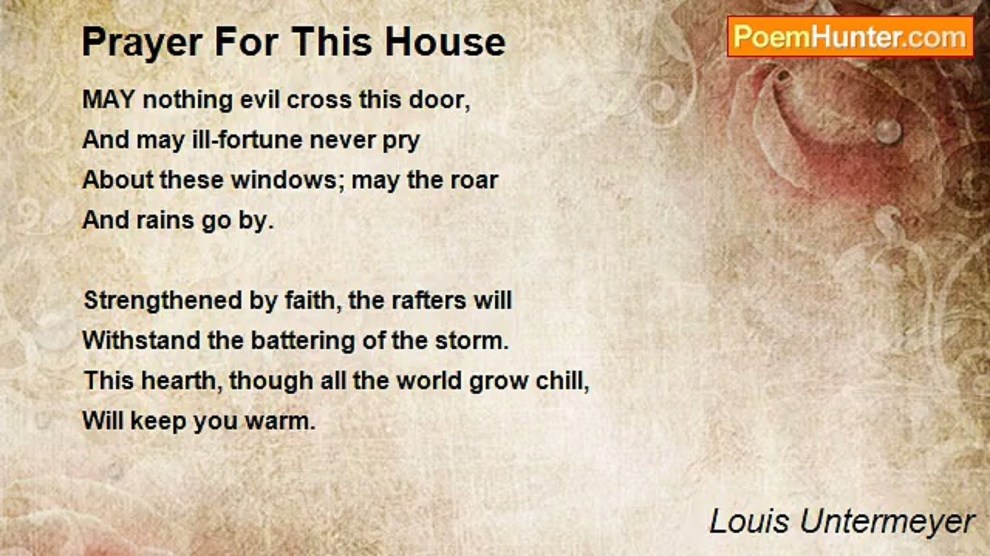
Prayer: May Nothing Evil Cross This Door (Hymn #1, SLT)
Eternal Spirit, from whom all things come and to all things return
We gather in community this morning with hope and gratitude
We sing our potent hymn of prayer for our community:
May nothing evil cross this door.
So much of the world beyond our doors is fraught
with suffering, hardship, Cruelty, bigotry and hate.
We prayer that evil, remains out there, beyond our walls
Here, we sing, we shall be safe.
Here, we sing, we shall sanctify every casual corner
and peace shall walk through our hallways.
Here, we sing, the roar and rain will go by.
Yet we do not have a gate on our door to bar evil or the flood of rain and river.
O Spirit we have no gate at our door
when we sing of nothing evil crossing our door.
We hold our door with prayer and with promise.
And when our doors and walls are breached by tragedy and evil, when the doors and walls of our homes and the homes of our friends and loved ones are breached as they were this week by flood waters, as they were ten years ago by the tragedy of the September 11th terrorist attack,
What can we do, but sing again and pray again and promise again.
We hold our door with prayer and promise.
And indeed these sheltering walls are thin,
yet they are strong enough to keep hate out and hold love in
O Spirit when trouble moves into our homes and across our doors may we be graceful enough to continue to reach out – to reach out and help others and to reach out to receive the help of others.
O Spirit that moves through our hearts
and kindles the conscience to allow truth and compassion to reside therein,
help us to keep our walls strong and our doors open that all may come
and receive the blessings that are held here.
May all who come through our doors know the peace that walks softly
through our halls and through our hearts.
May our walls be strong enough.
And may we be strong enough to keep hate out and hold love in.
In the name of all that is holy,
May it be so
Prayer for Life’s Melodies

Eternal Spirit
From whom all things come and to whom all things return
We gather this hour seeking meaning and understanding for our living.
This is our house of faith; this is our hour of worship;
We are a people of many beliefs together as one faith.
We are seekers of peace and light;
sifting through the moments of today
with an eye toward the eternal values that undergird life.
For the blessings of this day, the gathering of these good people,
and for the joys of simple things: we give thanks.
For songs that lift us up and for companions that carry us on:
we raise our voices in thanksgiving.
And for the revival of faith and trust in the face of the tides of life:
let us remember to give thanks indeed!
Help us to respond to life’s gifts with a generosity of spirit
Help us to meet differences and challenges
with an openness and a willingness
Let life’s melody rise and fall with us
Let the rhythm of love roll through our days
Let the music of the universe echo through our steps
And may our songs of our people
be songs of courage, respect, justice, and love
This we ask in the name of all that is holy
May it be so.
Prayer of Music

Eternal Spirit, from whom all things come and to whom all things return,
We gather this morning in community seeking to live in the harmony.
Each of us here gathered lives out our lives knowing our own story,
our own private melody.
Life – at its highest and its sweetest is a sharing.
Life is a sharing of our melodies, of our love and interest,
of our yearning and questions.
We gather this morning as individuals creating harmony in community together.
May our different ways of knowing and naming the holy blend together.
May our voices be added to the holy chorus of life.
May we practice our scales that we may better improvise and recognize
where we come in when it is our time.
The world is rife with discord and trouble.
Injustice and suffering weigh us down and trip us up and stop our voices.
May we learn to trust in love, in God, in our own voices,
in the trembling faith of our forbearers
to trust that we have a part in this symphony and
we can join this chorus and bring some beauty to the cacophony around us.
May there be times of gentle tones and soothing melodies
May there be rhythms upon which we can rely to rally our spirits at need
May there be teachers and band mates, fans and good companions
to help call our best music out of us
May there be moments when we are transported,
moments when we discover we are not playing the music
so much as the music is flowing through us,
the music is playing us
O Spirit of Life, may our song be among the songs of the spirit
May there be beauty in our song and in our living,
May there be meaning and power in our song
And may our individual voices blend into the chorus,
The chorus that is Thee, O Spirit.
This we ask, in the name of all that is holy
May it be so
Marching with Muslims
Marching with Muslims – celebrating radical diversity
About ten years ago I got a call from a private investigator who was worried for me. It was a courtesy call, ostensibly. Considered beyond the polite and calm words that were exchanged, it bordered on fear-mongering. The crux of it was that this private investigator had come across my name during his investigation of a Muslim community from the small rural area just outside of town. That Muslim community had in the spring of 2008 invited me to attend and speak at their first annual parade and rally to take place downtown. I had of course agreed and I was looking forward to the march. And then I got this call.
The P.I. was worried for me, for my reputation. Did I know these are not the Muslims who meet in town; they are a second group from a rural community outside of town? Yes, I knew that. I also knew that they are Shi’a while the mosque in town is Sunni. I also knew then that the in-town group was comprised mostly of Arab Americans who were first or second-generation immigrants while the Deposit group was predominantly African American. The Private Investigator told me he was investigating the rural, African American, Shi’a group for suspicion of links to domestic terrorism. He had called to give me the heads up before I associated myself too closely.
I thanked the investigator for his call and told him I would consider what he had said. The next call I made for to Dick Antoun, professor emeritus of Anthropology at the university, author of Understanding Fundamentalism, and member of the congregation. Dick’s focus had been the Middle East and Islam. When I described the call from the private investigator and the preceding invitation from the Muslims, Dick was very excited for me. First off, he agreed with my suspicion about the private investigator. Dick wondered who he was investigating for, and suggested the fellow might be self-appointed and thus not a reliable source. Nonetheless, Dick said I should certainly go in with my eyes open.
Dick couldn’t tell me much about the rural Muslim community. They were reclusive back then in 2008. I said they were aware of that and were now trying to step out into the community, to build up some connections and goodwill. Dick was excited about the movement and direction of this Muslim group, and made me promise to tell him about the experience afterward.
I really miss having conversations like that with Dick. He has since died. He had been greatly respected in our congregation, over at the university, and throughout the Muslim community in our town. One of the hidden blessings of most faith communities is that they are filled with extraordinary people like Dick. I find I am wiser with a community around me.
A few weeks later I found myself marching down main street with Muslims on our way to the courthouse steps for the rally. Members of my congregation had supported my presence, several of them joining in the march with us. There only a few people along the sidelines protesting.
The Muslim community had asked specifically if I would talk on the theme of unity. And I did speak a little about unity there on the courthouse steps that chilly spring afternoon. I spoke more, however, about diversity – about the intentional diversity that we call pluralism. I mentioned Martin Luther King Jr. and asked them to put their trust in the American vision of unity that says, ‘we are one’ not because we are all the same, but because we are all together in the effort to build a more perfect union. Our different faiths are part of the beautiful mosaic of our country. E Pluribus Unum. Out of many, we are one.
So, what is our religious community’s role in all this? Our modern and progressive congregation is practically a Multi-religious group unto itself. This means we know something of pluralism and religious diversity. Part of our role is to offer wisdom and encouragement to each other along the way; part of our role is to show up and share our perspectives in the mix. It means a lot to folks who find themselves marginalized and vulnerable in society to know it is not just the voice of one radical preacher with them, but the voices of a full community of faith.
 Rev. Douglas Taylor