
Where Do We Go from Here?
November 8, 2026
Ithaca UU Church
Rev. Douglas Taylor
Where do we go from here? I recently learned that this past Friday was the 25th anniversary of the acclaimed musical episode of Buffy the Vampire, “Once More with Feeling.” The climactic ensemble song is titled “Where do we go from here?” That show (and that episode in particular) was a big deal in my house when my adult children were teens. Sadly, that is not what my title was meant to reference.
No, I am taking about our current political situation through the lens of our religious values. We just had an election; our values were on display. There has been corruption and feints at fascism lately, but we have also seen courage and persistence and real heart. Educator and author, Parker Palmer once wrote that “Democracy is a nonstop experiment in the strength and weakness of our political institutions, our local communities and associations, and the human heart.” We had a break this mid-term with what was on display at the last election. There has been a change. Now what? Where do we go from here?
Nearly 60 years ago, Rev. D. Martin Luther King published a book with this question as the title Where Do We Go from Here: Chaos or Community? This is where my title comes from. It was the second to last book he authored, the last one was a collection of his sermons published a few months after his assassination. This one, “Where do we go from here” has the memorable quote:
“What is needed is a realization that power without love is reckless and abusive and that love without power is sentimental and anemic. Power at its best is love implementing the demands of justice. Justice at its best is love correcting everything that stands against love.”
Following these 2026 mid-term elections, with their clarifying rebuke of the corruption rampant in our government today, I am reminded of Dr. Kings words. I am reminded of his tireless work resisting the evil of racism in our society, racism and other pressing injustices such as poverty and militarism. He understood what it was to fight for justice and goodness. As I look back on the victories of this recent election, I am reminded of his words.
“Structures of evil do not crumble by passive waiting, (he wrote). If history teaches anything, it is that evil is recalcitrant and determined, and never voluntarily relinquishes its hold short of an almost fanatical resistance. Evil must be attacked by a counteracting persistence, by the day-to-day assault of the battering rams of justice.”
There is a persistence needed to pursue justice. King advised us, fom 60 years ago, to not let up. It is like the story of the widow seeking justice that is in the bible. The eighteenth chapter of the Gospel according to Luke, Jesus tells The Parable of the Persistent Widow (Luke 18:2-6).
He said: “In a certain town there was a judge who neither feared God nor cared about men. And there was a widow in that town who kept coming to him with the plea, ‘Grant me justice against my adversary.’
“For some time he refused. But finally he said to himself, ‘Even though I don’t fear God or care about men, yet because this widow keeps bothering me, I will see that she gets justice, so that she won’t eventually wear me out with her coming!’”
I don’t know about you, but this small parable surprised me when first I bumped into it. It just does not seem like the kind of thing you would find in the Bible. It is just so pragmatic! “I’ll see that she gets justice, so that she won’t eventually wear me out.” The persistence of the people who seek justice, who accomplish reform, who make a difference, is remarkable. The persistence of those who will not sit down and wallow in pity, of those who stand up to injustice though the odds are stacked against them, of those who don’t stop after a small victory, of those who stare unjust authority in the face and say, “grant me justice against my adversary,” is remarkable indeed. The persistence of those who practice resistance is the key to accomplishing justice.
Because “evil is recalcitrant and determined” King warned us nearly 60 years ago. We need to be persistent. Not persuasive, not trying to convince them they’re wrong – persistent in our calls for justice. We have new leadership that will take office in January. Our job now is to not stop being persistent now that the voting is done.
We will not vote our way out of the mess we’ve been in. Voting is one part of the work – an important part, but only one part. And that part is done. Howard Zinn once said “Voting is easy and marginally useful, but it is a poor substitute for democracy, which requires direct action by concerned citizens.” The voting is done. And the deeper work has now begun.
President Trump has long displayed too many of the traits and behaviors of an abuser for us to ignore what he is doing now and what is likely to continue to happen while he is in power. The most dangerous time in an abusive relationship is when you are leaving.
Our deeper work, after the voting is done, is to remain engaged in the work of building the world we long to live in.
Let me share with you a small set of ideas that can serve as a guide for the coming months. Parker Palmer, in his book Healing the Heart of Democracy, offers five habits or attitudes that we need as a democracy. Before you pull out your notes app or a pen and paper – let me assure you, this list is going to click for you.
The five habits to heal the heart of democracy are:
An Understanding that We Are All in this Together
An Appreciation of the Value of ‘Otherness’
An Ability to Hold Tension in Life-Giving Ways
A Sense of Personal Voice and Agency
A Capacity to Create Community
I think this is an elegant list and is a fair framework for staying engaged. In short – the answer is to focus back on our deeper moral principles as a people; to lean in to the identity that was revealed in this mid-term election.
We are deeply interconnected and interdependent. This is what Palmer listed as the first of these five habits. We are all in this together. For our democratic republic to continue to function, “we” needs to really mean “we” – all of us. As my colleague Julian Jamaica Soto has said, “All of us need all of us to make it.” We can’t move forward divided. I don’t mean, we have to be conciliatory to the point of ineffective with the fascists. I mean we need to build coalitions to accomplish our goals.
Because Palmer’s second point is that while we are all in this together, we are not all the same. We are each unique, and amazingly different. And our differences are part of what makes our country beautiful. And it is true we tend to gather in like-minded groups, to create ‘us’ and ‘them’ clusters – that doesn’t need to descend into competitive acrimony of leftists fighting against those they see as less-leftist them themselves. Parker Palmer reminds us that ‘us and them’ is fine. It is when it becomes ‘us vs. them’ that we have trouble.
Well, this, of course leads right into the third habit Palmer offers: an ability to hold tension in life-giving ways. Embracing differences while still finding our unity is a tension. Promoting personal agency and working toward creative community is also a tension. America is an extended exercise in holding tension – but you know what? So is Unitarian Universalism. Yes, it’s hard, but it gets easier with practice. And it does take practice. It takes work to hold tension well.
The fourth and fifth habits in Palmer’s list are dramatically revealed in this recent election. A single vote is just that -one voice with one vote. We each cast our ballot. But the agency of one vote is lost without the context of the community. We need to be actors in the ensemble – participants in the full drama of life.
This is an elegant set of five habits. The first two are complimentary: we are united and we are different. The last two are also a complimentary pair: We must be strong individuals and we must build strong communities. The middle one is simply the glue – we must be able to hold creative tension in life-giving ways. There is actually a lot of overlap between these habits Parker Palmer offers and our Unitarian Universalist Principles and Values.
The way forward for us as a nation is through a set of habits that we Unitarian Universalists have been practicing at for a long time. The habits of holding tension as pluralism, of promoting individual agency while also building community, of honoring our differences while focused on our unity.
We are certainly not the only religious community doing this sort of work, but it truly is our bread and butter as Unitarian Universalists. And I’m not suggesting this is therefore something easy. The way forward means we need to speak the truth about who and what has been hurt, threatened, and endangered. The way forward is not to rest on any laurels, but to instead remain persistent in our call for justice. And we must stay with each other as we figure it out together – because “all of us need all of us to make it.”
Where do we go from here? (Buffy)
And this is what we need to do: Keep faith with our messy democratic process. Keep fighting for truth and for compassion. Keep vigilant against the outbreak of violence. And stay true to the underlying principle of Unity to which we aspire as a people.
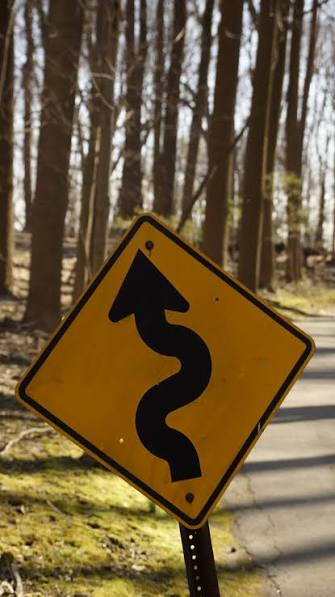
May grace and mercy go with you through the days and months ahead. We’re on a new road now; mind your step. Stay safe out there. Look after each other.
In a world without end,
May it be so.

