
Can Empathy Be Learned?

Can Empathy Be Learned?
Rev. Douglas Taylor
2/10/19
The short answer is ‘Yes.’
I’ve been thinking a lot about how important empathy is in our current social and political climate – how needed it is. I read the news and listen to the commentary; I seek out perspectives that differ from my own – often seeking oppositional perspectives so I can understand what is going on in the “us vs. them” split happening too often around us. I wonder at how we can dehumanize each other, how easy it is to turn people we disagree with into the ‘other,’ and then to turn the ‘other’ into something so foreign we can be cruel without it bothering out consciences.
And then I start thinking about empathy and how much we need it. I caution myself from slipping into the thinking that is something someone else needs – we all need it.
Empathy, as it says on the cover of the order of service today, is “the ability to step into the shoes of another person, aiming to understand their feelings and perspectives, and to use that understanding to guide our actions.” That definition comes from the “Greater Good Science Center” out of the University of Berkley, CA. They study and research resilience, compassion, and other important values for society.
So much could be accomplished if we could convince people to ‘walk a mile’ in someone else’s shoes. Walk a mile, lean into the experiences of other people. In his article, “Six Habits of Highly Empathic People,” social philosopher and author Roman Krznaric shares an anecdote about George Orwell, that famous author and social critic who gave us Animal Farm and 1984,
After several years as a colonial police officer in British Burma in the 1920s, Orwell returned to Britain determined to discover what life was like for those living on the social margins. “I wanted to submerge myself, to get right down among the oppressed,” he wrote. So he dressed up as a tramp with shabby shoes and coat, and lived on the streets of East London with beggars and vagabonds. The result, recorded in his book Down and Out in Paris and London, was a radical change in his beliefs, priorities, and relationships. He not only realized that homeless people are not “drunken scoundrels”—Orwell developed new friendships, shifted his views on inequality, and gathered some superb literary material. It was the greatest travel experience of his life. https://greatergood.berkeley.edu/article/item/six_habits_of_highly_empathic_people1
The experience was clearly very formative for Orwell. Often people think about empathy as a lesson learned during early childhood. I uncovered some perspectives that implied the primary way to gain the skill of empathy is through strong positive emotional attachments during the first two years of life. At least that is one version, granted an out-of-date version, of how empathy is formed.
The truth, as revealed in Orwell’s experience, is that we are always capable of learning empathy. Empathy is not a genetic trait we either have or do not have, it is a capacity we can exercise and strengthen by choice.
Okay, I will slow down and admit there is an aspect of empathy that has a genetic component. Neuroscience was very excited to uncover what we call Mirror Neurons a couple decades back. Essentially, Mirror Neurons fire in our brains the same way if we do something or if we watch someone else do the same thing. These neurons don’t distinguish between our actions and our observation of someone else’s actions.
For example, if I go with you to get your blood drawn at the doctor’s, my Mirror Neurons will respond as if I have been stuck by the needle. I don’t mean that watching someone else stuck by a needle will hurt as if I were stuck by a needle, but there are other things that happen besides the hurting. There is our actual pain and the response we have to our pain, the agony, the desire to get away from the pain, the seeking of relief or comfort … our Mirror Neurons fire around those areas.
I’m not entirely clear on all of it; and I suspect the field of neuroscience is also relatively unclear about some of it still too. That’s part of the fun of science, it is always figuring out a little more. But it is an intriguing discovery, this genetic disposition toward sharing the experiences of others.
Of course, Mirror Neurons are not the whole picture. Being a good person is not reducible to genetics. Empathy is not locked in our neurology. There is a considerable element of learning that is possible for us as well.
As religious and spiritual people, we talk about the importance of ‘considering the needs of other people.’ Often when we say that we mean it in as part of a conversation about justice. Today, we also mean it in a conversation about compassion and pastoral concerns. Apostle Paul advised that we be joyful with those who are joyful and sad with those who are sad (Romans 12:15). He was encouraging us into empathy, to share the feelings of other people. He was encouraging us to notice what our Mirror Neurons are telling us, to have empathy.
In the articles from that Greater Good Science Center I mentioned earlier, they made a point to distinguishing two forms of empathy. I mention this because it leads us into an interesting conversation. The two types of empathy are Affective empathy which is about our feelings and emotions, and Cognitive empathy which is sometimes referred to as ‘perspective taking.’ Look at that definition on the front of the order of service again and notice the words “to understand their feelings and perspective.” Perspective taking is what George Orwell did in the anecdote from earlier. We are able to identify and understand another person’s perspective. The ‘walking in another person’s shoes’ idea is about Cognitive empathy. The conversation about Mirror Neurons is about Affective empathy.
Interestingly, there has been a lot of research recently about empathy and autism. I know many people who are on the autism spectrum. So, this research caught my attention. Some people have characterized autism as an ‘empathy disorder,’ implying that people with autism are not and can not be empathic. More recently however, people are questioning the assumption. Some current research shows it is not empathy that is impaired, but social communication and knowing how to ‘read’ other people’s emotions.
Researchers Rebecca Brewer and Jennifer Murphy did an empathy study exploring the difference between people with Autism and people with Alexithymia. Alexithymia is a condition in which an individual has difficulty understanding and identifying their own emotions. This contrasts with the common feature in Autism of having difficulty understanding and identifying the emotions of other people. In Brewer and Murphy’s research they looked at four groups: people who had Autism but not Alexithymia, people who had both Autism and Alexithymia, People who had Alexithymia but not Autism, and people who had neither Autism or Alexithymia.
They discovered the greatest hurdle to empathy was Alexithymia, not Autism. In other words – if you have difficulty understanding and identifying your own emotions, you will tend to be less empathic. If you have difficulty with other people’s emotions, that is not a road block to empathy.
I found this to a fascinating insight. The way to be more empathic toward others is to explore and understand yourself more deeply. Like the passage from Leviticus that Jesus quoted, “Loving your neighbor as yourself” It is the ‘as yourself’ part that is so elegant. It is the ‘as yourself’ part that enables empathy. You are the lens through which you connect to others. So, go deeper into who you are, into your own values and experiences. Then, listen to the differences to be found in friends and strangers, and wonder at how similar it all is to your own experiences. Remember that old truism: often the most personal is the also the most universal.
The trick is to be open to the fears of other people. To do that you need to be open to your own fears. It is about being vulnerable.
I’ll give you an example. When you go to the hospice unit to visit a friend, you could say: ‘oh this must be horrible for you. I feel bad for you.” That is recognizing the situation but not a sharing of it. What does it look like to share it? When you visit your friend on the hospice unit, you feel your own mortality and fear. Your Mirror Neurons respond to the suffering. And rather than distance yourself or hold it off, you step closer.
If you walk by a homeless person and think, ‘I am not different;’ you risk recognizing the loneliness and the struggle to keep despair at bay. You can get stuck in your own stuff. You do need to mindful of that. But when you can recognize the suffering through your own suffering, you can move through your own emotions and experiences to the place where you can give your attention to your friend or a stranger – that’s empathy.
Empathy can be learned. It can be strengthened and encouraged. We can do empathic exercises. Behaviors you can practice that will strengthen your empathic skills include things like active listening, sharing in other people’s joy, being curious about strangers, looking for commonalities with others, reading fiction or watching plays.
It is all about getting out of yourself, but that’s not quite it – a better way to say it is to by going deeper into your own experiences, you can connect beyond yourself to others. And often we notice the differences, we see that someone is a different race, age, social class, physical ability or whatever. And it is worth noticing those differences, that’s part of being curious about others. But what will strengthen empathy is to then seek commonalities. So that list I mentioned about active listening and sharing other people’s joys and reading fiction – it is about strengthen your empathy by seeking commonalities across the differences.
Saint Maya’s poem from the opening words remind us of all this.
We love and lose in China, we weep on England’s moors,
We laugh and moan in Guinea, and thrive on Spanish shores.
We seek success in Finland, are born and die in Main.
In minor ways we differ, in major we’re the same.
I note the obvious differences between each sort and type;
But we are more alike, my friends, than we are unalike.
Empathy, as Brene Brown shared in the video, is all about connection. It is noticing that we are more alike than unalike. It is about seeing ourselves in the hurts and hopes of others. Empathy is recognizing ourselves as kin, and behaving as beloved community.
Once upon a time, a thief snuck into the room of a sleeping Buddhist monk. As the burglar rummaged about, the monk awoke. The startled thief ran into the snowy streets with the monk racing after him, “Please stop!” the monk called, and the man finally did, realizing that his pursuer was no threat. “You’ll need this,” the monk gasped, handing the thief his own coat.
“What do you mean?” the man asked.
“I saw that you dashed from my room into the cold without so much as a winter wrap, and I realized that I had both a woolen blanket and a coat.”
“I don’t understand,” the man said.
“It is simple. You have nothing at all to keep you warm,” the monk answered.
“But you are a fool to give away your coat, leaving you with only a blanket,” the man replied, reaching for the garment.
“If I had two gloves on one hand and none on the other,” the monk asked, “would I be a fool to put one of them on my bare hand?”
(from https://www.uua.org/worship/words/meditation/44876.shtml)
In a world without end, may it be so.
How to Be a Better Ally
How to Be a Better Ally
Rev. Douglas Taylor
1-20-19
So, here’s something I learned a little while back and have had the privilege to relearn several times over the years: Just because I am under the impression that I am a good and helpful person does not necessarily translate to me being a good and helpful person.
I was sitting in a circle of UU colleagues during a check-in. It was our monthly gathering in which we share trials and turmoil of our lives in ministry. And because we’re all preachers, we use a clock to discipline ourselves against the urge to talk in 20-minute chunks. I was minding the clock for a colleague and as the allotted span of time (I think it was 10 minutes) neared completion, this colleague was sharing some heavier things. I could tell my colleague needed more time, needed the gift of our attention as they processed their stuff with us. So, I let the time run out and didn’t say anything, just let them continue talking.
After about 4 or 5 additional minutes my colleague paused and said, “I feel like this has been a really long 10 minutes.” “Yeah,” I responded, “You seemed to need extra time.” To which another colleague chimed in, “If I were in their place, I’d have wanted to know I was using extra time.” The group moved on while I made a mental note that I’d done it again.
It was not a big deal, nothing egregious. Simply another example of a time I was under the mistaken impression that I was being a good and helpful person. What had actually happened is this: I had decided what would be helpful to someone else and acted without consulting them. My intention was good. But I think a better way would have been to let my colleague remain in control of their sharing and their time rather than me choosing for them.
It’s a little like the Golden Rule – do unto others as you would have them do unto you – except nuanced to actually listen to what they want and doing unto them what they would have you do unto them … It’s like the Gold-Plus Rule. I’m not going to hug everyone just because I want people to hug me. I’ll offer hugs to those people who want them. It’s the Gold-Plus Rule. It is about allowing the other person to control what is happening for themselves, to have a say in matters that concern them.
Giving people extra time for a difficult check-in is an awesome and kind thing to do. The point is to check with the person to see if that’s what they want. It’s like consent. Does it shade your perspective to know that the colleague in this anecdote is female and I am male? A man presuming to know better than a woman is a classic example of casual sexism.
Now, real talk: this example I am offering is so minor, so insignificant of an example it is hardly worth mentioning. I mention it for two reasons. First, by offering an example without much bite to it, I am hoping to get your attention without getting your pushback and reactivity. Right? “This is such a small thing. It is not hard to hear about it.” The second reason I offer it is that this example is part of a common enough pattern, and we can use it as a launching point to go deeper together.
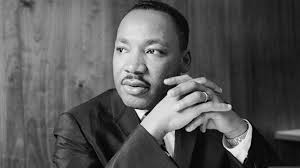
So, let’s dig in. I want to be an ally. Good allies are important in the work of building a better world. We can’t build the beloved community without strong allies. And, it is one of those difficult things because a lot of good people end up doing nothing with their privilege. As Dr. King said in the Letter for the Birmingham Jail:
Shallow understanding from people of good will is more frustrating than absolute misunderstanding from people of ill will. Lukewarm acceptance is much more bewildering than outright rejection.
-MLK, Letter from the Birmingham Jail
Pick a side, don’t be neutral. Being neutral always benefits the oppressor, never the oppressed. Step up and engage with the injustice you see. It is a goal of mine to become a trustworthy ally for people with marginalized identities. I know that the title of ‘ally’ is not something I can claim, it needs to be bestowed. It is bestowed based on relationship and a pattern of behavior. My intentions and principles are not enough. I need to step up. That’s how any of us will do this.
So how does one go about becoming an ally, or becoming a better ally? I feel like the starting point is sometimes glibly stated as “Show up and shut up.” Of course, that statement is a provocative way of saying it and as such does not really say it. (“Show up and shut up” is almost like Aaron Burr’s line in Hamilton, “Talk less, smile more;” which for Burr is really about playing the field and not making a commitment so you have room to respond depending which way the wind blows. That’s not what being an ally is about. That is so very much not what being an ally is all about.) “Show up and shut up” may be more politely phrased – get into relationship with the people on the margins and listen to their struggles, their solutions, their leadership.
A few years back, at the beginning of the Black Lives Matter movement, I participated in some gatherings locally. At one point, I was able to step forward and offer the use of our building for BLM community gatherings. I was proud to be able to host the gatherings. One thing I worked hard to not do was take over. I actively tried to not speak up as often, I didn’t insert myself in the leadership circle. I remained a supporter on the side.
Now, I don’t know with certainty that what I did was the best way, or the only good way, to be an ally in that situation. I didn’t talk with the main organizers and tell them explicitly that I was taking this particular supportive stance as ‘the stance of an ally.’ They were left to interpret my intentions based on my actions. It would have been better if I could have been clear. It would have been a step closer to being in relationship enough to have that conversation with the leaders.
One of the other big pieces of advice I’ve found for becoming a better ally is self-education. Look stuff up on Google. Most of the time, someone has already asked and answered the questions you might have – and Google doesn’t get offended by too-personal questions. You want to know what’s wrong with touching a black person’s hair? Google it. You wonder what happens with a transgender person’s body when they are going through hormone treatment? Google it. You curious if this phrase or that word is offensive, or why it is offensive? Google it. Look stuff up. You don’t have to wait until someone of a marginalized identity is standing near you to ask your question. In fact, please don’t.
There is a video that I found by searching the internet in exactly this way entitled “How to Be a Good Ally – Identity, Privilege, Resistance.” It is a Youtube video by Ahsante the Artist
https://www.youtube.com/watch?v=q7ElX4GFQpI Ahsante shares five things a person such as myself can do to be a better ally.
The first of the five tips she gives in this video is to listen and educate yourself. Which is what I’ve been saying here for the past 10 minutes, right? I need to listen, but I am listening with a specific goal: to learn more, to educate myself about what’s going on and about the experiences of people different from me – experiences of people with marginalized identities in our society. For real, though, this is a great tip for life in general. Listen to children, listen to your neighbor, listen to the cashier, listen to anyone out there … with the goal of learning more about the experiences of people who are different.
And then, here is a justice twist: give a little extra credence to people who are marginalized in our society. At first, I was just saying: listen. Now, I am saying: listen with a little preference for people who are different from me. I’m not saying people who share my identity are always wrong and people different from me are always right. Instead I’m suggesting I can start with an assumption that the experiences of marginalized people are credible. I’m not suggesting that’s the only step, but that’s a starting place.
There are liars and con artists among all types of people. But when people say things like: ‘amplify the voices of people of color’ and ‘believe women’ and ‘walk a mile in another person’s moccasins;’ the suggestion is to counter the near-universal bias people have to give greater credence to the experiences of people from the dominant culture.
All that leads to the second tip: Uplift marginalized voices. If I go online and search for some information about how to be a better ally … and I find a cool video or website by a person of color or by a handful of queer youth, I can quote that in a sermon, for example.
For the past few years I have been trying to include a worship element from a person of color. (Our benediction was written by Joseph Cherry, in today’s example. Rev. Cherry is of Latino descent and a UU colleague I met at Meadville Lombard during my first sabbatical.) It doesn’t pan out perfectly, but many Sundays I am able to make that work.
For all of my time as a minister creating worship each week, I have been paying attention to the gender of the authors I use for opening words, benedictions, and such. So, my new resolve is an expansion of a mindset I have been practicing already. This is a form of lifting up marginalized voices.
I’m not going to spend all my time on these five tips by Ahsante the Artist, you can watch the video yourself. I’ll put the link in the text of the sermon or you can do you own internet search for “How to Be a Good Ally.” It’s worth watching it for yourself.
A piece I think needs a little extra attention that I really want to share with you is about covenant and forgiveness. It’s about what I do when I say something stupid or a little racist, when I make a mistake and say or do something homophobic, sexist, transphobic, ableist, or so on. Because I will. I have. It happens.
There is a thing that happens publicly for people who make mistakes like this. The “Call out” culture calls people out when they’ve said or done something publicly that is out of line. This may be effective against the bigots and trolls, but it has mixed results when used on people trying to be allies.
I remember a story of a white colleague from the 60’s who was invited by a black colleague to participate in a civil rights meeting. The white colleague said something like, “But what if I say something stupid?” To which the black colleague responded. “Don’t worry, you will.”
What I take from that little anecdote is a call to get more comfortable with making mistakes, with being wrong, with showing up even though I feel uncomfortable. My being right or comfortable is not the point. So, I push myself, it is a spiritual practice for me, to factor in the reality that I will make mistakes on this path I have chosen.
What I gain by having this mindset is the capacity to stay in relationship. If someone calls you out for something you’ve said or done. Slow down. Listen. What if it is an opportunity to build the relationship? I know too often the conversation is a punishment, or feels like one. That’s not a way forward. The conversation should be a repair, an opening for growth, a time to step closer to each other.
Remember, I’m talking about people of goodwill who want to engage in being a better ally. There are other situations involving bigots and white supremacists. That’s not what I’m talking about. There is a way forward with them, but that’s a different conversation than I am aiming at today. I’m talking about the situations you and I will fall into. If you experience someone calling you out, work from the premise that they are actually calling you back in – they are willing to mention the problem to you because they have decided their relationship with you is worth it.
There is a lot of implicit stuff that I’ve picked up from my family, from my religion, my school, my music, my friends and loved ones. Some of it is good. Some of it is neutral. Some of it is not so good. There are things all of us need to unlearn, relearn, or simply discover for the first time.
Being an ally is about being willing to continue to learn and grow, to be in relationship through the messy parts of life. To show up and play a supporting role. To use the privilege you have for the good of others. Dr King, in the last Sunday sermon he preached said:
I submit that nothing will be done until people of goodwill put their bodies and their souls in motion. And it will be the kind of soul force brought into being as a result of this confrontation that I believe will make the difference.
It is my work to be an ally. I submit that it is your work as well. It is our work as Unitarian Universalists to use the strengths and gifts we have for the work of justice; to be a people of goodwill willing to put our bodies and souls in motion.
In a world without end, May it be so
The Sower’s Parable

The Sower’s Parable
Rev. Douglas Taylor
12-30-18
In the famous parable Jesus shared with his disciples, a Sower went out and scattered seeds on the ground. The parable goes on to describe various outcomes for those seeds, most of which end in the seeds not growing into plants. They are choked by weeds, unable to take root due to rocks, or eaten by birds. But the few seeds that do take root and survive grow to produce a hundredfold return.
In the Gospels, the sower is Jesus, the seeds are the truth and wisdom he shares with people, and the various outcomes are parallel to the various ways Jesus’ truth and wisdom is received by people. We, the people, are the soil, the receptacles in which wisdom and truth grow. Or at least that is one interpretation.
My title today, of course, tugs on that old parable but is mostly a reference to an Octavia Butler book Parable of the Sower from 1993. Fiction is a remarkable vehicle for our common conversation about humanity and truth and what it means to be human. Joseph Campbell made the point that myths, or in this case, powerful stories with deeply mythic themes, tell us something of what it means to be human. Fiction and myth can serve to help us understand problems and explore solutions. They can tell us truths through their fiction about who we are and what matters in life.
Butler’s Parable of the Sower is a near-future dystopian novel. It is part coming-of-age narrative, part adventure story, and part social critique. Part of why I like it is that the protagonist, like the author, is a black woman – a rare demographic is science fiction.
Another reason I’m draw to speak about this today is this: there are several Unitarian Universalist minister’s study groups around the country. They are annual opportunities for UU clergy to get together around a topic of importance. I was surprised recently to learn that one group had selected the works of Octavia Butler as their focus topic. This Sci-fi/fantasy author was being read by UU clergy in an intentional learning circle.
Adrienne Maree Brown, author of Emergent Strategy wrote about Octavia Butler’s books saying, “Woven throughout her work are two things: 1) a coherent visionary exploration of humanity and 2) emergent strategies for being better humans.” (p17)
And all of that caught my attention and led me to this morning. But what really hooked me and excited me enough about Octavia Butler’s work and this book in particular that I decided to use it as the root for a sermon is something altogether different. In the midst of the chaos and devastation, the main character, Lauren Olamina creates a new religion.
Briefly, because I don’t want to dwell on the book itself so much as a few ideas that arise from the story, …
Parable of the Sower by Octavia Butler is set in California and covers a period of three years, from 2024 to 2027. It is a grim near-future novel that exaggerates trends in American life that were apparent in the late 1980’s and early 1990’s, such as fear of crime, the rise of gated communities, illiteracy, designer drugs and drug addiction, and a growing gap between rich and poor. Climate changes brought about by global warming are also central to the novel. (from A Study Guide for Octavia Butler’s “Parable of the Sower”, Creative media, 2005)
It is written as diary entries by Lauren Olamina as she navigates life in her enclave and later out in the wilds of California. Like many dystopian novels, religion plays a significant role. In most dystopian novels, religion becomes a corrupted tool of oppression. In Butler’s novel, the protagonist creates a new religion. Part of the story is seeing Lauren Olamina become the founder of a new religion.
But let me tell you a little about this religion, because it is different. Lauren looks around for the most powerful force she can detect in the world; something infinite, inexorable, and irresistible. The answer she comes to is Change. Change is the most powerful force in the universe, it is infinite and irresistible. Therefore, she concludes, God is Change.
Lauren writes a series of verses about her ideas. She collects them into a book called Earthseed. The very first entry, the first verse is the one we had as one of our readings:
All that you touch
You Change.
All that you Change
Changes you.
The only lasting truth
Is Change.
God
Is Change.
In her diary, Lauren struggles to understand God. She writes,
A lot of people seem to believe in a big-daddy-God or a big-cop-God or a big-king-God. They believe in a kind of super-person. A few believe God is another word for nature. And nature turns out to mean just about anything they happen not to understand or feel in control of.
Some say God is a spirit, a force, an ultimate reality. Ask seven people what all of that means and you’ll get seven different answers. So what is God? Just another name for whatever makes you feel special and protected? (p15)
She concludes that passage in her diary asking “What if all that is wrong? What if God is something else altogether?” A little later, she reveals her big idea that God is Change. She explains that God is not a person. God does not love or hate anyone, doesn’t watch over people or protect people. God just is. God is change.
An astute hearer of my sermons will of course recognize that I am excited by this idea because it is a version of Process Theology, which I find very exciting and very helpful in describing the God I know and love. My understanding of Process Theology does have some elements missing from what is described in Octavia Butler’s book, but before I go further with that, let me linger for a moment on the topic of Change.
Everything changes. In the book, Lauren is experiencing the slow unraveling of society, the descent of civilization. The change feels dramatic as other characters in the book cling to the past, hoping to survive the chaotic changes around them. Lauren tries, instead, to pragmatically plan for to the next terrible thing while holding a vision of a new community that can be. She becomes a sower, casting her seeds as the world falls apart.
About a year ago I preached a sermon about “The Excitement of Change” https://douglastaylor.org/2017/04/09/excitement-of-change/ in which I highlighted the twin virtues of Letting Go and Holding On. When facing change, it is important to face the reality change brings and be willing to let go of what is no longer – even if it be precious. Change is loss. That is a fact. When change comes, what happens is we lose something. Learning to let go of what is gone – as a religious or spiritual tenet – allows us to respond healthfully to the change even if we do not see it as a good change. Every new day or New Year is also the ending of an old day, an old year.
In the face of that reality, it is also important to hold on to the essential pieces as you experience changes. Your values and your vision of where we are headed together can adjust in response to change, but ultimately there is something in your values and vision that remains sure throughout it all. Hold on to that to stay centered amidst the chaos of change.
“Knowing what you hold on to will help you weather the changes, help you stay grounded and headed in your chosen direction through the changes – even the changes you do not choose and cannot control. Let go, that you may be open. Hold on, that you may stay true.” (from “Excitement of Change”)
This pairing of holding on and letting go is part of the concept Butler put into her character’s version of God. In Butler’s book Parable of the Sower, the first tenet of Earthseed is that God is Change. She means that as something literally true – not as a metaphor or a poetic little something. God is change.
But here is where it gets interesting, and how it connects back to the twin concepts of holding on and letting go. In her fourth verse of Earthseed, Lauren tells the reader “We shape God.”
We do not worship God.
We perceive and attend God.
We learn from God.
With forethought and work,
We shape God.
In the end, we yield to God.
We adapt and endure,
For we are Earthseed
And God is Change.
‘Shaping God’ is a compelling idea. I could spend considerable time talking about other themes in the book such as Freedom, Community Building, Resilience, and Emergence … but for this morning I will limit myself to the themes of Change and this idea of Shaping God.
For Lauren, God shapes us and is shaped by us. As with most understandings of Process Theology, God is not the static, traditional, immutable creator of all things. Instead, God is a dynamic force at play in the existing universe. We all participate with God in co-creating our lives.
In my understanding of Process Theology and God, I can respond to the lure of God’s love and align myself with the good. The Taoist concept of flow is a close encapsulation of this more western concept. Pagans practice magic, which is also very similar. Some forms of Christian prayer, again, come close.
Remember, I’m talking about a fictional religion here – like “The Force” from Star Wars. But like, The Force, Earthseed with it’s practice of ‘Shaping God,’ carries echoes of practices and beliefs from older, traditional traditions and beliefs. That’s why these fictional religions resonate.
For Lauren, “Shaping God” is like what I might recognize as flow or magic or pray, but it is slightly different but in the same category because we are talking about how people have an agency, a way to participate in the holy power. Because change is the one constant, we can either accept change and work with it for our betterment and the betterment of others, or we can resist it in the vain hope that things will return to how they had been before.
If we choose to work with the changes that happen, we get to have a say in what happens next. We can shape the change. Or as Lauren says in the book, we Shape God.
I am intrigued by this concept because I think I do this. I bet you do to. Think about gardening. I’m sure I’ve told this chestnut before: The town vicar is walking past a man working in his garden and stops to admire the beauty. “Ah, Mr. O’Malley, you and God are doing some fine work together in this garden.” To which Mr. O’Malley replies, “Thank you, truly, vicar. But between you and me, you should have seen the place when God had it alone.”
With very little help or guidance from us, our gardens and our lives will bloom and blossom in a riot of color and scent. Beauty abounds. And … it is good to take a hand in shaping what grows in our gardens.
This is what ministry is like for me. I am not creating the energy of this community. I am not making all these amazing things happen around here. We are. Or perhaps we could say it is what naturally happens in a community.
I remember when I first arrived at this congregation over 15 years ago. I showed up in the summer when not much was going on. I looked around and made a list of the things I thought should happen, things I thought could change or improve. Then, just before the start of the church year in September, I lost that list. About a year later I stumbled onto that list again and was surprised to notice that about 80% of what I’d had there had happened; and most of it not because I made it happen but simply from the work of all of us.
The shaping or gardening I offer as my ministry is in this sense – shaping change instead of just tripping along reacting to it. ‘Shaping God’ as the protagonist from the book says. Participating in the nurture of the good energy.
This is the lesson I draw from this Parable of the Sower today. We are the sowers, we nourish the seeds and the soil and participate in the growth. We are not casual observes, separate from the spirit. Take up the role, share in the task of creating the world we long to live in.
I’ll close with one more passage from Lauren Olamina’s Earthseed collection.
God is Change.
God is Infinite,
Irresistible,
Inexorable,
Indifferent.
God is Trickster,
Teacher,
Chaos,
Clay—
God is Change.
Beware:
God exists to shape
And to be shaped.
In a world without end,
May it be so.
Mysterium Cosmographicum

Mysterium Cosmographicum
Rev. Douglas Taylor
12-16-18
Johannes Kepler was one of those cutting-edge new scientists in his day back at the end of the 1500’s. It was a heady time. Copernicus had tipped the scale away from the geocentric theory of the cosmos to the heliocentric theory. Kepler is more famous for his discovery that the planets travel elliptical rather than circular orbits around the sun. But the manner in which he figured that out is part of why I bring him up this morning.
Kepler threw his support behind Copernicus and the heliocentric theory primarily for theological reasons. They were mathematical reasons as well, but in Kepler’s mind, that’s practically the same thing.
The heart of his book Mysterium Cosmographicum was that he could figure out the distances between each of the six planets (they only knew about the closest six at that time) using the five Platonic solids. Essentially, Kepler was saying the universe is a creative math problem.
First, I have to tell you a little about what a Platonic solid is. A Platonic solid is a three-dimensional, regular polyhedron. Each face of a Platonic solid is congruent and regular, meaning each face is identical in shape and size and all the angles are equal. There are exactly five shapes that meet these criteria: Tetrahedron, Cube, Octahedron, Dodecahedron, Icosahedron.
If you’ve ever played Dungeons and Dragons or other similar role-playing game, you may recognize these five shapes as five of the six basic dice. 4, 6, 8, 12, and 20- sided polyhedrons. (Pull out D&D dice, roll them.) Let it be known I did not waste my youth playing a little fantasy game, I was exploring the Platonic solids.
So, here’s what Kepler did. For each polyhedron, he imagined an inner and an outer sphere. It is like those nesting dolls. The inner sphere is created at the tangent of each face of the polyhedron while the outer sphere is created at the vertices. Then, you stack them. Start with a sphere, inside that sphere is a cube, inside the cube is another sphere, followed by a tetrahedron or pyramid, then another sphere and so on with five polyhedrons and six spheres. Kepler used that model to show the distance between each planet, where the spheres represent the six planets.
Fascinatingly, Kepler was very close. The distances he came up with using his model of Platonic solids gave numbers that are remarkably close to the numbers we are able to determine today. Close but not close enough. This is perhaps my favorite part of this whole story, and really my whole point for today. Kepler was wrong. He was fabulously wrong. Elegantly and ingeniously wrong.
But let’s not be too hard on him. It’s like he was playing the Mystery Box game I showed the kids a few weeks back. (pull out box, shake it) “What is the nature of the universe? (shake, shake) I think it sounds like it has Platonic solids.”
This magnificent inaccuracy is, however, the basis for his research leading to Kepler’s three laws of orbital dynamics – which are accurate still today, the first of which is about elliptical orbits. And that stuff is good. Kepler never gave up his flawed theory of the nested Platonic solids, but his work served as a foundational step for science in a heliocentric universe. And in his time, his measurements were close enough to be intriguing and to keep other astronomers looking.
So that’s the math. I mentioned at the beginning that Kepler acceptance of a heliocentric universe was also theological. His central premise was that the God was at the center of it all, that the universe itself was an image of God.
Imago Dei is the theological concept that human beings were created in the image of God. Traditions and individuals through the ages have argued what that image is, exactly. Most are quick to state that it is not a statement saying we humans are physically in the literal likeness of God. Instead theologians talk about certain qualities and capacities we have that are the mark of divinity within. Some say it is our freedom, or our ability to love, our capacity to do good. Augustine said it was a reflection of the trinity: memory, intellect, and will. There are many versions of what Imago Dei means.
Johannes Kepler thought the universe itself was an image of God. He asserted that it was not only humans made in the image of God, but the entire universe. He suggested the sun, at the center, was the image of God the father. The celestial sphere at the outer edge represented Christ the son. And all the empty space between was akin to the Holy Spirit. Kepler included a chapter in his 1596 book Mysterium Cosmographicum analyzing a large number of biblical texts that refer to the movements of the stars and the earth as proof of both his mathematical and theological points.
What we know about the Universe today is considerably more than Kepler and his colleagues had figured out in the late 15- and early 16-hundreds. For example, what they thought was the whole universe, we know to be a portion of just our solar system. We know today that neither the earth or the sun is at the center of the universe. Indeed, we really have no sense of where the quote-unquote ‘center of the universe’ might be because the Universe is expanding and is far more complex than we can grasp. We know that it still obeys the laws of physics and math, but not always in a manner that appears orderly or sensible or neat.
I wonder what Kepler would make of our knowledge about the universe today. Would he still see the universe as an image of God? Kepler’s Universe and Kepler’s God were very fixed and stable, ordered and understandable. That is not how most modern astrophysicists would describe the universe. I mean, some parts are ordered and stable. Our planet Earth keeps spinning to give us this thing we call sunrise each morning. We can map the stars and each night they are predictably where we look to find them. Some things are ordered and stable. But as we look closer at the particulars, things get weird.
As we update our understanding of the universe for Kepler, can that updated universe still serve as an image of God for him and others? Can this vast, mysterious, dynamic and expanding, sometimes predictable and sometimes weird universe reflect the image of a God who is also vast, mysterious, dynamic and expanding, sometimes predictable and sometimes weird?
And, here’s a fun implication for this line of thinking: does that also describe the image of God within us? Think about it. We say in our 7 UU Principles that we are interconnected, we are part of the interdependent web of existence. That means, we are participants with the universe, as if we have the image of the universe within. We are part of the sometimes predictable and sometimes weird universe. If the universe is mysterious, dynamic and expanding; we are mysterious, dynamic and expanding. Right? But have you ever considered those qualities in our universe and in yourself to be the image of God?
The two qualities in our universe I find most intrigue for this line of thinking are emergence and the mysterious.
There is so much we do not know or understand about the universe. We are lightyears ahead of Kepler in our understanding, yet what we do not understand is vast. Dark Matter and Dark Energy are terms astrophysicists use to describe over 80% of the universe. I was watching a video of Neil deGrasse Tyson explaining Dark Matter. He said he gets this question a lot. “What is Dark Matter?” and in this video his answer is quick and brief: “We really don’t know.” It is the biggest mystery since they detected it in the 1930’s. And it’s not exactly ‘matter.’ That’s a misnomer. Neil deGrasse Tyson said it was really a problem of there being too much gravity in the universe that we can’t attribute to the mass we can see. So, there must be something else out there.
You know what that sounds like to me? (Take out Mystery Box, shake it) “What’s inside the box? (shake, shake) Dark Matter?” The problem modern astrophysicists are wrestling with sounds similar to what Kepler was dealing with. We have this great model to explain everything and it almost works. It’s close. We haven’t discovered that it’s wrong, or perhaps we can say we haven’t figured out which part of it is wrong yet. But we know something in the model is off. And the term we’ve come up with to talk about that is Dark Matter and Dark Energy.
Yes, I’m oversimplifying this, there actually are some compelling theories and observances out there about Dark Matter. I think we just have to do what Kepler did. We make theories and observations, we work within the assumptions we have for as long as we can, so we can figure out a little more about how it all works.
Ralph Waldo Emerson, in his essay Self-Reliance, wrote: “Speak what you think today in hard words and tomorrow speak what tomorrow thinks in hard words again, though it contradict everything you said today.” And in the end, we may be gloriously wrong about what we thought it was all about, but at the same time we’ve advanced the human venture and our collective scientific understanding a little further all the same. And at the end of the day, even in our fumbling hubris – something true and lasting and good has emerged.
And that’s the second quality of our universe I see linked to this idea Kepler has turned me on to. Emergence. Despite our fumbling hubris – something true and lasting and good has emerged. We live in an emergent universe. For a long time, we tried to reduce everything down to its smallest parts thinking that would give us the best clue to what everything was and what mattered. It turns out reductionist thinking can’t really tell you about the really interesting stuff.
For a simple example, think about yourself. A reductionist perspective would say you are made up of organ systems, which are made up of organs, which are made up of tissue, which are made up of cells, which are made up of molecules, which are made up atoms, which are made up of subatomic parts like quarks and electrons. And yet none of that really explains that you are alive. At some point along the complexification of atoms and cells and organs, you are alive and you are yourself. Emergence is where the exciting stuff happens. The whole becomes greater than the sum of the parts because we live in an emergent universe.
You are a reflection of the universe. You contain mystery and you are a dynamic example of emergence. And from whichever theological framework you use – the image of God, the highest qualities of humanity within you, or your localized manifestation of the gods and goddesses – however that fits you, can you also see the way your theology aligns with the reality of our world?
You and God, and the whole blessed universe are all like those mystery boxes – shake it a little bit, what’s inside? Mysteries and emergence; it’s sometimes dynamic and sometimes weird.
Kepler was wrong. But that’s the best part. I’m probably wrong too. We’ve learned so much over the past few hundred years. We will learn a lot over the next few hundred years. So, shake the box. Hunt down a few connections. Consider how the image of God within you may be as dynamic and mysterious as the expanding universe in which we live.
And believe me when I say –
In a world without end, may it be so.
—
*note*
What is a “Mystery Box”? It is an activity I did with the children during the service as the Time for All Ages. (My mother taught me this, so there may be a UU curriculum out there from the 60’s or 70’s with this activity. -dt)
Set up: get about a dozen boxes like the kind in which you would put a gift mug. Put various objects in each box (such as pennies, pen caps, sea shells, tin can lids, marbles, sand …) Seal the boxes closed and then wrap them in black construction paper or red wrapping paper – so long as all the boxes look the same on the outside but each one sounds and feels different when you test it. Extra note: avoid organic material that might rot or invite bugs.
For the TFAA: invite the kids to each take a box, test it and guess what is inside. Then collect the boxes back and tell them they’ll never know what’s inside, the guess is the best they get. And that’s what science is like sometimes. And that is what theology is like sometimes. And that is what life is like sometimes.
—
The Candles Say Love

The Candles Say Love
November 25, 2018
Rev. Douglas Taylor
I have a photograph on my cell phone, set as the background so I see it every time I look at my phone. I see it if someone called or texted, or if I am just checking the time. The photo is of some candles. The candles are arranged to spell the word “LOVE.” I took this photo after a recent vigil. It was the one for the shooting at the Pulse nightclub in Orlando, Florida almost two and a half years ago.
The candles say Love. It is a good reminder to me given the frequency of vigils in which I participate and which I attend. The candles say Love. The candles in the picture on my phone were only lit for a short time, a few moments. But they appear to me every day in the photograph, and so they last. And I am reminded, the candles say Love.
There is an important passage in the book of Jeremiah that applies to what I am sharing with you about this photo on my cell phone. Jeremiah was one of the major prophets in Hebrew Scripture. In Jeremiah 31:33, we read that God said: “I will put my law in their minds and write it on their hearts.” This was radical at the time, and in some ways is still radial today. In short, God was saying, all the law written so meticulously over the centuries, preserved and followed to the letter, all of it will fit in a simpler manner in your heart.
And I look down at my phone and seethe candles say Love. In all the turmoil of the day, as we navigate the hate and the trauma, the disempowerment of the vulnerable, and the slaughter of the innocent, God’s clearest and simplest law is written on our heats. The God I love calls us to Love. Love is the highest law, Love is the guide to lead us through the wilderness, Love it the way through these times in which we live.
Maybe I will sound too much like a philistine saying the Word of God comes to me through the photo I took on my cell phone, but I offer it for your consideration anyway. God speaks in all the ways available for those with the ears to hear. The candles say Love. In the face of ever more mass shootings, can it be far off to suggest God’s response, or what the holy calls for from us, is anything other than love?
I have attended and participated in a significant number of vigils. Tragedy and trouble continue to plague us. We gather and light candles, praying for tolerance, peace, and understanding; praying for a new way forward from the bloody and traumatic path we have been on so far.
This spring will be the 10th anniversary of the shooting here in Binghamton at the American Civic Association. Ten years! I took part in the vigil for that shooting. There have been so many over the years. In my mind I think of the shooting at Columbine High School as the starting point, that was back in 1999. In reviewing a list of mass shootings in the United States, I see that Columbine was not the starting point of anything beyond when I started paying attention.
The one that devastated me most, that shook my faith in our society, was the shooting a Sandy Hook elementary school almost 6 years ago in which six- and seven-year old children were murdered; resulting in no noticeable response from our government or from society in general to stem the tide of these shootings beyond more vigils and more ‘thoughts and prayers.’ That one was hard for me.
My colleague Sean Neal-Barron says “There are not enough candles.” He says “There are not enough candles in the world. Not if we lit one each time death came to knock, for each man gunned down, for each trans person attacked, for each woman left battered, for each child caught in the crossfires…” Sean imagines if we actually held a vigil and lit candles every time, “there would be runs on the stores to buy them… shelves left bare” until eventually it would become common,“another item to buy on the grocery list.” (From “To Wake, To Rise” William G. Sinkford, Ed) I pray we be spared the experience of such vigils becoming common.
That vigil for the shooting at the Pulse nightclub took place at Peacemakers stage; which is out near the confluence of the Susquehanna and Chenango rivers, along the Riverwalk. A local group raised funds to have the stage built and a larger-than-life statue of the Rev. Dr. Martin Luther King Jr. erected alongside. It has since become a popular spot for vigils and rallies and gatherings. Our UU congregation contributed financially for the statue and the stage, and we have a brick with our name on it down by the Peacemakers stage. It is at that stage, on those steps, where the candles had been arranged to spell out the word Love and I took the picture.
The vigil for the shooting in Orlando, Florida was organized by the Binghamton Pride Coalition with support from the mayor’s office. At the request of the LGBTQ leadership, I offered a prayer. I prayed for the people hurt and wounded. I prayed for the broken system in which we live that allowed this shooting take place, for all the brokenness around us – the broken policies, our broken hearts. 50 people died that night at the Pulse nightclub. Another 50-plus were injured.
In my prayer I said:
We turn our attention this hour to the grief and anguish that weighs on our hearts. We turn away from the clamoring news reports and analysis for a moment. We turn toward one another and to thee O Spirit.
In my prayer I asked:
Shall we talk about homophobia and finding safe spaces? Do we bring up the need for better gun control laws? Can we talk about Islamophobia and about vulnerable communities being pitted against each other? Or Xenophobia or media attention or who is worthy? O Spirit of Life and Love, can we simply talk about how much this hurts? Again?
The shooter was quickly identified as Muslim. It seems that because of that fact, the Wikipedia page describes this shooting as a ‘terrorist attack,’ a phrase that is not used for most of the mass shootings. Muslim communities across the country quickly clarified that the shooter’s actions were not in keeping with the proper behaviors prescribed by Islam. That evening, during our community vigil, there were many Muslims participating, because we, as a full community, refused to be divided.
The local Imam spoke early in the evening, and he left soon after. The shooting and subsequent vigil took place during Ramadan; the Imam had responsibilities back at the mosque for evening prayers to break the fast that evening. Ramadan is one of the holiest times in the Islamic calendar. It is notable that the Muslim community chose to show up in such large numbers supporting the LGBTQ community and rejecting hate.Ramadan is a time of daily fasting for Muslims with a particular call for adherents to live and behave as faithfully as possible.
The Imam had to leave to lead the sundown prayers that signal the end of the fast at the mosque. Yet a significant number of Muslims remained at the vigil throughout the evening. And sitting in the back as I was, I got to witness an event that has stayed with me through the years as a reminder of the power of solidarity and love. Quietly and without fanfare, that large group of Muslims at the vigil broke their fast.
One among them stepped away and returned with cups of water and a bowl of dates so the group could solemnly break their fast. They opted to miss their own prayers to remain with the larger grieving community. I imagine they each silently recited a version of the prayers necessary at sundown, or offered them later away from the public eye.What stands out to me was the way all of this did not stand out. I’d guess maybe a dozen other people even noticed. It was a subtle reminder that more than I see is happening around me in the hearts and choices of decent people.
It was not only the candles that said Love that night.
The mayor spoke, as did several local clergy from many different faith traditions.Families were present among the hundreds of attendees. There was a large card expressing our city’s sympathy for the city of Orlando which people lined up to sign. It was a powerful event; healing and a good reminder of the solidarity we experience here as a town.
Yesterday morning I was hosting a session of Building Your Own Theology for some of the Young Adults in our congregation. We were in a deep conversation about what we mean about people being inherently Good or inherently Bad. We circled around how the concepts of ‘good’ and ‘bad’ are social constructs rather than moral absolutes; we talked about cynicism and optimism; we discussed the systemic vs individual. At one point we talked about the people who commit mass shootings.
We agreed that compassion is possible for the perpetrators of such violence. Indeed, there are studies and anecdotal evidence that this type of psychopathic destructive behavior is predictable and preventable if we had the will to address the situation with compassion. The individual stories of these shooters are littered with red flags and opportunities for compassionate redirecting. A better way is possible. All of us have the seeds of goodness within us; in some they lie dormant, awaiting the encouragement to take root and grow.
And on the systemic level, there are steps we as a society can take to prevent these tragedies; again, if we had the will, for example, to take the teeth out of organizations like the NRA by limiting how much money they can pour into the pockets of our legislators. The systems we have in place now almost guarantee we will continue to have mass shootings. #thoughtsandprayers.
These vigils we keep hosting are not the solution, but they are a recurring opportunity for us remember our resolve to seek and find a better way together.In my prayer at Peacemakers stage two and a half years back I said:
May we learn, O Spirit, to be tender and gentle with the broken places in our own lives, and in the lives of our neighbors near and far. May we learn to be tender yet persistent with the broken places in our society. May we be tender but not complicit, demanding but not unkind. Let us stand up, speak out, and reach out with love.
These vigils we keep having serve to remind us that the candles say Love; that these shootings are not normal; that there is a better way. These vigils are important because they give us an outlet for our personal and communal grief.They give us hope in the face of the temptation of despair. They keep our consciousnesses piqued.
Part of my work as a minister, as a pastor, is to take in the pain and turmoil around me, to take in what is broken and then turn it back out into the world transformed as blessings. Much like those candles lit by grief and distress, and arranged to offer a message back to the world – the candles say Love.
I concluded my prayer that evening saying:
As a person of faith, love is the center of my theology, love is the core of my spiritual practice. Help me, O Spirit,to bring that love to bare on today’s brokenness and pain.
Help us, O Spirit, to transform our grief into action to make a difference. Let our grief and anger be converted, O Spirit, into power, that we may today take one more step toward building a better and safer and saner world.
As Unitarian Universalists, our values lead us to engage with the world, to support the vulnerable, and to speak out for truth and for justice. These mass shootings and other similar tragedies threaten our values. We are called to speak out, to challenge the hate, and to make a difference. It is not easy or simple. It can be overwhelming. But we are in this together. And together we will persevere.
Gathering in solidarity, lighting candles, and saying prayers are all activities we do in response to the hate and destruction. It is one of the steps of rebuilding. It is not insignificant. It helps us to recognize our shared humanity as we call for our political leaders to respond with appropriate legislation. It sends a message to individuals who are hurting that they are not alone. It helps us to recognize the call of Love, the presence of the Spirit across our religious differences, and the demands of compassion in the midst of the difficulty. The candles say Love. Let us do the same.
In a world without end,
May it be so

