
Prayer for Thanksgiving Harvest
Douglas Taylor
Eternal Spirit, from whom all things come and to whom all things return.
We gather in gratitude this day. We gather as children of the earth, joined together in a bond of respect and connection. We lift our hearts and our voices in both grief and gratitude.
We share our grief for the ways our mother earth has been dishonored and destroyed, for the ways the connection has been severed, for the ways we are alienated from our home. We pray for healing and for a turning and for strength to again flow between the land and the people.
We share of gratitude for the ways we discover and rediscover our connection and wholeness each day. We share our gratitude for our place in the circle, for the sharing and for the light. We share our gratitude for all the earth offers us, for the gifts of sun and soil, of life and the nourishing spirit.
As we wind our way into our culture’s celebration of Thanksgiving, O spirit, may we learn to lean in to our gratitude for the land and the plentiful nourishment it can provide.
May be uncover and honorable harvest this season. May we help keep the balance of living and give thanks for all we have been given.
In the name of all that is holy,
May it be so.
Here Is What We’ve Learned
June 13, 2021
“Here is What We Have Learned”
by Rev. Douglas Taylor

So much has changed in our lives over this year. We have been caught up in the global storm known as COVID-19. So much of what we took for granted or thought of as normal and regular, so much has been impossible, unsafe, even deadly.
Today, as a congregation, we honor passages in our lives: births, deaths, joining, crossing, and becoming. We may consider the ways the pandemic can also be seen as a passage. We are travelling this path from the way things were through into the way things may yet become. Every passage offers lessons to those involved.
While we have turned ourselves inside out to survive as best we could in this pandemic, we have learned some things about ourselves, about each other, about our world. We have learned some things about our values and our what matters to us, about what does and does not matter to others.
Here are some of the things we’ve learned over this this past year:
We are both fragile and resilient.
We have learned it can hard to keep moving when we are disoriented. It helps to slow down; it has been necessary to slow down.
We’ve learned it becomes easier for lies to spread when we are anxious and uncertain.
We’ve learned that 3.8 million is a large number – too large for most people to really take in. 3.8 million: that’s how many people have died from this pandemic since the beginning of 2020. 600,000 is also a big number. That’s the deaths just in the United States just from this one illness.
This has been hard. Harder that we imagined it would be.
But here is what else we’ve learned: while fear is still present, we are learning to rebuild our resilience.
We have learned that we can do online church; that we can protest injustice effectively even during a pandemic; that a lot of work can happen from home or anywhere – not all of it, but a lot more than we used to imagine; that medical innovation is possible with the right motivation and a reduction in capitalism’s restrictions.
We’ve learned that being with others helps. It is hard to be so vulnerable and powerless. Loneliness can be harmful.
Our big lesion has been that we need connection, that we are all more connected than we usually recognize. That need for connection has been what transmits the illness and also what has been a healing balm. Our connections matter. Our strength comes from being in community.
Our world is changing, and all shall be well. We will get through this, and all shall be well. We will get through this the way we have gotten through other difficulties in the past – together, and all manner of thing shall be well.
Prayer for a pandemic-tinged flower ceremony
Prayer
Douglas Taylor
5-31-2021

Eternal Spirit
From whom all things come and to whom all things return
We gather this hour to speak together of flowers and community,
of hope and bright blessings
We all have sorrows and broken places in our lives.
We do not always offer our best selves to the world.
Yet here we are: leaning into a simple ceremony of flowers and beauty together.
Despite the turmoil in the world and in our hearts,
we have come together in this moment to give praise to beauty and nature and life;
to communion for a time with the flowers
Help us remember this moment, O Spirit.
Later as we wind our ways through the hours and days to come,
Help us remember how we choose to set aside this small time to be together;
To be in this moment of grace and beauty with our flowers,
with our community, with thee, O Spirit
May this hour bring a greater abundance of life-giving truth and beauty
to those of us here gathered, and indeed to the whole world.
May this moment with these flowers and these people be
an ongoing blessing in our days.
In the name of all that is holy,
May it be so.
Prayer for our Changing Pandemic
Rev Douglas Taylor
5-23-21

Eternal Spirit
From Whom all things come and to whom all things return.
Hear this prayer, for our faith community, for our nation and our world, for me and the ones I love, for all those who are loved. Hear us in this time of change and possibility and uncertainty.
We gather this morning across our phone lines and computer screens. We gather as a community scattered across the region, though connected across the weeks and months and in and out of this past year in the best ways we could keep connected during this pandemic. We gather digitally, yearning for the community of grace and support we have found in years past and need so keenly in these days.
This pandemic has put great limitations upon us, O Spirit. This pandemic has asked sacrifices of us, losses and hardship, isolation and care. We have borne the burden on behalf of ourselves and on behalf of others, of the vulnerable, of strangers in need.
We have learned, O Spirit, just how very deeply the connection is among us while we have been isolated and disconnected. With care, we have worn our masks, stayed away from crowds, stopped visiting friends and family. With care we have refrained from risks knowing that the risk I choose to take may impact my neighbor, my spouse, my friend, my children, in ways I cannot control. We have borne the burden, O Spirit.
And now, the science tells us the trouble is beginning to ease. We begin to breathe again; we begin to hope. We begin to make plans.
But Spirit we know this is a newly dangerous time. This sickness is not done, the burden is not lifted. It has eased, but the danger is still hidden and waiting. We know there are steps we can still take to both come back together and protect the vulnerable among us. O Spirit, help us to remember both the grace of coming back together and the continuing need to care for and protect the vulnerable among us.
As we step into this new time of in between, when our worlds begin to open back up but the risk is still present, help us to keep our values of inclusion and connection and truth at the front of our decisions and choices.
May our community thrive. May the people in our lives be held in care. May our world turn still toward compassion and care for all those in need. May we have what we need. May we remember our power. May we serve life. And may we keep compassion in our hearts as we move forward together into this next chapter of our living.
Be thou an ever-present strength with us on our journeys, O Spirt.
In the name of all that is holy,
May it be so.
Know Thyself
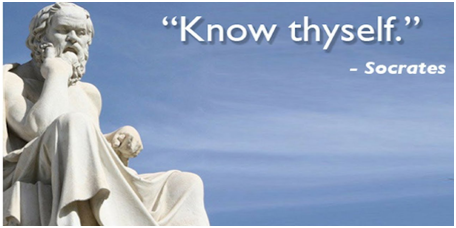
Know Thyself
Rev. Douglas Taylor
4/25/21
More than 20 years ago I had my first encounter with the personality assessment tool called the Enneagram. I was part of a group of seminary students invited to take the test and learn more about the tool. This was not part of our regular courses, instead it was offered by the minister serving the church across the street from the seminary.
If you are not familiar with the enneagram, it is a personality tool which, through self-assessment, sorts people into nine interconnected types. It is often used in the business world similar to the Myers–Briggs Type Indicator, which is a little more widely known. The Myers-Briggs uses 16 types, each known by a string of 4 letters, while the Enneagram results are simply the numbers 1 through 9. (I am a 4, if you are interested in knowing).
As I was saying, I had my first opportunity to take the Enneagram while I was in seminary. That’s the other distinction of the Enneagram; other personality tests were designed for businesses but the enneagram was meant for spiritual exploration and self-development.
Traditionally, it is when we are students, often as children, that we are encouraged to spend time in the pursuit of self-knowledge, self-development. Or if we enter a particular field or career we might be so encouraged. Most of us as adults end up defining ourselves by what we do, It can be difficult to tease out who we are apart from our work. But through the ages, philosophers and great thinkers have extolled the virtue of self-examination in the pursuit of wisdom.
In his famous essay “Apology,” Plato describes the Trial of Socrates. The elder philosopher is accused of corrupting the youth of Athens with his teachings. He is given a choice of punishment – death or exile. As a rationale for accepting death over exile, Socrates said “The unexamined life is not worth living.”
Similarly, ages later, Henry David Thoreau would proclaim, “I wanted to live deep and suck out all the marrow of life, to live so sturdily and Spartanlike as to put to rout all that was not life.” Thoreau would have been fine with exile, Socrates came to a different conclusion. I suspect Socrates and Thoreau may have disagreed on methods, but agreed on the ultimate goal. Likewise, Emerson and Aristotle, Shakespeare and Schweitzer, Camus and Lao Tzu, Simone de Beauvoir and Sigmund Freud – again and again the message is offered that the way to wisdom is through some form of examination of the self. Philosophers and sages throughout time have followed the dictum of Socrates: “To know thyself is the beginning of wisdom.”
But here is the really interesting part: often when you do that deeper work on yourself, you tend to also have a greater capacity to understand and relate to others.
So let us consider our work this morning – to know ourselves, to learn what we may of life through self-examination. And our first point of reference shall be to acknowledge that the ‘self’ is a dynamic, growing reality. You are not going to take a course in yourself and finish after a semester, or take a test and discover everything you need to know about yourself and be done. We are always growing and changing. Rev. A. Powell Davies said life is a chance to grow a soul. May Sarton begins her poem (which we used as our reading) saying “Now I become myself.” Socrates spent a lifetime uncovering self-knowledge. And so it will be for each of us as well.
All of this is well and good – but let us admit these philosophers and sages tend to have competing ideas about what the ‘self’ is and how best one is to go about examining it. This can be daunting. Physician and poet, Lewis Thomas, in his book The Medusa and the Snail, wrote about the effort to figure out just exactly what ‘the self’ was, saying:
“I have had more selves than I can possibly count or keep track of, and sometimes they are all present at once, clamoring for attention, whole committees of them, a House Committee, a Budget Committee, a Grievance Committee, even a Committee on Membership, although I don’t know how any of them ever got in. No chairman, ever, certainly not me. At the most I’m a sort of administrative assistant. There’s never an agenda. At the end I bring the refreshments.”
This, of course leads me to call to mind Walt Whitman’s assertion “Do I contradict myself? Very well, then, I contradict myself; I am large. I contain multitudes.” In short, our project this morning is to recognize that we are dynamically vast. We are both dynamic and growing, and there are multitudes of identities contained within this ‘self’ that I call “me”.
Allow me to offer a guiding principle for this journey. Something not as profound as what the philosophers have offered, but hopefully something that is enough of an opening to spur your own further exploration. My guiding principle is this: pursue this inquiry into your self with the style and rigor of the scientific method – even though, there is no way it can be a scientifically valid pursuit. The primary reason such a line of inquiry cannot be scientific is that the self is a purely subjective perspective.
Many of these Personality Inventories such as the Enneagram and the Myers-Briggs, are considered pseudoscientific because they are subjective and not grounded in the scientific process. They are not replicable, they make unfalsifiable claims, they rely on confirmation bias and subjective input, and are not open to evaluation or refutation from outsiders. This is not to say they lack value or cannot lead a person to understanding and insight. It simply means it is not science while being at risk of seeming like science.
For many years, Astrology was considered on a par with medicine, astronomy, alchemy, and meteorology (according to Wikipedia), a perspective not challenged until the 19th century and the adoption of the Scientific Method by the majority of academics and intellectuals of the western world. Today, Astrology is denigrated as unscientific.
My suggestion is to try any tool available to you in the pursuit of self-knowledge, to do so with the methods science uses: make hypotheses, rely on experience and logic, test ideas and be willing to reach some conclusions but don’t cling to them when new evidence contradicts those old conclusions. Just know that it is all happening in the subjective realm. Your personality, your essence, is not something to be corroborated by peer review. Your resulting behaviors can be corroborated, but the ‘self’ is by definition subjective.
It’s like this: I took one of these tests and it told me I am an introvert. In considering this, I agree with that assessment. And yet from time-to-time people are surprised to learn that about me. I am gregarious and outgoing in many group settings. “You must be an extrovert,” I’ve been told. But my personality is not something to be corroborated by peer review. It is subjective. You can’t tell me I am not an introvert. You can say, “Are you sure you are an introvert? Your behavior suggests otherwise.” And then we can have an interesting conversation about it in which we can each explore more deeply of our self-awareness.
Remember what Lewis Thomas and Walt Whitman offered: while we may reduce the ideas down to a word or two (introvert, extrovert) – the ideas remain vast and multitudinous. And remember what May Sarton and others offered: it is a process of becoming, we evolve and grow, we live into ourselves. Our lives, our experiences impact who we are. It is well documented that our personalities are a product of our genetics and our environment together. The answer to the old argument of Nature vs. Nurture turns out to be: both.
I was attending a conference last week on Revolutionary Love. This is a national conference centered around liberal religious values in the public sphere. One of the presenters, Mickey Scottbey Jones was talking about the role of grief in the work of creating justice. She referred to an old Christian hymn about the Refiner’s Fire. The experience of the Refiner’s Fire, she reminded us, is different than that of other fires. Other fires will only damage you; they will cause destruction and injury, trauma. But the Refiner’s Fire burns away the impurities. Grief, she said, can be like a Refiner’s Fire. In the Refiner’s Fire the impurities are burned away and you become more truly you.
We have experience that bring our true self more clearly to the front in our living. The Velveteen Rabbit (our story from this morning) suggests we become more truly ourselves through being worn away a bit, through being loved into our true form. It is an example of how our experiences can impact and alter our personalities, can shape who we are and how we become ourselves. One of the conclusion Lewis Thomas reached in that bit about all the committees inside in terms of “the Self,” other than it feels like a committee of selves competing, is that “the Self” can only be understood in the context of the world. Who you are is caught up in the context of everything going on around you.
Are you inventive, efficient, or risk-avoidant? Are you curious, confident, or compassionate? I have found the exploration invigorating. Some of these personality inventories have given me valuable feedback on my temperament; about how I am approach being a parent, being a pastor, being a person. I don’t agree with everything every test has told me, but it has all be grist for the mill to learn more about myself. In turn, a deeper self-awareness has revealed for me a richer awareness of others. All this has helped me continue to grow and become myself. “All fuses now, falls into place” May Sarton tells us. “From wish to action, word to silence, / My work, my love, my time, my face / Gathered into one intense / Gesture of growing like a plant.”
In a world without end,
May it be so.
 Rev. Douglas Taylor